
Digital Watchdog DWC-MF5Wi4TW vs Digital Watchdog DWC-MV95WiATW: Specification Comparison
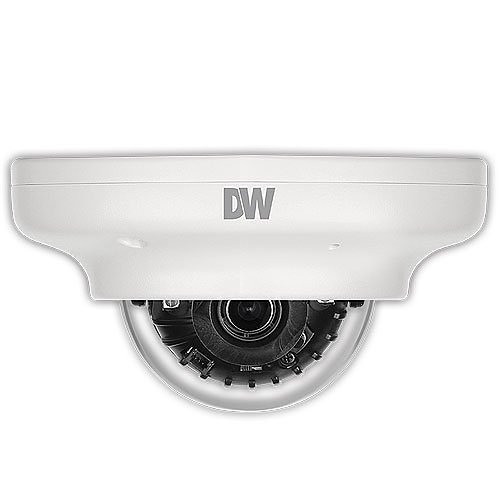
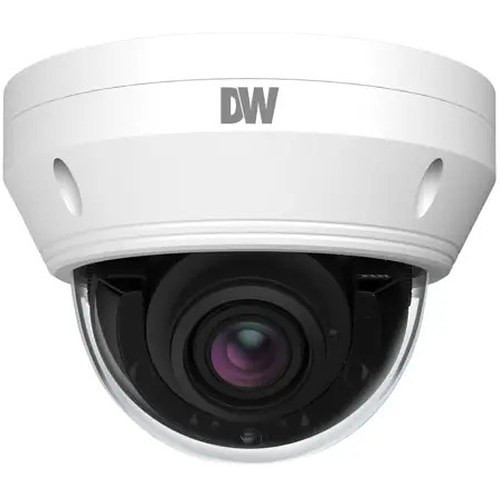
Both the Digital Watchdog DWC-MF5Wi4TW and DWC-MV95WiATW are 5MP outdoor IR vandal dome cameras sharing the same resolution class (2592×1944) and the same fixed-installation form factor. The DWC-MF5Wi4TW is a fixed-lens model available in 4mm, 6mm, and 8mm variants, while the DWC-MV95WiATW features a motorized varifocal lens spanning 2.8–12mm. Installers choosing between these two will weigh lens flexibility and IR throw distance against a simpler fixed-lens footprint and a lighter, more compact housing.
In This Guide
How do the imaging specs compare?
Both cameras use a 5MP CMOS sensor producing identical total-pixel arrays of 2592(H)×1944(V) and both deliver True WDR rated at 120dB. The sensor sizes differ slightly: the DWC-MF5Wi4TW uses a 1/2.8" chip while the DWC-MV95WiATW uses a 1/2.7" chip. The most significant imaging divergence is minimum scene illumination: the DWC-MF5Wi4TW achieves 0.16 lux in color and 0.0 lux in B/W, whereas the DWC-MV95WiATW achieves 0.01 lux in color and 0.0 lux in B/W — a 16× improvement in color low-light sensitivity in favor of the MV95WiATW.
The lens systems differ substantially. The DWC-MF5Wi4TW uses a fixed focal length (4.0mm, 6.0mm, or 8.0mm depending on SKU variant), with the 4mm variant delivering an 82.3° HFOV and the 8mm variant delivering 37.8° HFOV. The DWC-MV95WiATW provides a motorized varifocal lens spanning 2.8–12mm with auto-focus, yielding a continuous HFOV range of 95.1° down to 30° — adjustable post-installation without repositioning the camera. IR throw distance is also markedly different: the DWC-MF5Wi4TW provides 50 feet of Smart IR range, while the DWC-MV95WiATW extends to 164 feet — more than three times the illumination reach.
What about installation and environment?
Both cameras carry an IK10 vandal rating and are PoE Class 3 powered with no adapter included. Their ingress protection ratings differ by one grade: the DWC-MF5Wi4TW is rated IP66 (dust-tight, protection against powerful water jets), while the DWC-MV95WiATW is rated IP67 (dust-tight, protection against temporary immersion). The DWC-MV95WiATW also covers a wider operating temperature range of -22°F to 140°F (-30°C to 60°C) versus -4°F to 122°F (-20°C to 50°C) for the DWC-MF5Wi4TW — a meaningful difference in extreme-cold or extreme-heat deployments.
In terms of form factor, the DWC-MF5Wi4TW is notably more compact at 4.92"×1.88" (125×48mm) and lighter at 0.88 lbs (0.4kg), with a polycarbonate lens cover over an aluminum die-cast body. The DWC-MV95WiATW is larger at 5.43"×3.93" (138×100mm) and heavier at 1.98 lbs (0.9kg), constructed entirely from aluminum die-casting. Maximum power draw is nearly identical: 7.2W (PoE) for the DWC-MF5Wi4TW versus 6.0W (PoE) for the DWC-MV95WiATW. Both cameras include a micro SD/SDHC/SDXC slot supporting up to 1TB for local edge recording. Mounting accessories are optional and sold separately for both models.
Which fits your VMS and analytics better?
Both cameras are ONVIF-compatible and support H.264, H.265, and MJPEG compression with dual-stream capability at up to 30fps across all resolutions. The DWC-MF5Wi4TW lists a broader set of supported protocols including Bonjour, Genetec Protocol, SNMPv1/v2/v3 (MIB-2), Telnet, Zeroconf/AutoIP, and TCP — and its web viewer supports Chrome, Edge, Firefox, and Safari on Windows, Mac, and Linux. The DWC-MV95WiATW lists ONVIF, FTP, SMTP, ICMP, PPPoE, RTCP, QoS, and UDP among its protocols, supports IPv4 and IPv6 (the DWC-MF5Wi4TW lists IPv4 only), but its web viewer is specified only for Microsoft Edge on Windows. Video bitrate range also differs: 32Kbps–20Mbps for the DWC-MF5Wi4TW versus 64Kbps–8Mbps for the DWC-MV95WiATW.
For edge analytics, the DWC-MF5Wi4TW includes an IVA license covering intrusion, line crossing, counting line, loitering, enter/exit, tamper detection — with an IVA+ license available on separate SKUs adding logical rules, object removed, tailgating, direction, stopped, appear/disappear, and object left detection. The DWC-MV95WiATW includes built-in analytics for object classification (human vs. object differentiation), line crossing, perimeter intrusion, and video tampering detection (scene change, video blur, abnormal color). On audio, both provide 1 audio input and 1 audio output; the DWC-MV95WiATW adds a built-in microphone and supports G.711A/U compression, while the DWC-MF5Wi4TW supports G.711 and includes operational notifications via alarm output activation, email, and SD card recording — the DWC-MV95WiATW lists email and FTP server notifications.
Which should you choose: the DWC-MF5Wi4TW or the DWC-MV95WiATW?
Our take: The DWC-MV95WiATW is the stronger choice when coverage distance, lens adjustability post-installation, and extreme-environment resilience are the primary requirements. Its 164-foot Smart IR range is 3.3× the DWC-MF5Wi4TW's 50-foot reach, making it significantly more capable for parking lots, perimeters, and long-corridor applications. Its motorized 2.8–12mm varifocal lens with auto-focus eliminates repositioning at commissioning or during scene changes, compared to the fixed focal lengths of the DWC-MF5Wi4TW. It also delivers 0.01 lux color sensitivity versus 0.16 lux — a 16× improvement — and operates down to -22°F versus -4°F. Conversely, the DWC-MF5Wi4TW is the better fit where a compact, lightweight dome (0.88 lbs vs. 1.98 lbs) is needed in tight ceiling spaces, where a Genetec-native protocol or broader OS/browser web viewer support is required, or where the higher 20Mbps maximum bitrate ceiling matters. Both carry 5-year warranties and IK10/PoE Class 3 parity.
Side-by-Side Comparison
Spec-for-spec, from manufacturer data.
| Specification | Digital Watchdog DWC-MF5Wi4TW | Digital Watchdog DWC-MV95WiATW |
|---|---|---|
| Resolution | 5MP (2592×1944) | 5MP (2592×1944) |
| Image Sensor | 1/2.8" CMOS | 1/2.7" CMOS |
| Lens Type | Fixed | Motorized Varifocal, Auto-focus |
| Focal Length | 4.0mm / 6.0mm / 8.0mm | 2.8mm – 12mm |
| Horizontal FOV | 82.3° / 51.9° / 37.8° | 95.1° – 30° |
| Min. Illumination (Color) | 0.16 lux | 0.01 lux |
| Min. Illumination (B/W) | 0.0 lux | 0.0 lux |
| IR Range | 50 ft (Smart IR) | 164 ft (Smart IR) |
| Wide Dynamic Range | True WDR 120dB | True WDR 120dB |
| Video Compression | H.264 / H.265 / MJPEG | H.264 / H.265 / MJPEG |
| Max Frame Rate | 30fps at all resolutions | 30fps at all resolutions |
| Video Bitrate Range | 32Kbps – 20Mbps | 64Kbps – 8Mbps |
| IP Rating | IP66 | IP67 |
| IK / Impact Rating | IK10 | IK10 |
| Operating Temperature | -4°F to 122°F (-20°C to 50°C) | -22°F to 140°F (-30°C to 60°C) |
| Power / PoE Class | PoE Class 3, max 7.2W | PoE Class 3, max 6.0W |
| Edge Storage | microSD/SDHC/SDXC up to 1TB | microSD/SDHC/SDXC up to 1TB |
| Audio | 1 in / 1 out, G.711 | 1 in / 1 out + built-in mic, G.711A/U |
| IP Protocol Version | IPv4 | IPv4 / IPv6 |
| Privacy Masks | 16 programmable | 4 programmable |
| Dimensions (H×W) | 4.92" × 1.88" (125×48mm) | 5.43" × 3.93" (138×100mm) |
| Weight | 0.88 lbs (0.4kg) | 1.98 lbs (0.9kg) |
| Housing Material | Polycarbonate lens cover + aluminum die-cast | Aluminum die-cast |
| Warranty | 5 Year | 5 Year |
Frequently Asked Questions
Which should you choose: the DWC-MF5Wi4TW or the DWC-MV95WiATW?
The DWC-MV95WiATW is the stronger choice when coverage distance, lens adjustability post-installation, and extreme-environment resilience are the primary requirements. Its 164-foot Smart IR range is 3.3× the DWC-MF5Wi4TW's 50-foot reach, making it significantly more capable for parking lots, perimeters, and long-corridor applications. Its motorized 2.8–12mm varifocal lens with auto-focus eliminates repositioning at commissioning or during scene changes, compared to the fixed focal lengths of the DWC-MF5Wi4TW. It also delivers 0.01 lux color sensitivity versus 0.16 lux — a 16× improvement — and operates down to -22°F versus -4°F. Conversely, the DWC-MF5Wi4TW is the better fit where a compact, lightweight dome (0.88 lbs vs. 1.98 lbs) is needed in tight ceiling spaces, where a Genetec-native protocol or broader OS/browser web viewer support is required, or where the higher 20Mbps maximum bitrate ceiling matters. Both carry 5-year warranties and IK10/PoE Class 3 parity.
Is the DWC-MF5Wi4TW or DWC-MV95WiATW better for low-light performance?
The DWC-MV95WiATW is better in low light by a significant margin. Its minimum color scene illumination is 0.01 lux versus 0.16 lux for the DWC-MF5Wi4TW — 16 times more sensitive in color mode. Both reach 0.0 lux in black-and-white mode with IR active. Additionally, the DWC-MV95WiATW's Smart IR range of 164 feet versus 50 feet means it illuminates a much larger area in complete darkness.
Can I adjust the field of view after mounting without removing the DWC-MV95WiATW from the ceiling?
Yes. The DWC-MV95WiATW features a motorized varifocal lens spanning 2.8–12mm with auto-focus, allowing remote zoom and focus adjustment after installation. The DWC-MF5Wi4TW uses a fixed focal length (4.0mm, 6.0mm, or 8.0mm depending on the variant ordered); changing the field of view requires purchasing and installing a different lens variant.
Which camera is rated for colder outdoor temperatures — the DWC-MF5Wi4TW or DWC-MV95WiATW?
The DWC-MV95WiATW is rated for colder environments, operating down to -22°F (-30°C) versus -4°F (-20°C) for the DWC-MF5Wi4TW — an 18°F (10°C) advantage at the low end. At the high end, the DWC-MV95WiATW is also rated to 140°F (60°C) versus 122°F (50°C) for the DWC-MF5Wi4TW. For installations in northern climates, rooftop enclosures, or industrial environments with temperature extremes, the DWC-MV95WiATW has the broader rated range per spec.
Get a Second Opinion on Your Camera Choice
Share your site layout, coverage goals, and budget. Our team will validate the camera selection, flag anything we would change, and recommend products that match the use case.