
Hanwha XNV-8020R vs i-PRO S22500-F6L: Specification Comparison
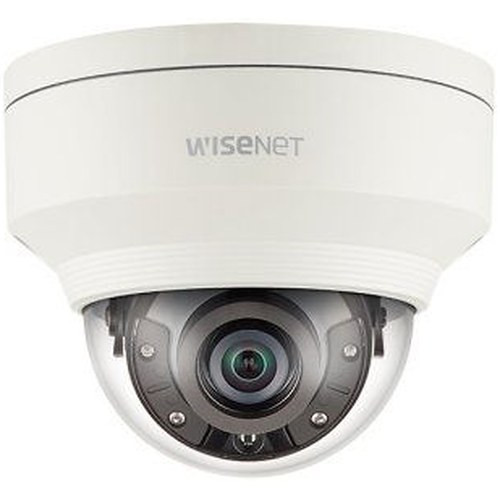
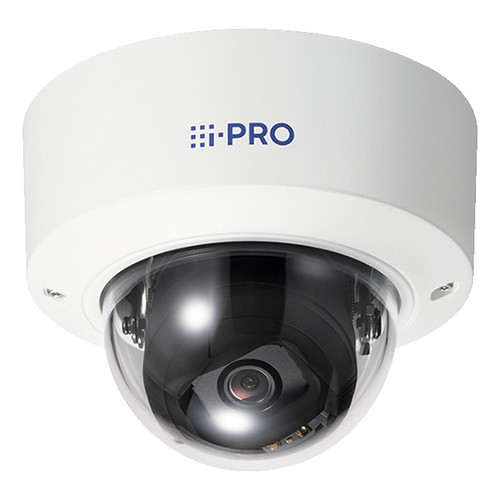
Both the Hanwha XNV-8020R and the i-PRO WV-S22500-F6L are 5MP fixed-lens wired dome cameras with IR night vision, IK10 vandal resistance, and PoE power—placing them squarely in the same resolution class and form factor for cross-shopping consideration. The XNV-8020R is rated for outdoor use with an IP66/IP67 weatherproof housing, while the S22500-F6L is an indoor-rated model. This comparison covers imaging performance, installation and environmental fit, and VMS/analytics integration to help installers and IT buyers match the right unit to their deployment.
In This Guide
How do the imaging specs compare?
The XNV-8020R uses a 1/1.8" CMOS sensor delivering 5MP at 2560×1920 through a fixed 3.7mm lens with a 97.5° horizontal field of view. Minimum illumination is rated at 0.16 lux color and 0 lux in B&W with IR active, with a built-in IR range of 30m. WDR is specified at 120dB. The S22500-F6L uses a smaller 1/2.8" CMOS sensor producing up to 3072×2304 (5MP 4:3) or 3072×1728 (16:9) through a fixed 3.2mm lens with a 48° horizontal field of view in 16:9 mode. Minimum illumination is rated at 0.08 lux color and 0.07 lux B&W, with IR range specified at 25m (30IRE). The i-PRO's Super Dynamic WDR reaches 132dB at maximum setting.
On sensor size, the XNV-8020R's 1/1.8" chip is physically larger than the S22500-F6L's 1/2.8" chip, which generally benefits sensitivity in low light before IR engagement. However, the S22500-F6L's specified color minimum illumination (0.08 lux) is lower than the Hanwha's (0.16 lux), and its WDR ceiling (132dB) exceeds the XNV-8020R's (120dB). The Hanwha offers a significantly wider field of view (97.5° H vs. 48° H), making it better suited for broad-area coverage, while the i-PRO's narrower lens provides tighter framing and DORI distances are specified (Identify at 13.8m, Recognize at 27.6m). Both cameras deliver 30fps. Neither camera specifies optical zoom beyond 1x fixed; the i-PRO lists a 1x–3x digital extra zoom at reduced resolution.
What about installation and environment?
The XNV-8020R is rated IP66, IP67, and IK10, making it suitable for outdoor installations exposed to rain, dust, and physical impact. Operating temperature range is -30°C to +55°C, accommodating cold-climate deployments. Power input is PoE IEEE 802.3af Class 3 (max 9.00W) or 12VDC (max 8.00W). The unit also includes a CVBS monitor output and Micro USB port for installation alignment. Physical dimensions are Ø120.0×97.5mm at 615g (1.36 lb). A 2-slot microSD/SDHC/SDXC edge storage bay supports up to 512GB.
The S22500-F6L is specified for indoor use only—no IP ingress rating is listed in the provided specs. It carries IK10 impact resistance. Operating temperature range is -10°C to +50°C (power-on minimum 0°C), a notably narrower cold-weather envelope than the Hanwha. Power input is PoE IEEE 802.3af (PoE Class 0 per spec) or DC12V. The unit provides a VBS composite monitor output for adjustment. Dimensions are Ø129.5×102.5mm at 800g (1.77 lb), making it slightly larger and heavier than the XNV-8020R. Edge storage supports microSDXC up to 512GB. The S22500-F6L includes 3.5mm stereo audio I/O jacks and three alarm I/O terminals versus the Hanwha's single alarm in/out pair. The i-PRO is UL 62368-1, c-UL, CE, and IEC 62368-1 certified; the Hanwha carries IP66/IP67 and IK10 certifications per the provided specs.
Which fits your VMS and analytics better?
Both cameras support ONVIF, H.265, H.264, and MJPEG compression. The XNV-8020R is listed under ONVIF Profile S, G, and T; the S22500-F6L supports ONVIF Profile G, M, S, and T, adding Profile M (metadata). The Hanwha supports Wisenet SUNAPI and the Wisenet open platform for native integration with Hanwha VMS. The i-PRO supports SFTP, MQTT, and LLDP in addition to standard protocols; the Hanwha's protocol list does not include these. The Hanwha allows up to 20 unicast users and up to 10 streaming profiles; the i-PRO limits simultaneous users to 14. The i-PRO also specifies FIPS 140-2 Level 3 security with an NXP SE050F secure element and signed firmware; the Hanwha lists 802.1X (EAP-TLS, EAP-LEAP), HTTPS, and IP filtering but does not claim FIPS 140-2 in the provided specs.
On-board analytics differ meaningfully. The XNV-8020R includes loitering, directional detection, fog detection, digital auto-tracking, sound classification, heatmap, people counting, queue management, tampering, and motion detection—along with WiseStream II smart codec. The S22500-F6L offers AI-based motion, face, and vehicle detection plus AI sound classification for gunshot, yell, vehicle horn, and glass break. The i-PRO does not list heatmap, queue management, or people counting in the provided specs. Both cameras include audio input and output. The Hanwha uses a selectable mic/line-in with 2K Ohm impedance and RCA-style line out; the i-PRO uses 3.5mm stereo mini jacks for both input and output, which may simplify cabling for some installers.
Which should you choose: the XNV-8020R or the S22500-F6L?
Our take: The XNV-8020R is the stronger choice when the installation is outdoors, spans a wide area, or requires a broad analytics suite including people counting and heatmap. Its IP66/IP67 outdoor weatherproof rating makes it the only option of the two for exterior deployments. The 97.5° horizontal field of view is nearly double the S22500-F6L's 48°, allowing broader scene coverage from a single mount point. Its IR range (30m) also exceeds the i-PRO's (25m at 30IRE). Conversely, the S22500-F6L is the stronger choice for indoor high-security environments where WDR performance and cybersecurity certification are critical: its Super Dynamic range reaches 132dB versus 120dB, and it carries FIPS 140-2 Level 3 with a hardware secure element—a qualification the Hanwha does not claim in its published specs. The i-PRO also carries UL 62368-1 safety certification and supports ONVIF Profile M. Choose the Hanwha for outdoor wide-angle coverage; choose the i-PRO for indoor regulated or high-security applications.
Side-by-Side Comparison
Spec-for-spec, from manufacturer data.
| Specification | Hanwha XNV-8020R | i-PRO S22500-F6L |
|---|---|---|
| Resolution | 5MP (2560×1920) | 5MP (3072×2304 4:3 / 3072×1728 16:9) |
| Image Sensor | 1/1.8" CMOS | Approx. 1/2.8" CMOS |
| Lens / Focal Length | 3.7mm fixed | 3.2mm fixed |
| Horizontal Field of View | 97.5° | 48° (16:9) |
| Min. Illumination (Color) | 0.16 lux | 0.08 lux (F1.6, 1/30s, 30IRE) |
| Min. Illumination (B&W / IR) | 0 lux (IR) | 0.07 lux (B&W); 0 lux (IR) |
| Wide Dynamic Range | 120 dB | 132 dB (Super Dynamic Level 31) |
| IR Range | 30m | 25m (30IRE) / 20m (50IRE) |
| Max Frame Rate | 30fps | 30fps |
| Video Compression | H.265, H.264, MJPEG | H.265, H.264, MJPEG |
| IP / Ingress Rating | IP66 / IP67 | Not specified (indoor only) |
| IK / Impact Rating | IK10 | IK10 |
| Operating Temperature | -30°C to +55°C | -10°C to +50°C (power-on min 0°C) |
| Power Input / PoE Class | PoE 802.3af Class 3; 12VDC | PoE 802.3af Class 0; DC12V |
| Edge Storage | Dual microSD/SDHC/SDXC, up to 512GB | microSDXC up to 512GB |
| Alarm I/O | 1 input / 1 output | 3 alarm terminals; 1 AUX OUT |
| ONVIF Profiles | S, G, T | G, M, S, T |
| Audio | Selectable mic/line-in; line out | 3.5mm stereo mic input; 3.5mm stereo output |
| Dimensions | Ø120.0 × 97.5mm | Ø129.5 × 102.5mm |
| Weight | 615g (1.36 lb) | 800g (1.77 lb) |
| Environment Rating | Outdoor | Indoor |
| Warranty | 3 years | 5 years |
Frequently Asked Questions
Which should you choose: the XNV-8020R or the S22500-F6L?
The XNV-8020R is the stronger choice when the installation is outdoors, spans a wide area, or requires a broad analytics suite including people counting and heatmap. Its IP66/IP67 outdoor weatherproof rating makes it the only option of the two for exterior deployments. The 97.5° horizontal field of view is nearly double the S22500-F6L's 48°, allowing broader scene coverage from a single mount point. Its IR range (30m) also exceeds the i-PRO's (25m at 30IRE). Conversely, the S22500-F6L is the stronger choice for indoor high-security environments where WDR performance and cybersecurity certification are critical: its Super Dynamic range reaches 132dB versus 120dB, and it carries FIPS 140-2 Level 3 with a hardware secure element—a qualification the Hanwha does not claim in its published specs. The i-PRO also carries UL 62368-1 safety certification and supports ONVIF Profile M. Choose the Hanwha for outdoor wide-angle coverage; choose the i-PRO for indoor regulated or high-security applications.
Is the XNV-8020R or S22500-F6L better for low-light performance?
The S22500-F6L has a lower specified color minimum illumination (0.08 lux vs. 0.16 lux for the XNV-8020R) and a higher WDR ceiling (132dB vs. 120dB), giving it an edge in challenging mixed-light indoor scenes. The XNV-8020R has a physically larger 1/1.8" sensor (vs. 1/2.8") and a longer IR range (30m vs. 25m at 30IRE), which benefits outdoor low-light coverage at greater distances. Neither camera specifies 0 lux with IR active explicitly for color mode; both reach 0 lux in B&W with IR on.
Can the XNV-8020R be used outdoors while the S22500-F6L cannot?
Yes. The XNV-8020R is rated IP66 and IP67, meaning it is sealed against dust ingress and protected against water jets and temporary immersion—fully suitable for outdoor mounting. The S22500-F6L is specified as an indoor camera; no IP ingress protection rating appears in its provided specifications. Both cameras carry IK10 vandal resistance, but only the XNV-8020R is rated for outdoor environmental exposure.
Which camera offers stronger cybersecurity features for a regulated environment?
The i-PRO S22500-F6L specifies FIPS 140-2 Level 3 certification backed by an NXP SE050F hardware secure element, signed firmware, and support for SFTP and MQTT—capabilities not listed in the Hanwha XNV-8020R's published specifications. The Hanwha does support 802.1X (EAP-TLS, EAP-LEAP), HTTPS, and IP address filtering, which satisfy baseline network security requirements. For deployments with federal or regulated-industry cybersecurity mandates (e.g., NDAA-sensitive environments where FIPS 140-2 is required), the S22500-F6L's published credentials are stronger based on available spec data.
Get a Second Opinion on Your Camera Choice
Share your site layout, coverage goals, and budget. Our team will validate the camera selection, flag anything we would change, and recommend products that match the use case.