
Datalogic 943500013 vs Honeywell CK67-X1N-58A1C1G: Specification Comparison
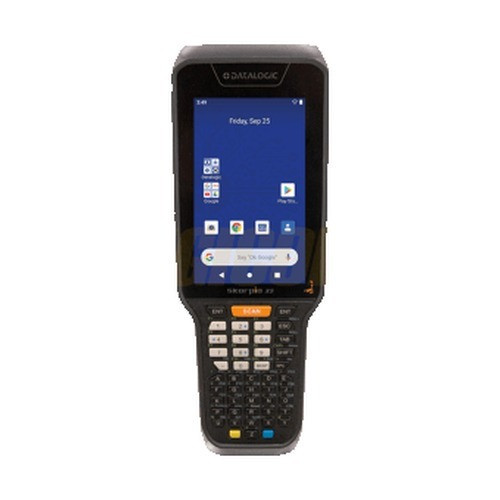
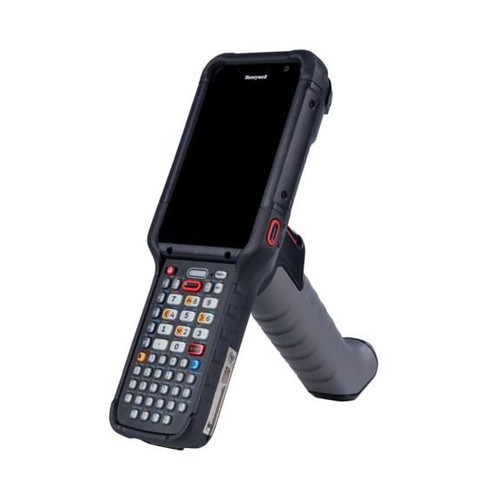
Both the Datalogic Skorpio X5 (943500013) and the Honeywell CK67 (CK67-X1N-58A1C1G) are enterprise-class handheld mobile computers built for warehouse, logistics, and field operations. Each runs Android with GMS on a 4.3-inch WVGA display with a Qualcomm octa-core processor, IP65 sealing, and microSD expansion. This comparison evaluates where their specifications diverge across compute and memory resources, connectivity and wireless capabilities, and physical durability and battery endurance — the three axes that most directly govern deployment suitability and total cost of ownership.
In This Guide
- Which device delivers more compute power and memory headroom for demanding applications?
- Which device offers broader wireless and cellular connectivity for mixed indoor and outdoor deployments?
- Which device is more ruggedized and better suited to extended shift use without a charging opportunity?
- Which should you choose: the 943500013 or the CK67-X1N-58A1C1G?
- Side-by-Side Specs
- FAQ
Which device delivers more compute power and memory headroom for demanding applications?
The Datalogic Skorpio X5 uses a Qualcomm SDA660 clocked at 2.3 GHz with 3–4 GB RAM and 32–64 GB Flash storage. The Honeywell CK67 uses a Qualcomm QCS4490 clocked at 2.0 GHz with 6 GB RAM and 128 GB Flash storage. On raw clock speed the Skorpio X5 holds a 300 MHz advantage; however, the QCS4490 is a newer-generation silicon architecture than the SDA660, and the CK67 pairs it with 6 GB RAM versus the Skorpio X5's 3–4 GB range, providing significantly more headroom for multi-app workloads, background services, and future Android OS upgrades.
Storage tells a similar story: the CK67's fixed 128 GB Flash roughly doubles the upper bound of the Skorpio X5's 64 GB maximum, reducing reliance on microSD for application data. Both units support microSD expansion. Buyers running heavy WMS clients, voice-directed picking software, or multiple simultaneous enterprise apps should weight the CK67's memory and storage advantage. For lighter single-app workflows where clock speed matters more than memory ceiling, the Skorpio X5's 2.3 GHz figure is the higher published number.
Which device offers broader wireless and cellular connectivity for mixed indoor and outdoor deployments?
The Datalogic Skorpio X5 supports Wi-Fi 5 (802.11 a/b/g/n/ac), Bluetooth 5.0, NFC, and USB. No WWAN or cellular capability is specified in the provided data. The Honeywell CK67 supports Wi-Fi 6E (802.11 a/b/g/n/ac/ax), Bluetooth 5.2, NFC, USB, and additionally 5G Sub-6 GHz and mmWave WWAN with Nano SIM and eSIM support. The wireless generational gap is material: Wi-Fi 6E adds the 6 GHz band for reduced congestion in dense RF environments such as large distribution centers, while 5G enables true cellular connectivity for yard management, remote site operations, and vehicle-mounted or field use cases.
For purely indoor, Wi-Fi-anchored deployments the Skorpio X5's 802.11ac coverage is functionally adequate, and Bluetooth 5.0 is sufficient for most peripheral pairing scenarios. However, any deployment requiring cellular data offload, outdoor roaming beyond Wi-Fi coverage, or future-proofing against Wi-Fi 6E infrastructure upgrades will find the CK67 substantially better specified. The CK67's Honeywell ScanPal platform is also explicitly noted, which informs integration with Honeywell's device management and mobility ecosystem — no equivalent platform identifier is listed for the Skorpio X5 in the provided specs.
Which device is more ruggedized and better suited to extended shift use without a charging opportunity?
Both units carry an IP65 ingress protection rating, meaning both are sealed against dust ingress and low-pressure water jets. The Honeywell CK67 additionally carries an IP68 rating, indicating it can withstand sustained immersion — a meaningful advantage in food processing, cold-storage wash-down, or outdoor wet environments where IP65 alone may be insufficient. Drop ratings diverge as well: the Skorpio X5 is rated to 1.8 m on concrete; the CK67 is rated to 2.4 m, a 33% higher drop tolerance that reduces device replacement risk in high-bay picking or loading dock environments.
Battery capacity favors the CK67 at 7,000 mAh versus the Skorpio X5's 6,200 mAh — an 800 mAh or approximately 13% larger cell. The Skorpio X5 specification notes hot-swappable battery capability, which can extend effective uptime without a larger cell; the CK67 spec as provided does not explicitly confirm or deny hot-swap. The Skorpio X5 also specifies its weight at 488 g versus the CK67's 516 g, a 28 g difference that may matter in high-repetition scan jobs over full shifts. Both units operate from −20 to 50 °C. The CK67's storage temperature range extends to −30 to 70 °C versus data not provided for Skorpio X5 storage temperature.
Which should you choose: the 943500013 or the CK67-X1N-58A1C1G?
Our take: The CK67-X1N-58A1C1G is the stronger choice when the deployment requires cellular connectivity, higher memory capacity, or superior ingress protection. Its 6 GB RAM and 128 GB Flash roughly double the Skorpio X5's upper-range figures (4 GB / 64 GB), its IP65/IP68 dual rating exceeds the Skorpio X5's IP65-only seal, and its 2.4 m drop rating clears the Skorpio X5's 1.8 m by 600 mm — meaningful differences in wash-down or high-bay environments. The addition of 5G Sub-6 GHz/mmWave WWAN and Wi-Fi 6E positions the CK67 for mixed indoor-outdoor and cellular-dependent workflows the Skorpio X5 cannot address. The Skorpio X5 counters with a higher published clock speed (2.3 GHz vs. 2.0 GHz), lighter weight (488 g vs. 516 g), a hot-swappable battery noted in spec, and a lower entry-level memory/storage configuration that may reduce unit cost. Choose the Skorpio X5 for lighter single-app, Wi-Fi-only, weight-sensitive deployments; choose the CK67 for cellular, wash-down, or memory-intensive enterprise rollouts.
Side-by-Side Comparison
Spec-for-spec, from manufacturer data.
| Specification | Datalogic 943500013 | Honeywell CK67-X1N-58A1C1G |
|---|---|---|
| Product Family | Skorpio X5 | CK67 |
| SKU | 943500013 | CK67-X1N-58A1C1G |
| Processor | Qualcomm SDA660 2.3 GHz Octa-Core | Qualcomm QCS4490 2.0 GHz Octa-Core |
| RAM | 3–4 GB | 6 GB |
| Flash Storage | 32–64 GB | 128 GB |
| Storage Expansion | microSD | microSD |
| Operating System | Android 10 with GMS | Android with GMS |
| Display | 4.3 in WVGA (800x480) Gorilla Glass 3 | 4.3 in (800x480) Gorilla Glass 7 |
| Wi-Fi Standard | 802.11 a/b/g/n/ac (Wi-Fi 5) | 802.11 a/b/g/n/ac/ax (Wi-Fi 6E) |
| Bluetooth | 5.0 | 5.2 |
| WWAN / Cellular | — | 5G Sub-6 GHz / mmWave; Nano SIM + eSIM |
| NFC | Yes | Yes |
| IP Rating | IP65 | IP65 / IP68 |
| Drop Rating | 1.8 m on concrete | 2.4 m |
| Battery Capacity | 6,200 mAh (hot-swappable) | 7,000 mAh Li-Ion |
| Operating Temperature | -20 to 50 °C | -20 to 50 °C |
| Weight | 488 g (17.2 oz) | 516 g (18.2 oz) |
| Scan Engine | — | S0703 FlexRange Imager |
| Warranty | 1-Year Limited | — |
Frequently Asked Questions
Which should you choose: the 943500013 or the CK67-X1N-58A1C1G?
The CK67-X1N-58A1C1G is the stronger choice when the deployment requires cellular connectivity, higher memory capacity, or superior ingress protection. Its 6 GB RAM and 128 GB Flash roughly double the Skorpio X5's upper-range figures (4 GB / 64 GB), its IP65/IP68 dual rating exceeds the Skorpio X5's IP65-only seal, and its 2.4 m drop rating clears the Skorpio X5's 1.8 m by 600 mm — meaningful differences in wash-down or high-bay environments. The addition of 5G Sub-6 GHz/mmWave WWAN and Wi-Fi 6E positions the CK67 for mixed indoor-outdoor and cellular-dependent workflows the Skorpio X5 cannot address. The Skorpio X5 counters with a higher published clock speed (2.3 GHz vs. 2.0 GHz), lighter weight (488 g vs. 516 g), a hot-swappable battery noted in spec, and a lower entry-level memory/storage configuration that may reduce unit cost. Choose the Skorpio X5 for lighter single-app, Wi-Fi-only, weight-sensitive deployments; choose the CK67 for cellular, wash-down, or memory-intensive enterprise rollouts.
Does either the 943500013 or the CK67-X1N-58A1C1G support cellular / 5G connectivity?
Only the Honeywell CK67-X1N-58A1C1G supports cellular connectivity. Its spec lists 5G Sub-6 GHz and mmWave WWAN with Nano SIM and eSIM support. The Datalogic Skorpio X5 (943500013) spec does not list any WWAN or cellular capability — its wireless connectivity is limited to Wi-Fi (802.11 a/b/g/n/ac), Bluetooth 5.0, NFC, and USB.
Which device is better protected against water exposure — the 943500013 or the CK67-X1N-58A1C1G?
The Honeywell CK67-X1N-58A1C1G carries dual IP65 and IP68 ratings, meaning it is sealed against dust and rated for sustained water immersion. The Datalogic Skorpio X5 (943500013) is rated IP65 only, providing dust-tight and low-pressure water-jet protection but no immersion rating. For wash-down environments, food processing facilities, or outdoor wet conditions, the CK67's IP68 certification offers a higher level of protection.
Is the 943500013 or the CK67-X1N-58A1C1G better for high-repetition scanning jobs where device weight matters?
The Datalogic Skorpio X5 (943500013) is lighter at 488 g (17.2 oz) with its standard battery, compared to the Honeywell CK67-X1N-58A1C1G at 516 g (18.2 oz). For operators performing thousands of scan cycles per shift, the 28 g difference may reduce fatigue. The Skorpio X5 also specifies a hot-swappable 6,200 mAh battery, which can maintain uptime across shifts without powering down. The CK67's scan engine is identified as the S0703 FlexRange Imager; the Skorpio X5 spec does not name its scan engine in the provided data.
More Mobile Computer Comparisons
- Datalogic 944850001 vs Honeywell CK67-X0N-5EC1C2G
- Datalogic 944850001 vs Honeywell CK67-X1N-58A1B1G
- Datalogic 944850001 vs Honeywell CK67-X1N-58A1A1G
- Datalogic 944850001 vs Honeywell CK67-X1N-58A1C1G
- Datalogic 944850001 vs Datalogic 944950001
- Datalogic 944850001 vs Datalogic 944900004
Mobile Computer Buying Guides
Get a Second Opinion on Your Camera Choice
Share your site layout, coverage goals, and budget. Our team will validate the camera selection, flag anything we would change, and recommend products that match the use case.