
Datalogic 944850001 vs Honeywell CK67-X1N-58A1C1G: Specification Comparison
Both the Datalogic Memor 30 (944850001) and the Honeywell CK67-X1N-58A1C1G are Android-based rugged handheld mobile computers targeting warehouse, logistics, and field operations. Each carries the same Qualcomm QCS4490 octa-core SoC, IP65/IP68 ingress protection, Wi-Fi 6E, Bluetooth 5.2, 128 GB flash storage, and a 1D/2D imager. The comparison turns on meaningful differences in display size and resolution, cellular connectivity, battery capacity, weight and ergonomics, and scanning engine architecture—factors that drive distinct purchase decisions across deployment types.
In This Guide
- Which device offers the better display, compute performance, and scanning capability for your workflow?
- How do ruggedness ratings, battery endurance, and operating environment compare between the two units?
- Which unit provides broader connectivity and better fits your network and platform infrastructure?
- Which should you choose: the 944850001 or the CK67-X1N-58A1C1G?
- Side-by-Side Specs
- FAQ
Which device offers the better display, compute performance, and scanning capability for your workflow?
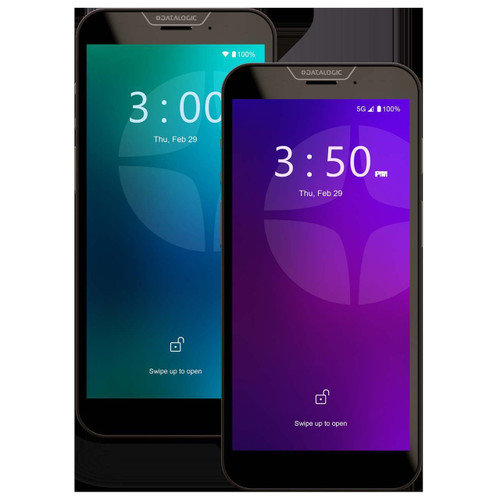
The Datalogic Memor 30 ships with a 6.0-inch Full HD+ display (2160 × 1080) protected by Corning Gorilla Glass 5, paired with a Qualcomm QCS4490 running at 2.4 GHz. Its 1D/2D imager covers a scanning range of 10 cm to 10 m and supports QR Code and broader 2D symbologies. The larger, higher-resolution screen makes it well-suited to workflows that require reading complex documents, picking screens, or map-heavy applications on the device itself.
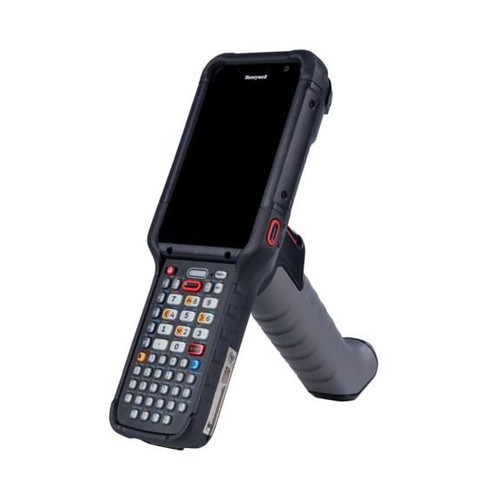
The Honeywell CK67 uses a 4.3-inch display at 800 × 480 resolution with Corning Gorilla Glass 7—a smaller, lower-resolution panel, but protected by a newer glass generation. Its QCS4490 is clocked at 2.0 GHz, 400 MHz below the Memor 30. The CK67 integrates Honeywell's S0703 FlexRange Imager, which the spec sheet describes as a variable-distance 1D/2D engine that scans without refocus. Datalogic's scanning range is specified (10 cm–10 m); Honeywell does not publish a numeric range for the S0703 in the provided specs.
For display-intensive tasks, the Memor 30 holds a clear advantage. For dedicated scan-centric workflows where the FlexRange engine's variable-focus behavior is operationally important, the CK67's imager architecture may be the deciding factor—though its rated range is not confirmed in the available specifications.
How do ruggedness ratings, battery endurance, and operating environment compare between the two units?
Both devices share IP65/IP68 dual ingress ratings and MIL-STD-810H certification. Drop ratings differ: the Datalogic Memor 30 is rated to 6 ft (approximately 1.83 m) onto concrete; the Honeywell CK67 is rated to 2.4 m (approximately 7.9 ft). The CK67's drop rating is meaningfully higher and may be relevant in elevated-rack or mezzanine environments.
Battery capacity separates the two significantly. The Memor 30 carries a 4,680 mAh safe-swap battery with wireless charging support—the hot-swap capability allows continuous operation without powering down. The CK67 carries a 7,000 mAh Li-Ion cell, a 50 percent capacity advantage, with Honeywell estimating 8–12 hour shift endurance; safe-swap or wireless charging capability for the CK67 is not confirmed in the provided specifications.
Operating temperature range is only specified for the CK67: -20°C to 50°C (operating) and -30°C to 70°C (storage). Datalogic does not publish an operating or storage temperature range in the provided specs, which is a gap buyers in cold-chain or outdoor environments should resolve before procurement.
Which unit provides broader connectivity and better fits your network and platform infrastructure?
The Honeywell CK67's most differentiating connectivity feature is integrated 5G (Sub-6 GHz and mmWave) with Nano SIM plus eSIM support, enabling direct cellular data without relying on Wi-Fi infrastructure. This is absent from the Datalogic Memor 30's specification set—no WWAN or cellular connectivity is listed for the Memor 30.
Both units support Wi-Fi 6E (802.11 a/b/g/n/ac/ax), Bluetooth 5.2, NFC, and USB. The Memor 30 specifies USB 3.2 Type-C and Ethernet connectivity; the CK67 lists USB and Wi-Fi/Bluetooth but does not specify a USB generation or wired Ethernet in the provided specs. Both support microSD expansion.
The Memor 30 runs Android 13 with GMS confirmed; the CK67 lists Android with GMS but does not specify an Android version in the provided specs. The CK67 operates on Honeywell's ScanPal platform, which implies integration with Honeywell's device management and enterprise mobility suite. Datalogic's platform ecosystem is not described in the provided specs. Buyers standardized on either vendor's MDM or enterprise software stack should verify compatibility independently.
Which should you choose: the 944850001 or the CK67-X1N-58A1C1G?
Our take: The 944850001 is the stronger choice when the deployment requires a large high-resolution display, wireless-charging safe-swap battery continuity, and operates within Wi-Fi or wired network coverage. The Memor 30 delivers a 6.0-inch Full HD+ (2160 × 1080) screen versus the CK67's 4.3-inch 800 × 480 panel, a 2.4 GHz processor versus 2.0 GHz, and a specified 10 cm–10 m scan range—advantages for document-intensive or long-range scan workflows. The CK67-X1N-58A1C1G is the stronger choice when the deployment demands cellular independence (5G Sub-6/mmWave with eSIM), higher drop tolerance (2.4 m versus 1.83 m), or maximum all-shift battery endurance (7,000 mAh versus 4,680 mAh). Field service, remote-site logistics, and environments without dense Wi-Fi infrastructure strongly favor the CK67. Buyers in cold-chain or temperature-extreme environments should note that operating temperature is only confirmed in spec for the CK67.
Side-by-Side Comparison
Spec-for-spec, from manufacturer data.
| Specification | Datalogic 944850001 | Honeywell CK67-X1N-58A1C1G |
|---|---|---|
| Form Factor | Handheld Mobile Computer | Handheld Mobile Computer |
| Processor | Qualcomm QCS4490 Octa-Core 2.4 GHz | Qualcomm QCS4490 Octa-Core 2.0 GHz |
| RAM | 6/8 GB | 6 GB |
| Storage | 128 GB UFS Flash | 128 GB Flash |
| Storage Expansion | microSD up to 2 TB | microSD (max not specified) |
| Display Size | 6.0 in Full HD+ (2160 x 1080) | 4.3 in (800 x 480) |
| Display Glass | Corning Gorilla Glass 5 | Corning Gorilla Glass 7 |
| Operating System | Android 13 with GMS | Android with GMS (version not specified) |
| Scan Engine | 1D/2D Imager (range: 10 cm to 10 m) | S0703 FlexRange Imager 1D/2D (range not specified) |
| Wi-Fi | Wi-Fi 6/6E (802.11 a/b/g/n/ac/ax) | Wi-Fi 6E (802.11 a/b/g/n/ac/ax) |
| Bluetooth | 5.2 | 5.2 |
| Cellular (WWAN) | — | 5G Sub-6 GHz / mmWave |
| SIM | — | Nano SIM + eSIM |
| NFC | Yes | Yes |
| IP Rating | IP65/IP68 | IP65/IP68 |
| Drop Rating | 6 ft (1.83 m) to concrete | 2.4 m (7.87 ft) |
| MIL-STD | MIL-STD-810H | MIL-STD-810H |
| Battery Capacity | 4,680 mAh (safe-swap, wireless charging) | 7,000 mAh Li-Ion |
| Operating Temperature | — | -20°C to 50°C |
| Weight | 313 g (0.69 lb) | 516 g (18.2 oz / 1.14 lb) |
| Camera (Rear) | 13 MP | 13 MP |
| Camera (Front) | 8 MP | Not specified |
Frequently Asked Questions
Which should you choose: the 944850001 or the CK67-X1N-58A1C1G?
The 944850001 is the stronger choice when the deployment requires a large high-resolution display, wireless-charging safe-swap battery continuity, and operates within Wi-Fi or wired network coverage. The Memor 30 delivers a 6.0-inch Full HD+ (2160 × 1080) screen versus the CK67's 4.3-inch 800 × 480 panel, a 2.4 GHz processor versus 2.0 GHz, and a specified 10 cm–10 m scan range—advantages for document-intensive or long-range scan workflows. The CK67-X1N-58A1C1G is the stronger choice when the deployment demands cellular independence (5G Sub-6/mmWave with eSIM), higher drop tolerance (2.4 m versus 1.83 m), or maximum all-shift battery endurance (7,000 mAh versus 4,680 mAh). Field service, remote-site logistics, and environments without dense Wi-Fi infrastructure strongly favor the CK67. Buyers in cold-chain or temperature-extreme environments should note that operating temperature is only confirmed in spec for the CK67.
Does either the 944850001 or the CK67-X1N-58A1C1G support cellular connectivity for use outside Wi-Fi coverage?
Only the Honeywell CK67-X1N-58A1C1G includes cellular connectivity—specifically 5G Sub-6 GHz and mmWave with Nano SIM and eSIM support. The Datalogic Memor 30 (944850001) does not list any WWAN or cellular capability in the provided specifications, making the CK67 the only option of the two for deployments without reliable Wi-Fi infrastructure.
Which device has the longer battery life for full-shift use without recharging?
The Honeywell CK67 carries a 7,000 mAh Li-Ion battery, which Honeywell estimates covers 8–12 hour shifts. The Datalogic Memor 30 has a 4,680 mAh battery—approximately 33 percent less capacity—but supports safe-swap (hot-swap) and wireless charging, allowing the battery to be replaced without powering down the device. Whether safe-swap or wireless charging is available on the CK67 is not confirmed in the provided specifications.
Is the 944850001 or the CK67-X1N-58A1C1G better suited to workers who spend significant time reading on-screen content or navigating complex application UIs?
The Datalogic Memor 30 (944850001) is better suited for display-intensive use. Its 6.0-inch Full HD+ screen at 2160 × 1080 resolution is substantially larger and sharper than the Honeywell CK67's 4.3-inch 800 × 480 display. For workflows involving picking manifests, map navigation, rich application UIs, or reading detailed on-screen data, the Memor 30's display advantage is significant. The CK67's smaller display is more appropriate for scan-centric tasks where screen real estate is secondary.
More Mobile Computer Comparisons
- Datalogic 944850001 vs Honeywell CK67-X0N-5EC1C2G
- Datalogic 944850001 vs Honeywell CK67-X1N-58A1B1G
- Datalogic 944850001 vs Honeywell CK67-X1N-58A1A1G
- Datalogic 944850001 vs Datalogic 944950001
- Datalogic 944850001 vs Datalogic 944900004
- Datalogic 944950001 vs Honeywell CK67-X0N-5EC1C2G
Mobile Computer Buying Guides
Get a Second Opinion on Your Camera Choice
Share your site layout, coverage goals, and budget. Our team will validate the camera selection, flag anything we would change, and recommend products that match the use case.