
Datalogic 943500013 vs Honeywell CK67-X1N-58A1A1G: Specification Comparison
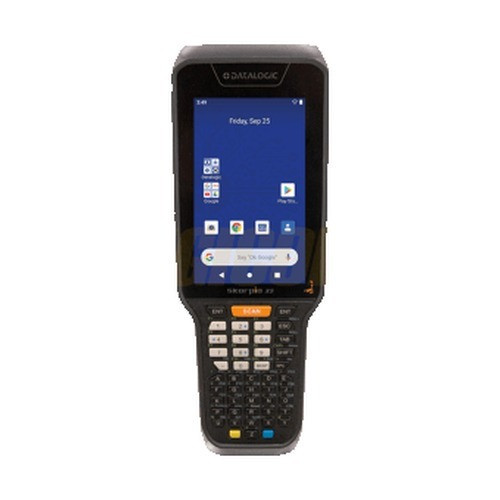
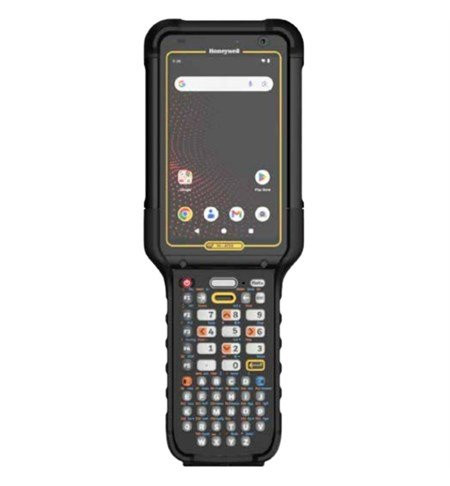
Both the Datalogic Skorpio X5 (943500013) and the Honeywell CK67 (CK67-X1N-58A1A1G) are rugged Android-based handheld mobile computers with pistol-grip or full-touch form factors, 4.3-inch WVGA displays, and IP65-rated enclosures aimed at warehouse, logistics, and field-mobility applications. This comparison evaluates their processing and memory headroom, durability and environmental ratings, and wireless connectivity stack — the three axes that most directly determine fit for enterprise mobile-computing deployments.
In This Guide
- Which device offers more processing and memory headroom for demanding enterprise applications?
- How do the two devices compare on durability ratings and environmental operating range?
- Which device delivers the more capable wireless connectivity stack for high-density or cellular-connected deployments?
- Which should you choose: the 943500013 or the CK67-X1N-58A1A1G?
- Side-by-Side Specs
- FAQ
Which device offers more processing and memory headroom for demanding enterprise applications?
The Honeywell CK67 ships with a Qualcomm QCS4490 octa-core processor clocked at 2.0 GHz paired with 6 GB of RAM and 128 GB of onboard Flash storage. The Datalogic Skorpio X5 uses a Qualcomm SDA660 octa-core at a higher 2.3 GHz clock speed, but carries only 3–4 GB of RAM and 32–64 GB of Flash. Both support microSD expansion for additional storage.
In raw memory terms the CK67 holds a clear advantage: its 6 GB RAM is at minimum 50 percent more than the Skorpio X5's upper-bound 4 GB configuration, and its 128 GB Flash doubles the Skorpio X5's maximum 64 GB. For deployments running multiple concurrent enterprise apps, real-time WMS clients, or large local data caches, the CK67's memory configuration provides more headroom without relying on microSD overflow. The Skorpio X5's higher clock frequency may offset some throughput difference in single-threaded scan-and-commit workflows, but clock speed alone does not substitute for addressable RAM in multitasking environments.
How do the two devices compare on durability ratings and environmental operating range?
Both units carry an IP65 ingress-protection rating, meaning both are fully dust-sealed and protected against low-pressure water jets. The Honeywell CK67 adds an IP68 rating, qualifying it for sustained immersion in water — a meaningful differentiator for environments involving washdown procedures, outdoor rain exposure, or wet cold-storage facilities. The Skorpio X5 specifies IP65 only; no IP68 rating is listed in the provided specifications.
Drop-resistance ratings further separate the two. The CK67 is rated to 2.4 m on an unspecified surface, while the Skorpio X5 is rated to 1.8 m on concrete. The CK67's 2.4 m figure is 33 percent higher than the Skorpio X5's 1.8 m figure. Storage temperature ranges also differ: the CK67 lists −30 to 70 °C for storage versus the Skorpio X5's storage temperature, which is not specified in the provided data. Operating temperature for both units is −20 to 50 °C. The Honeywell CK67 also specifies Gorilla Glass 7 on its display; the Skorpio X5 specifies Gorilla Glass 3.
Which device delivers the more capable wireless connectivity stack for high-density or cellular-connected deployments?
The Honeywell CK67 supports Wi-Fi 6E (802.11 a/b/g/n/ac/ax), Bluetooth 5.2, integrated NFC, 5G Sub-6 GHz and mmWave WWAN, and a Nano SIM plus eSIM slot. The Datalogic Skorpio X5 supports Wi-Fi 5 (802.11 a/b/g/n/ac), Bluetooth 5.0, and NFC; no WWAN or cellular capability is listed in the provided specifications.
The CK67's Wi-Fi 6E support is particularly relevant in high-density RF environments such as large distribution centers where channel congestion on the 2.4 GHz and 5 GHz bands degrades throughput. The 6 GHz band available to Wi-Fi 6E devices reduces interference from legacy equipment. The addition of 5G WWAN with dual SIM/eSIM makes the CK67 viable for yard operations, intermodal facilities, or any deployment requiring cellular fallback without a separate device. The Skorpio X5's 802.11ac and Bluetooth 5.0 are adequate for standard enterprise WLAN environments but offer no cellular path and a narrower wireless standard than the CK67.
Which should you choose: the 943500013 or the CK67-X1N-58A1A1G?
Our take: The CK67-X1N-58A1A1G is the stronger choice when deployment requirements include high-density Wi-Fi 6E environments, cellular (5G) connectivity, or washdown/immersion durability. Concretely: the CK67 carries 6 GB RAM versus the Skorpio X5's 3–4 GB, is drop-rated to 2.4 m versus 1.8 m, and adds IP68 plus 5G WWAN where the Skorpio X5 specifies IP65 and no cellular at all. The Skorpio X5's Qualcomm SDA660 runs at 2.3 GHz versus the CK67's 2.0 GHz, and its 6,200 mAh hot-swappable battery may suit shift-intensive workflows where battery swap without powering down is operationally critical — the CK67's battery swap capability is not specified in the provided data. Platform buyers already standardized on Honeywell ScanPal will also find the CK67 a natural fit. For budget-sensitive deployments on legacy 802.11ac WLAN infrastructure without washdown or cellular needs, the Skorpio X5 remains a viable candidate.
Side-by-Side Comparison
Spec-for-spec, from manufacturer data.
| Specification | Datalogic 943500013 | Honeywell CK67-X1N-58A1A1G |
|---|---|---|
| Processor | Qualcomm SDA660 Octa-Core 2.3 GHz | Qualcomm QCS4490 Octa-Core 2.0 GHz |
| RAM | 3–4 GB | 6 GB |
| Flash Storage | 32–64 GB | 128 GB |
| Expandable Storage | microSD | microSD |
| Display | 4.3 in WVGA (800×480) Gorilla Glass 3 | 4.3 in WVGA (800×480) Gorilla Glass 7 |
| Operating System | Android 10 with GMS | Android with GMS |
| Wi-Fi Standard | 802.11 a/b/g/n/ac (Wi-Fi 5) | 802.11 a/b/g/n/ac/ax (Wi-Fi 6E) |
| Bluetooth | 5.0 | 5.2 |
| WWAN / Cellular | — | 5G Sub-6 GHz / mmWave |
| SIM | — | Nano SIM + eSIM |
| NFC | Yes | Yes |
| IP Rating | IP65 | IP65 / IP68 |
| Drop Rating | 1.8 m (concrete) | 2.4 m |
| Battery Capacity | 6,200 mAh (hot-swappable) | 7,000 mAh Li-Ion |
| Operating Temperature | −20 to 50 °C | −20 to 50 °C |
| Weight | 488 g (17.2 oz) | 516 g (18.2 oz) |
Frequently Asked Questions
Which should you choose: the 943500013 or the CK67-X1N-58A1A1G?
The CK67-X1N-58A1A1G is the stronger choice when deployment requirements include high-density Wi-Fi 6E environments, cellular (5G) connectivity, or washdown/immersion durability. Concretely: the CK67 carries 6 GB RAM versus the Skorpio X5's 3–4 GB, is drop-rated to 2.4 m versus 1.8 m, and adds IP68 plus 5G WWAN where the Skorpio X5 specifies IP65 and no cellular at all. The Skorpio X5's Qualcomm SDA660 runs at 2.3 GHz versus the CK67's 2.0 GHz, and its 6,200 mAh hot-swappable battery may suit shift-intensive workflows where battery swap without powering down is operationally critical — the CK67's battery swap capability is not specified in the provided data. Platform buyers already standardized on Honeywell ScanPal will also find the CK67 a natural fit. For budget-sensitive deployments on legacy 802.11ac WLAN infrastructure without washdown or cellular needs, the Skorpio X5 remains a viable candidate.
Is the Skorpio X5 or the CK67 better for cold-storage and washdown warehouse environments?
Based on the provided specifications, the Honeywell CK67 is better suited. It carries both IP65 and IP68 ratings, qualifying it for water immersion in addition to dust and jet protection. The Datalogic Skorpio X5 is rated IP65 only. The CK67 also lists a storage temperature low of −30 °C versus the Skorpio X5, for which no storage temperature is specified in the provided data.
Does either device support cellular connectivity for use outside a fixed Wi-Fi network?
Only the Honeywell CK67 (CK67-X1N-58A1A1G) supports cellular connectivity. Its specifications list 5G Sub-6 GHz and mmWave WWAN with a Nano SIM and eSIM slot. The Datalogic Skorpio X5 (943500013) specifications do not list any WWAN or cellular capability.
Which device has a longer battery life for extended shifts?
The Honeywell CK67 specifies a 7,000 mAh Li-Ion battery, compared to the Datalogic Skorpio X5's 6,200 mAh battery. The Skorpio X5 specifies its battery as hot-swappable, which allows battery replacement mid-shift without powering down. The CK67's specifications do not indicate whether its battery is hot-swappable. Neither set of provided specifications includes a runtime figure in hours.
More Mobile Computer Comparisons
- Datalogic 944850001 vs Honeywell CK67-X0N-5EC1C2G
- Datalogic 944850001 vs Honeywell CK67-X1N-58A1B1G
- Datalogic 944850001 vs Honeywell CK67-X1N-58A1A1G
- Datalogic 944850001 vs Honeywell CK67-X1N-58A1C1G
- Datalogic 944850001 vs Datalogic 944950001
- Datalogic 944850001 vs Datalogic 944900004
Mobile Computer Buying Guides
Get a Second Opinion on Your Camera Choice
Share your site layout, coverage goals, and budget. Our team will validate the camera selection, flag anything we would change, and recommend products that match the use case.