
Comelit UT1090B vs Comelit 3460HEV: Specification Comparison
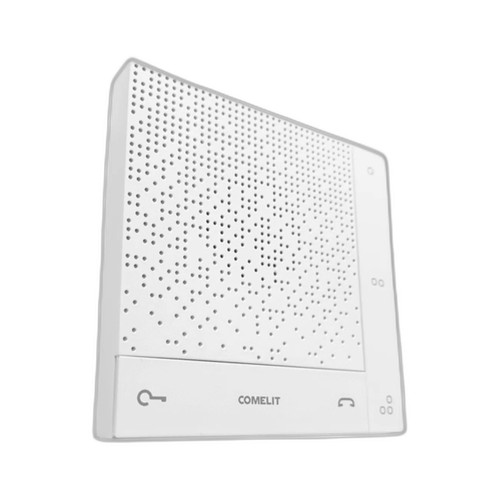
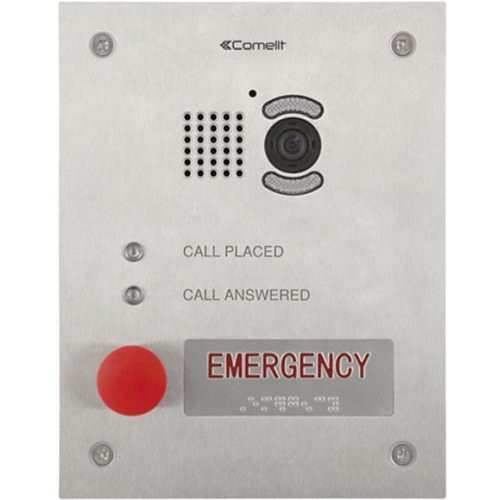
Both units are Comelit wall-mounted video entry panels sharing a 4MP resolution and single-cable PoE deployment model — the core door-station category a security integrator would specify for a building entrance. The UT1090B is positioned as a general-purpose video touch entry panel with a built-in touchscreen and two-way audio, while the 3460HEV is purpose-built for emergency-call applications with accessibility features. Buyers evaluating these two are trading off interactive touchscreen functionality and Simplebus 1 integration against a dedicated emergency-call form factor with ADA-compliant hardware and ViP system compatibility.
In This Guide
- Which panel requires less infrastructure — and can your existing PoE switch power it?
- What interaction model does each panel offer visitors and how is audio handled?
- Which Comelit ecosystem does each panel lock you into, and which application does each serve?
- Which should you choose: the UT1090B or the 3460HEV?
- Side-by-Side Specs
- FAQ
Which panel requires less infrastructure — and can your existing PoE switch power it?
Power delivery is the most immediate infrastructure question for any door station. The UT1090B requires PoE+ (IEEE 802.3at), drawing up to 30W, and specifically calls out the Comelit PSU art. 1595 as the delivery mechanism — meaning your switch or injector must be 802.3at-rated; a standard 802.3af port will not suffice. The 3460HEV operates on standard PoE (IEEE 802.3af), capped at 15.4W, and is compatible with the far broader installed base of 802.3af switches and injectors. For retrofit projects or remote entry points where only a standard PoE run exists, the 3460HEV imposes no additional switch-upgrade cost. New builds specifying managed PoE+ switches throughout will accommodate either unit without differentiation. Neither datasheet specifies cable run length limits or midspan injector requirements beyond the standard cited.
Both panels mount flush to a wall and connect over a single RJ45 drop, eliminating dedicated 24V AC homerun wiring in either case. No additional conduit or power-supply enclosure is referenced for the 3460HEV; the UT1090B explicitly names a Comelit PSU accessory (art. 1595), which may represent an intermediate injector rather than a conventional wall-mount power supply — the datasheet should be consulted to confirm whether that PSU is required in all installations or only where 802.3at switching is unavailable.
What interaction model does each panel offer visitors and how is audio handled?
The UT1090B integrates a 5-inch capacitive touchscreen, making it a self-service interactive terminal: visitors can navigate call directories, trigger actions, or authenticate via the touch surface. Audio is handled by an omnidirectional digital microphone paired with dual loudspeakers, providing full two-way communication. The touchscreen also implies visual feedback — menus, confirmation states, or directory listings — though the specific UI software is not detailed in the provided specs beyond the Comelit Simplebus 1 integration.
The 3460HEV is described as an emergency-call panel, which implies a simplified, single-purpose interaction model: press a button, initiate a call. The specs confirm a Braille-marked button, directly addressing ADA and accessibility requirements that the UT1090B specs do not mention. Audio capability for the 3460HEV is not explicitly broken out in the provided specification set — microphone type, speaker count, and two-way audio are not listed. The 4MP H.264 camera is confirmed, enabling visual caller identification from the monitoring station, but whether the panel itself produces audible feedback to the visitor is not spec-confirmed. Buyers requiring documented two-way audio on both ends should verify against the 3460HEV datasheet before specifying.
Which Comelit ecosystem does each panel lock you into, and which application does each serve?
The UT1090B is specified for the Comelit Simplebus 1 ecosystem and is tagged as compatible with Comelit access control and IP video management platforms. Simplebus 1 is Comelit's traditional two-wire intercom bus, meaning the UT1090B bridges PoE IP delivery with a Simplebus 1 back-end — relevant for sites already running Simplebus 1 door stations or monitors. This positions the UT1090B as a main-entrance interactive panel in a conventional multi-tenant residential or small commercial deployment.
The 3460HEV integrates with the Comelit ViP (Video IP) system, a separate Comelit platform from Simplebus 1. ViP is Comelit's fully IP-native video intercom architecture, and the 3460HEV is explicitly typed as an emergency-call panel — appropriate for elevator cabs, stairwells, parking structures, accessible entrances, or any location where a dedicated distress-call point with ADA-compliant hardware is required by code. The two panels are therefore not direct substitutes: they serve different call types (general visitor vs. emergency/accessibility call), run on different Comelit back-end systems (Simplebus 1 vs. ViP), and cannot be assumed interchangeable within a single Comelit deployment without verifying cross-platform compatibility with Comelit engineering.
Which should you choose: the UT1090B or the 3460HEV?
Our take: The UT1090B is the stronger choice when specifying an interactive visitor-facing entry point on a Comelit Simplebus 1 system with 802.3at PoE infrastructure. It delivers a confirmed 5-inch capacitive touchscreen, documented two-way audio via omnidirectional digital microphone and dual loudspeakers, and 4MP (2560×1440) imaging — versus the 3460HEV, whose audio specifications are not confirmed in the provided data. However, the 3460HEV is the correct specification for emergency-call stations: it runs on the more widely available 802.3af standard (15.4W vs. up to 30W for 802.3at), carries a Braille-marked ADA-accessible button not present on the UT1090B, and integrates with the Comelit ViP IP platform. These are fundamentally different application types on different Comelit back-ends. Cross-shopping them is only appropriate if a buyer is evaluating general-purpose versus emergency-call door stations at the same opening — in which case site code requirements and the installed Comelit platform (Simplebus 1 vs. ViP) are the deciding factors, not image resolution or housing color.
Side-by-Side Comparison
Spec-for-spec, from manufacturer data.
| Specification | Comelit UT1090B | Comelit 3460HEV |
|---|---|---|
| Product Type | Video Touch Entry Panel | Emergency Call Video Entry Panel |
| Form Factor | Entrance panel (flush-mount) | Entry Panel (wall-mount) |
| Camera Resolution | 4MP (2560×1440) | 4MP (2560×1440) |
| Video Compression | — | H.264 |
| Display | 5-inch capacitive touchscreen | — |
| Audio | Omnidirectional digital mic; dual loudspeaker; two-way | — |
| PoE Standard | PoE+ (802.3at) | PoE (802.3af) |
| Power Delivery Note | Via Comelit PSU art. 1595 | Standard 802.3af switch/injector |
| Mount Type | Wall (flush-mounted) | Wall-mounted |
| Housing Color | White | White |
| Housing Material | — | Stainless steel |
| Accessibility Feature | — | Braille-marked button |
| ADA / Emergency Use | — | Yes (emergency call application) |
| Comelit Ecosystem | Simplebus 1 | ViP system |
| System Integration | Comelit access control and IP video management | Comelit video entry and access control systems |
| Warranty | 2-Year | 2-Year |
Frequently Asked Questions
Which should you choose: the UT1090B or the 3460HEV?
The UT1090B is the stronger choice when specifying an interactive visitor-facing entry point on a Comelit Simplebus 1 system with 802.3at PoE infrastructure. It delivers a confirmed 5-inch capacitive touchscreen, documented two-way audio via omnidirectional digital microphone and dual loudspeakers, and 4MP (2560×1440) imaging — versus the 3460HEV, whose audio specifications are not confirmed in the provided data. However, the 3460HEV is the correct specification for emergency-call stations: it runs on the more widely available 802.3af standard (15.4W vs. up to 30W for 802.3at), carries a Braille-marked ADA-accessible button not present on the UT1090B, and integrates with the Comelit ViP IP platform. These are fundamentally different application types on different Comelit back-ends. Cross-shopping them is only appropriate if a buyer is evaluating general-purpose versus emergency-call door stations at the same opening — in which case site code requirements and the installed Comelit platform (Simplebus 1 vs. ViP) are the deciding factors, not image resolution or housing color.
Can I use the UT1090B and the 3460HEV on the same Comelit system?
Not without verifying cross-platform support with Comelit directly. The UT1090B is specified for Comelit Simplebus 1, while the 3460HEV is specified for the Comelit ViP system. These are distinct Comelit back-end architectures. A site running only one platform cannot assume the other panel will register or operate without confirmation from Comelit engineering or the relevant integration documentation.
Will a standard 802.3af PoE switch power both panels?
Only the 3460HEV is confirmed compatible with standard 802.3af (up to 15.4W). The UT1090B requires PoE+ (802.3at, up to 30W) and references a dedicated Comelit PSU (art. 1595). A standard 802.3af switch or injector is not sufficient for the UT1090B. If your infrastructure is 802.3af-only and an upgrade is not planned, the 3460HEV is the only confirmed-compatible option between these two.
Which panel is required for ADA or accessibility compliance at an entry point?
The 3460HEV is the only panel of the two with a confirmed accessibility feature: a Braille-marked button. The UT1090B relies on a capacitive touchscreen, which does not inherently meet tactile accessibility requirements. For entry points where ADA-compliant tactile controls or emergency-call functionality is mandated by code — such as elevator lobbies, accessible entrances, or public corridors — the 3460HEV is the specified solution. Consult the applicable accessibility code and the Comelit 3460HEV datasheet to confirm full compliance for your jurisdiction.
More Intercom Comparisons
- Ubiquiti UA-G3-INTERCOM vs SDC IPDSE
- Ubiquiti UA-G3-INTERCOM vs Comelit TP6842
- Ubiquiti UA-G3-INTERCOM vs ACTi Q950
- Axis 03448-001 vs Axis 02892-001
- Comelit TP6842 vs ACTi Q950
- Comelit TP6842 vs Comelit 3460HEV
Intercom Buying Guides
Get a Second Opinion on Your Camera Choice
Share your site layout, coverage goals, and budget. Our team will validate the camera selection, flag anything we would change, and recommend products that match the use case.