
Comelit 909020113 vs HID 20NKS-00-000000: Specification Comparison
Both the Comelit 909020113 GS3-MT and the HID Signo 20 (20NKS-00-000000) are wall-mount, contactless proximity card readers intended for IP or Wiegand-based access control panels. Each targets credential-reading at a door or controlled entry point, outputs via Wiegand protocol, and is rated for indoor/outdoor use. The primary comparison axes are power and connectivity architecture, credential and protocol breadth, and physical/environmental specifications—the three dimensions that most influence an integrator's panel selection, cabling plan, and site requirements.
In This Guide
- How do the 909020113 and 20NKS-00-000000 differ in power source and connectivity architecture?
- Which reader supports a broader credential and protocol set, and how does each integrate with an existing panel?
- How do the two readers compare on physical dimensions, materials, environmental rating, and user feedback?
- Which should you choose: the 909020113 or the 20NKS-00-000000?
- Side-by-Side Specs
- FAQ
How do the 909020113 and 20NKS-00-000000 differ in power source and connectivity architecture?
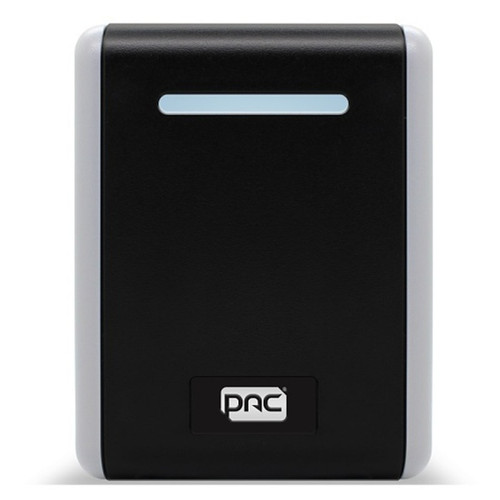
The Comelit 909020113 is powered exclusively via PoE (802.3af), consolidating power and data on a single Ethernet cable run. The spec notes a 13W minimum per port requirement, meaning the supplying switch or midspan must be confirmed against that draw. This eliminates a separate power supply and conduit run but binds the reader to an Ethernet infrastructure and a PoE-capable panel or injector.
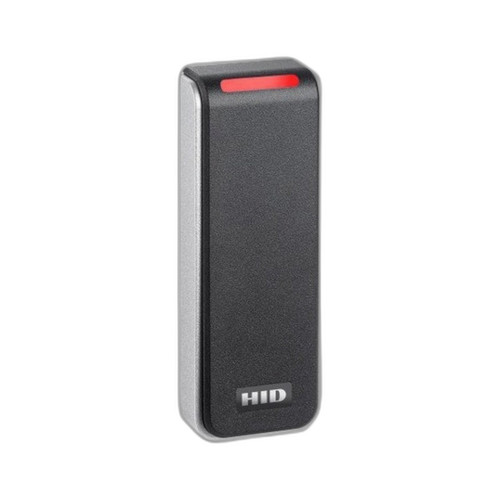
The HID 20NKS-00-000000 is specified as wired with Wiegand output and offers flush-mount terminal block and pigtail wiring options. No PoE capability is listed in the provided specifications. This means the Signo 20 follows a conventional low-voltage wiring topology—dedicated power wires plus Wiegand data lines—compatible with virtually any legacy or current access panel without Ethernet infrastructure at the door. Power source voltage and current draw are not stated in the provided specs.
Which reader supports a broader credential and protocol set, and how does each integrate with an existing panel?
The Comelit 909020113 is documented to read PAC OPS™, KeyPAC, and third-party Wiegand credentials on a single reader, making it explicitly multi-technology for mixed PAC/third-party environments. It outputs via Wiegand protocol and is certified for use with PAC 512 controllers, where the tamper circuit becomes configurable. Its encryption spec references PAC certification but the provided text is truncated; a complete encryption standard cannot be confirmed from the supplied data.
The HID 20NKS-00-000000 reads EM 32-bit proximity cards using ASP10022 / EM 32-bit standard card formats and outputs Wiegand 32-bit MSB. The spec also references NFC/BLE, SEOS profile, Smart profile, and Standard profiles in the NFC/BLE field—however, this appears inconsistent with the reader's designation as a proximity-only model (20NKS); those entries may reflect a family-level spec field and cannot be confirmed as active capabilities on this specific SKU from the data provided. Buyers should verify supported credential types against HID's full Signo 20 datasheet.
How do the two readers compare on physical dimensions, materials, environmental rating, and user feedback?
The Comelit 909020113 measures 89 × 115 × 28 mm (3.50 × 4.53 × 1.10 in.) and weighs 0.290 kg (0.639 lb). It is constructed from UL-rated polycarbonate and carries an IP65 weatherproofing rating, supporting both indoor and outdoor installations without an additional enclosure. The reader includes an audible sounder and red/green LEDs for credential feedback. An integral tamper circuit and mounting plate are included in the package.
The HID 20NKS-00-000000 lists dimensions of 45 × 121.5 × 19.5 inches as recorded in the provided specs—this is almost certainly a data-entry error (likely mm values mis-labeled as inches); buyers must verify actual dimensions from HID's published datasheet before planning a rough-in. The reader provides a red LED in standby, a green flash on a valid read, and an audible buzzer. Its environmental rating is listed as Indoor/Outdoor with no IP ingress rating stated in the provided specs. Material is not specified.
Which should you choose: the 909020113 or the 20NKS-00-000000?
Our take: The 909020113 is the stronger choice when the installation already runs Ethernet to the door and the primary panel is PAC 512 or a Wiegand-compatible IP system. Its PoE (802.3af) architecture eliminates a separate power run, its IP65 UL-rated polycarbonate housing is confirmed for outdoor use, and its multi-technology credential support (PAC OPS™, KeyPAC, third-party Wiegand) reduces future reader swaps in mixed environments. By contrast, the HID 20NKS-00-000000 is the practical choice when the panel infrastructure is conventional low-voltage Wiegand with no Ethernet at the door, or where the installed base is EM 32-bit card stock (ASP10022). Its terminal-block/pigtail wiring is panel-agnostic. However, the Signo 20's dimension data as provided is clearly erroneous and its outdoor IP rating is unconfirmed, so physical fit and weatherproofing must be validated against HID's official datasheet before specification.
Side-by-Side Comparison
Spec-for-spec, from manufacturer data.
| Specification | Comelit 909020113 | HID 20NKS-00-000000 |
|---|---|---|
| Product Class | Proximity Reader (PoE) | Proximity Reader (Wiegand) |
| SKU | 909020113 | 20NKS-00-000000 |
| Power Source | PoE 802.3af (13W min per port) | Wired low-voltage (voltage not specified) |
| Connectivity | Single Ethernet cable (power + data) | Terminal block or pigtail wiring |
| Output Protocol | Wiegand | Wiegand 32-bit MSB |
| Supported Credentials | PAC OPS™, KeyPAC, third-party Wiegand | EM 32-bit (ASP10022) |
| Certified Controller | PAC 512 | Not specified in provided specs |
| Environmental Rating | IP65 | Not stated in provided specs |
| Mounting | Wall (surface) | Wall (surface or flush mount) |
| Dimensions | 89 × 115 × 28 mm | Not confirmed (provided data appears erroneous) |
| Weight | 0.290 kg / 0.639 lb | Not specified |
| Housing Material | UL-rated polycarbonate | Not specified |
| Visual Feedback | Red/Green LEDs | Red LED (standby), Green flash (read) |
| Audible Feedback | Audible sounder | Audible buzzer |
| Tamper Circuit | Integral; configurable with PAC 512 | Not specified in provided specs |
| Warranty | 2-Year | 2-Year |
Frequently Asked Questions
Which should you choose: the 909020113 or the 20NKS-00-000000?
The 909020113 is the stronger choice when the installation already runs Ethernet to the door and the primary panel is PAC 512 or a Wiegand-compatible IP system. Its PoE (802.3af) architecture eliminates a separate power run, its IP65 UL-rated polycarbonate housing is confirmed for outdoor use, and its multi-technology credential support (PAC OPS™, KeyPAC, third-party Wiegand) reduces future reader swaps in mixed environments. By contrast, the HID 20NKS-00-000000 is the practical choice when the panel infrastructure is conventional low-voltage Wiegand with no Ethernet at the door, or where the installed base is EM 32-bit card stock (ASP10022). Its terminal-block/pigtail wiring is panel-agnostic. However, the Signo 20's dimension data as provided is clearly erroneous and its outdoor IP rating is unconfirmed, so physical fit and weatherproofing must be validated against HID's official datasheet before specification.
Can the 909020113 or 20NKS-00-000000 work with my existing Wiegand access panel?
Both readers output Wiegand data. The Comelit 909020113 is explicitly documented as Wiegand protocol compatible and also certified for PAC 512 controllers. The HID 20NKS-00-000000 outputs Wiegand 32-bit MSB and integrates directly with standard access panels per its spec. Either unit can connect to a Wiegand panel input, but the Comelit requires an Ethernet/PoE port at the door rather than a traditional low-voltage cable run.
Is the 909020113 or 20NKS-00-000000 better suited for outdoor installations?
The Comelit 909020113 carries a confirmed IP65 rating and is constructed from UL-rated polycarbonate, making its outdoor suitability verifiable from the provided specifications. The HID 20NKS-00-000000 is listed as Indoor/Outdoor in the provided specs, but no IP ingress protection rating is stated. Until HID's full datasheet is consulted to confirm an IP rating, the 909020113 provides a more verifiable outdoor specification.
Do I need any special credentials or cards for these readers, or will my existing proximity cards work?
The HID 20NKS-00-000000 is specifically designed for EM 32-bit proximity cards (ASP10022 format); if your site uses a different proximity standard, verify compatibility with HID before purchasing. The Comelit 909020113 supports PAC OPS™, KeyPAC, and third-party Wiegand credentials, offering broader compatibility across mixed-card environments. Neither reader's provided specifications confirm support for the other's primary card format, so existing card stock should be validated against each reader's full datasheet.
More Access Control Reader Comparisons
- HID 5365EGP00 vs Comelit 909020116
- HID 5365EGP00 vs Speco Technologies AP500HA
- HID 5365EGP00 vs Comelit 909020113
- HID 5365EGP00 vs HID 20NKS-00-000000
- HID 5365EGP00 vs HID 40NKS-00-000000
- Comelit 909020116 vs Speco Technologies AP500HA
Access Control Reader Buying Guides
Get a Second Opinion on Your Camera Choice
Share your site layout, coverage goals, and budget. Our team will validate the camera selection, flag anything we would change, and recommend products that match the use case.