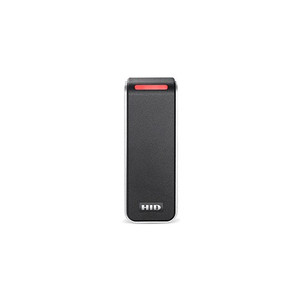
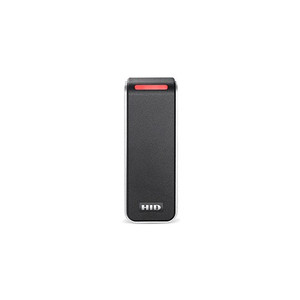
HID 20NKS-00-000000 Signo 20 Proximity Reader
Overview
The HID 20NKS-00-000000 Signo 20 is a proximity card reader purpose-built for standard door access control installations where Wiegand protocol integration is the default. This reader outputs 32-bit MSB (most significant bit) encoded credentials, making it compatible with both legacy access control panels and current commercial door controllers that accept Wiegand input. The black and silver finish integrates into typical office, industrial, and secure facility environments without standing out architecturally.
Key Features
- Wiegand Protocol Output: Native Wiegand communication eliminates the need for protocol converters or special drivers when paired with standard access control panels — direct integration reduces installation time and failure points.
- 32-Bit MSB Encoding: Supports both EM (Electro-Magnetic) standard format and ASP10022 card profiles, the most common credential formats in North American commercial installations. This specification matters because incompatible bit encoding is a common source of failed credentials in mixed-vendor environments.
- Red LED with Green Flash Confirmation: Visual feedback tells cardholders immediately whether a card was read successfully — red indicates standby, green flash confirms acceptance. This prevents repeated tap attempts and reduces user frustration at high-traffic entry points.
- Audible Buzzer Feedback: An audio cue accompanying the green LED provides redundant confirmation in noisy environments or for users with limited vision. Buzzer tone audibility is particularly valuable at loading dock, warehouse, or manufacturing floor access points where visual confirmation alone may be missed.
- Surface Mount Installation: The reader mounts directly to door frame, wall, or pedestal without requiring recessed installation — significant cost savings when retrofitting existing doors or where structural modification is restricted. Surface mount also simplifies future removal or replacement.
- Standard Card Profile Support: Configurable for ASP10022 standard format, the de facto credential standard for proximity systems installed over the past 15+ years. This ensures compatibility with your existing card stock and reader ecosystem without needing a credential migration project.
Integration & Compatibility
The 20NKS-00-000000 integrates via Wiegand output to any access control panel or door controller with a Wiegand input port — including Honeywell, Salto, Lenel, Keri Systems, Genetec OnGuard, and most commercial security platforms. Wiegand is the industry standard for credential transmission at the reader level, so compatibility is nearly universal. No special drivers, middleware, or firmware updates are required on the controller side; the reader simply transmits bit sequences that the panel interprets natively.
Massachusetts-ready certification indicates compliance with state-level security and access control standards, relevant for critical infrastructure, government facilities, and regulated commercial environments operating in that jurisdiction.
When to Choose a Different Model
If your installation requires multi-technology card reading (both proximity and smart card in one reader), or if you need IP-networked credential transmission rather than Wiegand hard-wired protocol, consider a higher-capability reader in the access control reader family. Similarly, if your access control system is entirely cloud-native or mobile credential–based, a standalone proximity reader may not align with your architecture.
Deployment Context
The Signo 20 is the right choice for facilities retrofitting or maintaining standard Wiegand-based access control systems — office buildings, warehouses, manufacturing sites, and secure data centers where the legacy infrastructure is solid and the requirement is simply a reliable credential reader with no feature complexity. It handles high-volume card traffic without latency and requires minimal ongoing maintenance beyond occasional proximity antenna cleaning.
Frequently Asked Questions
Q: Is the HID 20NKS-00-000000 compatible with my existing Wiegand access control panel?
A: Yes. The 20NKS-00-000000 outputs standard Wiegand protocol with 32-bit MSB encoding, compatible with virtually all commercial Wiegand-input panels including Honeywell, Salto, Lenel, Keri Systems, and others. No special converters or drivers are required.
Q: What card formats does the Signo 20 support?
A: The reader is configured for ASP10022 standard card format and EM 32-bit credential encoding, the most common proximity standards in North American commercial access control.
Q: Can I use the 20NKS-00-000000 in an outdoor environment?
A: The Signo 20 is designed for standard indoor or covered outdoor installations. For fully exposed outdoor door entry, verify the environmental housing and weather protection of your specific installation setup — the reader itself does not include weather sealing specifications.
Q: Does the HID 20NKS-00-000000 work with mobile credentials or cloud-based access systems?
A: No. The 20NKS-00-000000 is a traditional proximity reader that outputs Wiegand protocol to a local access control panel. Mobile and cloud-native credential systems require networked readers with their own IP connectivity and application-level authentication.
Q: What power supply does the Signo 20 require?
A: Power specifications are not detailed in the available documentation. Consult the product datasheet or contact the manufacturer for power input requirements (typically 12VDC or derived from the access control panel's reader power output).
Q: Is the 20NKS-00-000000 NDAA Section 889 compliant?
A: Compliance certifications beyond Massachusetts-ready certification are not stated in the current product documentation. Verify with HID or your integrator if NDAA compliance is a project requirement.
Ted PerryPerspective based on aggregated IP Security Depot and affiliated engineering team experience.
The HID 20NKS-00-000000 is purpose-built for facilities that have already standardized on Wiegand protocol and simply need a reliable, no-frills proximity reader. This reader is not a platform; it is a workhorse. The 32-bit MSB encoding and ASP10022 card format support ensure you can deploy it alongside any existing proximity card stock without migration — a real advantage in multi-building campuses or facilities managed by different teams.
Technical Highlights:
- Wiegand Output & 32-Bit MSB: Direct compatibility with legacy and modern access control panels eliminates the need for protocol translation hardware. This reduces electrical points of failure and keeps wiring runs simple — Wiegand is a two-wire signaling protocol, so installation labor is minimal compared to networked readers requiring full Ethernet infrastructure.
- ASP10022 & EM Format Support: The reader works with standard proximity cards deployed across North America for the past 15+ years. No credential replacement campaign required — a significant cost avoidance in a mixed-vendor environment.
- Dual Feedback (LED + Buzzer): Red/green LED combined with audible confirmation means users get immediate, unambiguous feedback. In high-traffic warehouse or manufacturing entry points, this redundancy prevents the confusion of silent failures or missed visual cues.
Deployment Considerations:
- Wiegand is hardwired, not networked — you cannot monitor reader health, credential attempts, or tamper alerts in real-time through a central platform unless your access control panel itself is networked and exposes those logs. If real-time reader diagnostics and remote event streaming are critical, specify a networked (IP) proximity reader instead.
- The 20NKS-00-000000 has no built-in encryption or credential validation — all security decisions live on the access control panel side. Ensure your panel's reader input validation and firmware are current.
Position this reader for retrofit and maintenance scenarios in facilities committed to Wiegand-based architectures: office buildings, warehouses, manufacturing plants, and data centers where the backbone access control system is solid and the task is simply replacing or adding readers without architectural redesign.