
CipherLab A2564S8BKUTS3 vs CipherLab A2500SCBSU001: Specification Comparison
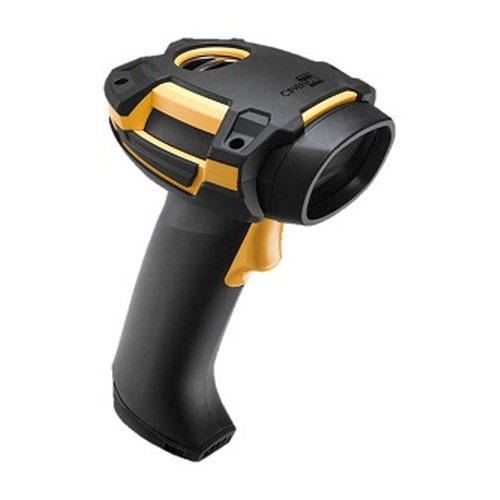
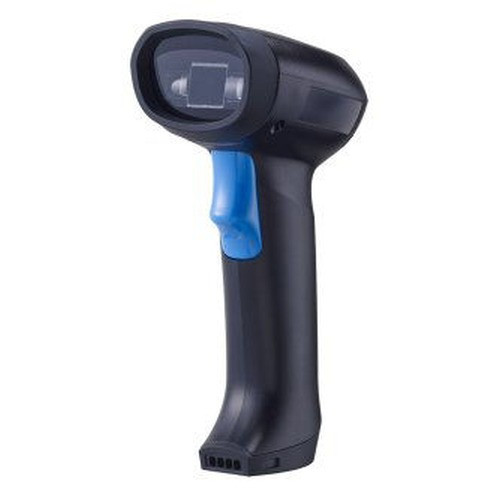
Both the CipherLab A2564S8BKUTS3 and A2500SCBSU001 are handheld 1D linear imager barcode scanners from the same manufacturer, sharing Bluetooth and USB connectivity, IP65 environmental protection, and a 578-scan-per-second engine. Buyers evaluating these two models are looking at near-identical form factors and symbology support for retail, logistics, or light industrial environments. This comparison examines the three most decision-relevant axes: scan engine performance and range, connectivity and durability, and symbology breadth and warranty coverage.
In This Guide
- How do the scan engine speed, range, and decode depth compare between the A2564S8BKUTS3 and A2500SCBSU001?
- How do the A2564S8BKUTS3 and A2500SCBSU001 compare on connectivity options and environmental durability?
- Do the A2564S8BKUTS3 and A2500SCBSU001 differ in supported symbologies or warranty terms?
- Which should you choose: the A2564S8BKUTS3 or the A2500SCBSU001?
- Side-by-Side Specs
- FAQ
How do the scan engine speed, range, and decode depth compare between the A2564S8BKUTS3 and A2500SCBSU001?
Both scanners share the same 1D linear imager engine rated at 578 scans per second, so neither model offers a throughput advantage over the other in terms of raw scan rate.
On scan range, the A2564S8BKUTS3 spec lists Code 39 coverage from 3–60 cm and UPC-A up to 38 cm at 13 mil, with a minimum print contrast of 15%. The A2500SCBSU001 spec likewise lists Code 39 from 3–60 cm and UPC-A from 0.5–38 cm, also at 15% minimum print contrast. The A2500SCBSU001 spec explicitly states a 0.5 cm near-range floor for UPC-A, while the A2564S8BKUTS3 spec does not provide a UPC-A near-distance figure.
Both units support auto-sense and continuous scan modes. Neither spec discloses resolution (mil), field of view angle, or light source type beyond 'linear imager,' so further optical differentiation cannot be made from the provided data.
How do the A2564S8BKUTS3 and A2500SCBSU001 compare on connectivity options and environmental durability?
Both scanners offer dual connectivity: Bluetooth wireless and wired USB. The A2564S8BKUTS3 spec lists 'Bluetooth; USB' without specifying Bluetooth version, profile (HID, SPP), or USB interface type (HID, CDC). The A2500SCBSU001 spec similarly lists 'USB cable included; Bluetooth wireless' with no Bluetooth version or USB class detail provided in the supplied data.
Environmental protection is identical at IP65 for both models, meaning both are rated fully dust-tight and protected against low-pressure water jets — appropriate for retail counters, warehouse floors, or light outdoor use. Neither spec discloses drop-test ratings, operating temperature ranges, or humidity tolerances, so no advantage can be assigned on those dimensions.
Both are handheld form factors. Color options listed are identical: Black and Register White for both models.
Do the A2564S8BKUTS3 and A2500SCBSU001 differ in supported symbologies or warranty terms?
The symbology lists for both scanners are functionally identical as provided: Codabar, Code 39, Code 93, Code 128, GS1 DataBar (RSS), Industrial 2 of 5, Interleave 2 of 5, ISBT-128, Italian Pharmacode, French Pharmacode, Matrix 2 of 5, MSI, Plessey, Telepen, UPC/EAN/GS1-128, and Code 11. Both are limited to 1D linear symbologies with no 2D (QR, Data Matrix, PDF417) decode capability noted in either spec.
Warranty coverage is identical at 2 years for both models. Neither spec discloses advance-replacement, depot, or on-site service tiers.
The A2500SCBSU001 marketing notes 'reliable performance in direct sunlight and challenging lighting,' but no measurable ambient light immunity figure (lux rating) is provided in the spec data for either unit, so this claim cannot be independently quantified from the supplied specifications.
Which should you choose: the A2564S8BKUTS3 or the A2500SCBSU001?
Our take: The A2564S8BKUTS3 and A2500SCBSU001 are functionally near-identical scanners: both deliver 578 scans per second, IP65 protection, Bluetooth plus USB connectivity, a 3–60 cm Code 39 range, 15% minimum print contrast, and a 16-symbology 1D decode set under a 2-year warranty. The only measurable spec delta found in the provided data is the UPC-A near-range floor: the A2500SCBSU001 specifies 0.5 cm minimum, while the A2564S8BKUTS3 does not state a UPC-A near-range figure. No differences in Bluetooth version, USB class, drop rating, operating temperature, or batch-scanning features are disclosed. Buyers whose primary criterion is confirmed UPC-A close-range decode distance may favor the A2500SCBSU001 for that documented 0.5 cm floor. In all other spec-verifiable respects, selection should be driven by SKU availability, kit contents (the A2500SCBSU001 spec explicitly notes a USB cable included), and negotiated pricing.
Side-by-Side Comparison
Spec-for-spec, from manufacturer data.
| Specification | CipherLab A2564S8BKUTS3 | CipherLab A2500SCBSU001 |
|---|---|---|
| Product Type | 1D Linear Imager Barcode Scanner | 1D Linear Imager Barcode Scanner |
| Form Factor | Handheld | Handheld |
| Scan Engine | 1D Linear Imager | 1D Linear Imager |
| Scan Rate | 578 scans/second | 578 scans/second |
| Code 39 Scan Range | 3–60 cm (1.2–23.6 in) | 3–60 cm |
| UPC-A Scan Range | Up to 38 cm at 13 mil (near floor not stated) | 0.5–38 cm |
| Min Print Contrast | 15% | 15% |
| Scan Modes | Auto-sense and continuous | Auto-sense and continuous |
| Connectivity | Bluetooth + USB | Bluetooth + USB (cable included) |
| Bluetooth Version | Not specified | Not specified |
| IP Rating | IP65 | IP65 |
| Color Options | Black, Register White | Black, Register White |
| 2D Symbology Support | Not supported (1D only) | Not supported (1D only) |
| Symbology Count | 16 (1D) | 16 (1D) |
| ISBT-128 / Pharmacode | Yes (Italian + French) | Yes (Italian + French) |
| Warranty | 2-Year | 2-Year |
Frequently Asked Questions
Which should you choose: the A2564S8BKUTS3 or the A2500SCBSU001?
The A2564S8BKUTS3 and A2500SCBSU001 are functionally near-identical scanners: both deliver 578 scans per second, IP65 protection, Bluetooth plus USB connectivity, a 3–60 cm Code 39 range, 15% minimum print contrast, and a 16-symbology 1D decode set under a 2-year warranty. The only measurable spec delta found in the provided data is the UPC-A near-range floor: the A2500SCBSU001 specifies 0.5 cm minimum, while the A2564S8BKUTS3 does not state a UPC-A near-range figure. No differences in Bluetooth version, USB class, drop rating, operating temperature, or batch-scanning features are disclosed. Buyers whose primary criterion is confirmed UPC-A close-range decode distance may favor the A2500SCBSU001 for that documented 0.5 cm floor. In all other spec-verifiable respects, selection should be driven by SKU availability, kit contents (the A2500SCBSU001 spec explicitly notes a USB cable included), and negotiated pricing.
Is the A2564S8BKUTS3 or A2500SCBSU001 better for scanning barcodes at very close range?
Based on the provided specifications, the A2500SCBSU001 explicitly lists a UPC-A minimum scan distance of 0.5 cm, giving buyers a confirmed close-range floor. The A2564S8BKUTS3 spec does not state a UPC-A near-range figure, only a Code 39 minimum of 3 cm. If confirmed close-range UPC-A performance is critical, the A2500SCBSU001 has the documented advantage. For Code 39, both models share the same 3 cm minimum.
Do both the A2564S8BKUTS3 and A2500SCBSU001 support Bluetooth, and is there any difference in wireless capability?
Both models list Bluetooth as a supported connectivity option alongside wired USB. However, neither specification discloses the Bluetooth version, supported profiles (such as HID or SPP), or wireless range. No difference in Bluetooth capability can be confirmed from the provided spec data; further detail would need to come from CipherLab's official datasheets or product documentation.
Which scanner is better suited for healthcare or pharmacy environments requiring ISBT-128 or Pharmacode support?
Both the A2564S8BKUTS3 and A2500SCBSU001 explicitly list ISBT-128, Italian Pharmacode, and French Pharmacode in their identical 16-symbology decode sets. Neither model has an advantage over the other for healthcare or pharmacy symbology requirements based on the provided specifications. Both also carry IP65 ratings, supporting the hygiene and splash-resistance demands common in those environments.
More Barcode Scanner Comparisons
- Zebra DS8108 vs Datalogic GBT4600-HC-BTK1-HP
- Zebra DS8108 vs Datalogic GD4590-HCK10-HDR-B
- Zebra DS8108 vs Honeywell 1202G-2USB-5BF-N
- Zebra DS8108 vs Datalogic GBT4500-BK-BTK1DRA
- Zebra DS8108 vs Zebra DS3608
- Zebra DS8108 vs Zebra LI3608
Barcode Scanner Buying Guides
Get a Second Opinion on Your Camera Choice
Share your site layout, coverage goals, and budget. Our team will validate the camera selection, flag anything we would change, and recommend products that match the use case.