
CipherLab A2564S8BKUTS3 vs CipherLab A2200NBUN0001: Specification Comparison
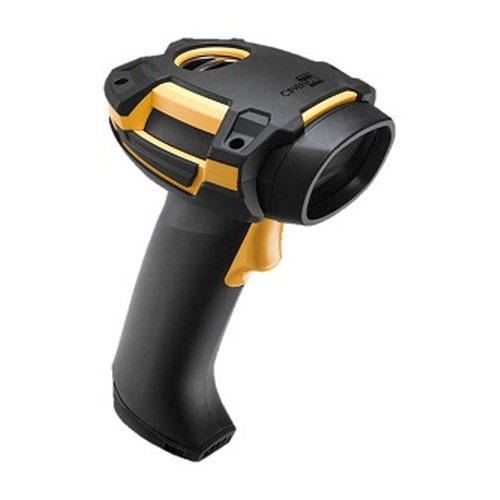
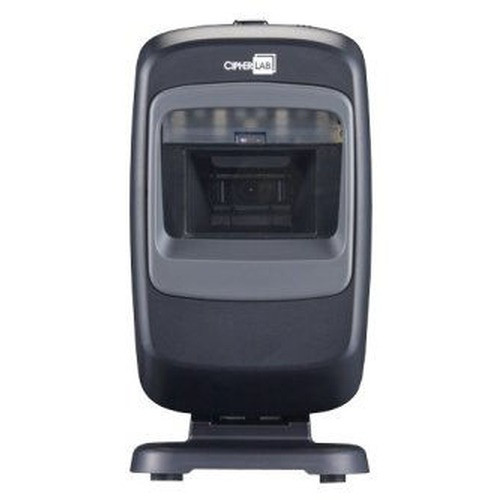
Both the CipherLab A2564S8BKUTS3 and the A2200NBUN0001 are handheld barcode scanners from the same manufacturer, but they serve distinct scanning tiers. The A2564S8BKUTS3 is a 1D linear imager targeting environments where only traditional barcodes are present, while the A2200NBUN0001 is a 2D imager capable of reading both 1D and 2D symbologies including QR Code, Data Matrix, and PDF417. Buyers choosing between them are weighing 1D-only range and IP65 ruggedness against 2D versatility and a different durability profile.
In This Guide
- Which scanner handles the symbologies and scan performance your operation requires?
- How far can each scanner read, and what connection options does each support?
- Which scanner is built to survive harsher physical environments?
- Which should you choose: the A2564S8BKUTS3 or the A2200NBUN0001?
- Side-by-Side Specs
- FAQ
Which scanner handles the symbologies and scan performance your operation requires?
The A2564S8BKUTS3 uses a 1D linear imager engine rated at 578 scans per second. It decodes a broad set of 1D symbologies: Codabar, Code 39, Code 93, Code 128, GS1 DataBar (RSS), Industrial 2 of 5, Interleave 2 of 5, ISBT-128, Italian Pharmacode, French Pharmacode, Matrix 2 of 5, MSI, Plessey, Telepen, UPC/EAN/GS1-128, and Code 11. It cannot read any 2D symbologies. Scan modes include auto-sense and continuous.
The A2200NBUN0001 uses a 2D imager engine operating in presentation mode. It reads the same core 1D set (with the addition of Chinese25) plus 2D symbologies: QR Code, Data Matrix, PDF417, Aztec, MaxiCode, MicroPDF417, Micro QR Code, HanXin, and Composite Codes. No scan rate in scans-per-second is provided in the supplied specifications for the A2200NBUN0001.
For workflows limited to traditional 1D barcodes, both units cover the standard symbology set. Any operation that now or in the future requires QR, Data Matrix, or PDF417 scanning must use the A2200NBUN0001, as the A2564S8BKUTS3 is physically incapable of decoding 2D codes.
How far can each scanner read, and what connection options does each support?
The A2564S8BKUTS3 specifies concrete scan range data: Code 39 at 20 mil reads from 1.5 cm to 60 cm (0.6–23.6 in), and UPC-A at 13 mil reads up to 38 cm. It supports dual connectivity — wired USB and Bluetooth — giving operators the option of a wireless, cable-free workflow alongside a tethered fallback.
The A2200NBUN0001 is listed as a USB handheld scanner. No Bluetooth or wireless connectivity is indicated in the supplied specifications. No scan range distances in centimeters or inches are provided for any symbology.
For range-critical or wireless applications — such as scanning items on a shelf or conveyor where the operator cannot be tethered — the A2564S8BKUTS3 provides documented range figures and a Bluetooth option. The A2200NBUN0001's connectivity is USB-only per the available specs, with no published range data to compare.
Which scanner is built to survive harsher physical environments?
The A2564S8BKUTS3 carries an IP65 rating, meaning it is fully dust-tight and protected against low-pressure water jets from any direction. No drop specification is provided in the supplied specifications.
The A2200NBUN0001 carries an IP52 rating — protected against limited dust ingress and dripping water only — a meaningfully lower environmental seal than IP65. However, it does specify a drop durability rating of 1.5 m (4.9 ft) multiple drops onto concrete. Storage temperature range is listed as -40°C to 60°C (-40°F to 140°F). Weight is listed at 320 g / 11 oz (or 380 g / 13 oz — two values are present in the spec data without further qualification). Physical dimensions are 83 × 80 × 150 mm (3.3 × 3.2 × 5.9 in). Input voltage is 5 V, 2 A max.
In wet or washdown-adjacent environments, the A2564S8BKUTS3's IP65 rating offers superior ingress protection. In environments where drop events are the primary concern, the A2200NBUN0001 provides a documented 1.5 m concrete-drop rating that the A2564S8BKUTS3 does not state. Buyers should weigh which hazard — liquid/dust exposure versus impact — is more prevalent in their deployment.
Which should you choose: the A2564S8BKUTS3 or the A2200NBUN0001?
Our take: The A2564S8BKUTS3 is the stronger choice when operations are strictly 1D, require wireless flexibility, or face liquid and dust exposure. It delivers a documented 578 scans/second, Bluetooth connectivity absent from the A2200NBUN0001, a 60 cm Code 39 read range with published distance data, and an IP65 rating versus the A2200NBUN0001's IP52. Conversely, the A2200NBUN0001 is the necessary choice when any 2D symbology — QR Code, Data Matrix, PDF417, Aztec, or MaxiCode — must be decoded, and it adds a specified 1.5 m concrete drop rating not stated for the A2564S8BKUTS3. Both carry a 2-year warranty and share the same core 1D symbology library. Deployments in retail, healthcare, or logistics where 2D codes are present or anticipated require the A2200NBUN0001; strictly 1D environments with wireless or wet-area needs favor the A2564S8BKUTS3.
Side-by-Side Comparison
Spec-for-spec, from manufacturer data.
| Specification | CipherLab A2564S8BKUTS3 | CipherLab A2200NBUN0001 |
|---|---|---|
| SKU | A2564S8BKUTS3 | A2200NBUN0001 |
| Scan Engine | 1D Linear Imager | 2D Imager |
| 2D Symbology Support | None | QR Code, Data Matrix, PDF417, Aztec, MaxiCode, MicroPDF417, Micro QR, HanXin, Composite |
| 1D Symbology Support | Codabar, Code 39, Code 93, Code 128, GS1 DataBar, I 2of5, Ind. 2of5, ISBT-128, UPC/EAN/GS1-128, MSI, Plessey, Telepen, Code 11, Pharmacodes, Matrix 2of5 | Same as A + Chinese25 |
| Scan Rate | 578 scans/second | — |
| Scan Range (Code 39, 20 mil) | 1.5–60 cm (0.6–23.6 in) | — |
| Scan Range (UPC-A, 13 mil) | Up to 38 cm | — |
| Scan Modes | Auto-sense; Continuous | Presentation mode |
| Connectivity | USB; Bluetooth | USB only |
| IP Rating | IP65 | IP52 |
| Drop Specification | — | 1.5 m multiple drops onto concrete |
| Form Factor | Handheld | Handheld |
| Color Options | Black; Register White | Black |
| Dimensions | — | 83 × 80 × 150 mm (3.3 × 3.2 × 5.9 in) |
| Weight | — | 320 g / 11 oz (also listed as 380 g / 13 oz) |
| Warranty | 2-Year | 2-Year |
Frequently Asked Questions
Which should you choose: the A2564S8BKUTS3 or the A2200NBUN0001?
The A2564S8BKUTS3 is the stronger choice when operations are strictly 1D, require wireless flexibility, or face liquid and dust exposure. It delivers a documented 578 scans/second, Bluetooth connectivity absent from the A2200NBUN0001, a 60 cm Code 39 read range with published distance data, and an IP65 rating versus the A2200NBUN0001's IP52. Conversely, the A2200NBUN0001 is the necessary choice when any 2D symbology — QR Code, Data Matrix, PDF417, Aztec, or MaxiCode — must be decoded, and it adds a specified 1.5 m concrete drop rating not stated for the A2564S8BKUTS3. Both carry a 2-year warranty and share the same core 1D symbology library. Deployments in retail, healthcare, or logistics where 2D codes are present or anticipated require the A2200NBUN0001; strictly 1D environments with wireless or wet-area needs favor the A2564S8BKUTS3.
Can the A2564S8BKUTS3 read QR codes or other 2D barcodes?
No. The A2564S8BKUTS3 uses a 1D linear imager engine and is limited to 1D symbologies as listed in the specifications. It cannot decode QR Code, Data Matrix, PDF417, Aztec, MaxiCode, or any other 2D barcode. If your operation requires 2D scanning, the A2200NBUN0001 is the appropriate choice.
Is the A2564S8BKUTS3 or the A2200NBUN0001 better suited to a mobile or wireless workflow?
The A2564S8BKUTS3 supports both USB (wired) and Bluetooth connectivity, enabling a fully wireless setup. The A2200NBUN0001 is specified as a USB scanner only — no Bluetooth or other wireless interface is listed in the provided specifications. For mobile or untethered use, the A2564S8BKUTS3 is the only option of these two that explicitly supports wireless connectivity.
Which scanner holds up better in a demanding physical environment — drops versus dust and water?
It depends on the hazard. The A2564S8BKUTS3 has an IP65 rating (fully dust-tight, jet-water resistant), but no drop specification is provided. The A2200NBUN0001 carries an IP52 rating (limited dust and drip protection only) but specifies survival of multiple 1.5 m drops onto concrete. For wet or dusty environments, the A2564S8BKUTS3's IP65 is superior. For impact-heavy environments, the A2200NBUN0001's documented drop rating is the differentiator.
More Barcode Scanner Comparisons
- Zebra DS8108 vs Datalogic GBT4600-HC-BTK1-HP
- Zebra DS8108 vs Datalogic GD4590-HCK10-HDR-B
- Zebra DS8108 vs Honeywell 1202G-2USB-5BF-N
- Zebra DS8108 vs Datalogic GBT4500-BK-BTK1DRA
- Zebra DS8108 vs Zebra DS3608
- Zebra DS8108 vs Zebra LI3608
Barcode Scanner Buying Guides
Get a Second Opinion on Your Camera Choice
Share your site layout, coverage goals, and budget. Our team will validate the camera selection, flag anything we would change, and recommend products that match the use case.