
CipherLab A2560SCBKU0S1 vs CipherLab A2200NBUN0001: Specification Comparison
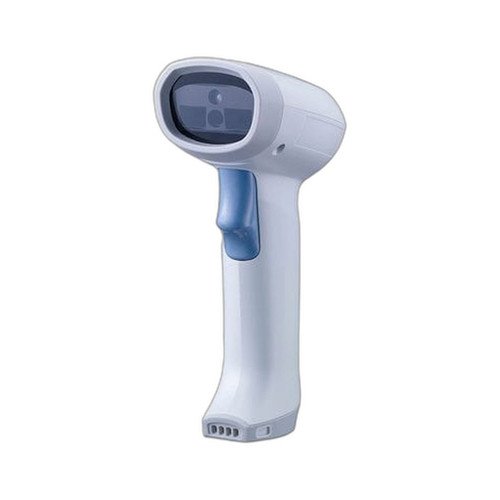
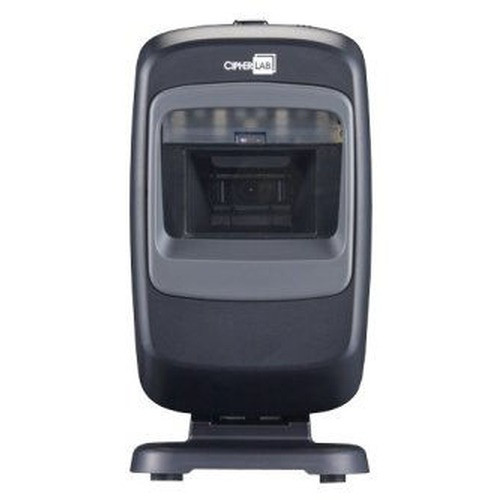
The CipherLab A2560SCBKU0S1 and A2200NBUN0001 are both USB handheld barcode scanners from the same manufacturer, targeting point-of-sale, warehouse, and light industrial data-capture environments. The core distinction is scan engine generation: the A2560 uses a 1D linear imager, while the A2200 uses a 2D area-imaging engine capable of reading QR codes, Data Matrix, PDF417, and other 2D symbologies in addition to all standard 1D codes. Buyers cross-shopping these two are typically deciding whether 1D-only throughput or 2D symbology breadth better fits their workflow.
In This Guide
- Which scanner reads the barcodes your operation actually uses — 1D only or full 2D?
- How do scan speed and trigger/presentation modes differ between the two units?
- Which unit offers stronger environmental and drop protection for the intended deployment site?
- Which should you choose: the A2560SCBKU0S1 or the A2200NBUN0001?
- Side-by-Side Specs
- FAQ
Which scanner reads the barcodes your operation actually uses — 1D only or full 2D?
The A2560SCBKU0S1 is a dedicated 1D linear imager. Its supported symbologies are exclusively 1D: Code 39, Code 93, Code 128, UPC/EAN/GS1-128, Codabar, GS1 DataBar (RSS), Industrial 2 of 5, Interleave 2 of 5, ISBT-128, Italian Pharmacode, French Pharmacode, Matrix 2 of 5, MSI, Plessey, Telepen, and Code 11. It cannot read QR codes, Data Matrix, PDF417, Aztec, or any other 2D symbology. Its scan range for Code 39 is specified at 3–60 cm (1.2–23.6 in), giving buyers a concrete depth-of-field reference for standard warehouse labels.
The A2200NBUN0001 uses a 2D area-imaging engine that reads all of the 1D symbologies above (including Chinese25, which is absent from the A2560's list) plus 2D symbologies: QR Code, Micro QR Code, Data Matrix, PDF417, MicroPDF417, Aztec, MaxiCode, HanXin, and Composite Codes. No scan range in centimeters is provided in the available specs for the A2200. Buyers whose workflows already involve or anticipate QR codes, mobile ticket scanning, or GS1-2D labels must select the A2200; those running purely linear-barcode environments may not need this capability.
How do scan speed and trigger/presentation modes differ between the two units?
The A2560SCBKU0S1 specifies a scan rate of 578 scans per second and supports both auto-sense and continuous scan modes. This high sustained rate suits high-volume pick-pack or checkout lanes where operators sweep items across the scanner without deliberate aiming. The auto-sense mode allows hands-free operation within its 3–60 cm Code 39 window.
The A2200NBUN0001 is documented as operating in presentation mode — it activates when an object enters the scan field. No numeric scan rate (scans per second) is provided in the available specifications for the A2200. Buyers evaluating throughput capacity for high-velocity scanning cannot make a direct numeric comparison on scan rate between the two models; the A2560 has a published figure of 578 scans/sec while the A2200 does not.
Which unit offers stronger environmental and drop protection for the intended deployment site?
The A2560SCBKU0S1 carries an IP65 rating, meaning it is fully dust-tight and protected against low-pressure water jets from any direction. No drop specification is stated in the available specs for the A2560. IP65 makes it suitable for environments where liquid splashes, washdowns, or heavy particulate are present — food distribution, light manufacturing, or outdoor receiving docks.
The A2200NBUN0001 carries an IP52 rating, which provides protection against dust ingress sufficient to prevent harmful deposits and against water dripping vertically or at up to 15 degrees. IP52 is a lower environmental sealing rating than IP65. However, the A2200 adds a drop specification absent from the A2560: it is rated for multiple drops onto concrete from 1.5 m (4.9 ft). Its storage temperature range is specified at -40°C to 60°C (-40°F to 140°F); no storage temperature is stated for the A2560. The A2200 also provides physical dimensions (83 × 80 × 150 mm) and weight (320 g / 11 oz); neither dimension nor weight is specified for the A2560 in the available data.
Which should you choose: the A2560SCBKU0S1 or the A2200NBUN0001?
Our take: The A2560SCBKU0S1 is the stronger choice when the deployment reads only linear 1D barcodes and requires maximum environmental sealing, while the A2200NBUN0001 is the necessary choice when 2D symbologies such as QR Code, Data Matrix, or PDF417 must be read. Three concrete spec deltas define the trade-off: (1) scan engine — the A2560 reads 1D only; the A2200 adds QR, Data Matrix, PDF417, Aztec, MaxiCode, and more; (2) IP rating — the A2560's IP65 outseals the A2200's IP52 against dust and liquid jets; (3) drop rating — the A2200 specifies 1.5 m multiple-drop protection onto concrete; the A2560 provides no drop spec. Scan rate favors the A2560 at a published 578 scans/sec; the A2200 publishes no equivalent figure. Deploy the A2560 in high-throughput linear-barcode warehouses with wet or dusty conditions; deploy the A2200 wherever 2D code formats are present or anticipated.
Side-by-Side Comparison
Spec-for-spec, from manufacturer data.
| Specification | CipherLab A2560SCBKU0S1 | CipherLab A2200NBUN0001 |
|---|---|---|
| SKU | A2560SCBKU0S1 | A2200NBUN0001 |
| Scan Engine | 1D Linear Imager | 2D Area Imager |
| 2D Symbologies | — | QR Code, Data Matrix, PDF417, Aztec, MaxiCode, Micro QR, MicroPDF417, HanXin, Composite |
| 1D Symbologies | Code 39, 93, 128, UPC/EAN/GS1-128, Codabar, GS1 DataBar, I 2of5, Ind 2of5, ISBT-128, MSI, Plessey, Telepen, Code 11, Pharmacodes, Matrix 2of5 | Same as A2560 plus Chinese25 |
| Scan Rate | 578 scans/sec | — |
| Scan Range (Code 39) | 3–60 cm (1.2–23.6 in) | — |
| IP Rating | IP65 | IP52 |
| Drop Specification | — | 1.5 m multiple drops onto concrete |
| Scan / Trigger Mode | Auto-sense and continuous | Presentation mode |
| Connectivity | Bluetooth + USB kit included | USB |
| Color | Black, Register White | Black |
| Dimensions | — | 83 x 80 x 150 mm (3.3 x 3.2 x 5.9 in) |
| Weight | — | 320 g / 11 oz (380 g / 13 oz) |
| Storage Temperature | — | -40°C to 60°C (-40°F to 140°F) |
| Input Voltage | — | 5V 2A Max |
| Warranty | 2-Year | 2-Year |
Frequently Asked Questions
Which should you choose: the A2560SCBKU0S1 or the A2200NBUN0001?
The A2560SCBKU0S1 is the stronger choice when the deployment reads only linear 1D barcodes and requires maximum environmental sealing, while the A2200NBUN0001 is the necessary choice when 2D symbologies such as QR Code, Data Matrix, or PDF417 must be read. Three concrete spec deltas define the trade-off: (1) scan engine — the A2560 reads 1D only; the A2200 adds QR, Data Matrix, PDF417, Aztec, MaxiCode, and more; (2) IP rating — the A2560's IP65 outseals the A2200's IP52 against dust and liquid jets; (3) drop rating — the A2200 specifies 1.5 m multiple-drop protection onto concrete; the A2560 provides no drop spec. Scan rate favors the A2560 at a published 578 scans/sec; the A2200 publishes no equivalent figure. Deploy the A2560 in high-throughput linear-barcode warehouses with wet or dusty conditions; deploy the A2200 wherever 2D code formats are present or anticipated.
Can the A2560SCBKU0S1 read QR codes or Data Matrix labels?
No. The A2560SCBKU0S1 uses a 1D linear imager and its documented symbology list includes only 1D codes — Code 39, Code 128, UPC/EAN, Codabar, and related linear formats. It cannot read QR codes, Data Matrix, PDF417, Aztec, or any 2D symbology. If your operation uses any 2D barcodes, the A2200NBUN0001 with its 2D area-imaging engine is required.
Which scanner is better protected against water and dust on a warehouse or production floor?
The A2560SCBKU0S1 carries IP65 certification — fully dust-tight and resistant to low-pressure water jets from any direction. The A2200NBUN0001 is rated IP52, which offers limited dust protection and guards only against vertically dripping water. For wet or heavily particulate environments, the A2560's IP65 rating provides meaningfully stronger protection.
Is the A2200NBUN0001 more durable overall despite its lower IP rating?
It depends on the hazard. The A2200 specifies a 1.5 m multiple-drop-onto-concrete rating, which the A2560 does not document, so the A2200 has a quantified drop-durability advantage. However, the A2560's IP65 rating exceeds the A2200's IP52 for ingress protection against dust and liquids. Neither model is comprehensively superior in all durability dimensions; the relevant hazard profile — drops versus liquid/dust exposure — should drive the selection.
More Barcode Scanner Comparisons
- Zebra DS8108 vs Datalogic GBT4600-HC-BTK1-HP
- Zebra DS8108 vs Datalogic GD4590-HCK10-HDR-B
- Zebra DS8108 vs Honeywell 1202G-2USB-5BF-N
- Zebra DS8108 vs Datalogic GBT4500-BK-BTK1DRA
- Zebra DS8108 vs Zebra DS3608
- Zebra DS8108 vs Zebra LI3608
Barcode Scanner Buying Guides
Get a Second Opinion on Your Camera Choice
Share your site layout, coverage goals, and budget. Our team will validate the camera selection, flag anything we would change, and recommend products that match the use case.