
CipherLab A2504S2BS0001 vs CipherLab A2560SCBS0001: Specification Comparison
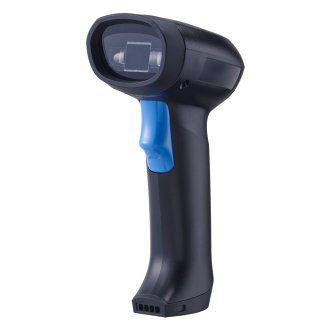
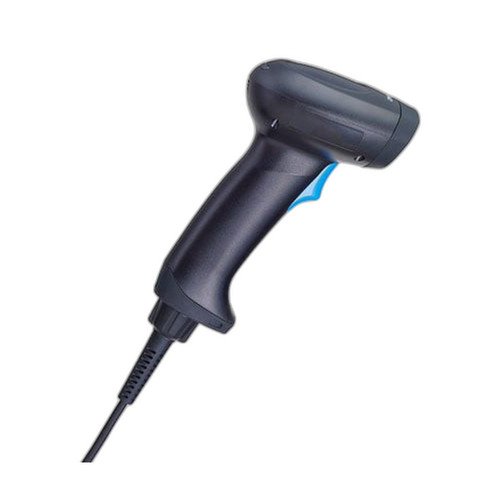
Both the CipherLab A2504S2BS0001 and A2560SCBS0001 are Bluetooth handheld 1D linear imager barcode scanners rated IP65, sharing the same scan rate, minimum print contrast, scan patterns, and symbology set. This comparison helps installers and IT buyers distinguish between the two models across the dimensions that actually drive a selection decision: scan range by barcode density, physical and environmental build, and wireless connectivity and symbology breadth.
In This Guide
- How does scan range and resolution differ between the A2504S2BS0001 and A2560SCBS0001 for varying barcode densities?
- Are the A2504S2BS0001 and A2560SCBS0001 equivalent in physical durability and environmental protection?
- Do the A2504S2BS0001 and A2560SCBS0001 differ in wireless connectivity or supported symbologies?
- Which should you choose: the A2504S2BS0001 or the A2560SCBS0001?
- Side-by-Side Specs
- FAQ
How does scan range and resolution differ between the A2504S2BS0001 and A2560SCBS0001 for varying barcode densities?
The A2504S2BS0001 specifies its scan range as Code 39: 3–60 cm and UPC-A: 0.5–38 cm. These two data points indicate the engine handles a range of barcode densities but the spec sheet does not break out performance by mil size.
The A2560SCBS0001 provides more granular range data tied directly to print density: Code 39 at 3 mil reads 3–10 cm, at 5 mil reads 2–14 cm, and at 20 mil reads 1.5–60 cm. This density-indexed breakdown gives integrators clearer guidance for matching the scanner to the label stock in use.
Both models share the same 578 scans-per-second rate and 15% minimum print contrast. The A2504S2BS0001's maximum stated reach of 60 cm (Code 39) matches the A2560SCBS0001's 20 mil maximum, but the A2560SCBS0001's specs make the density-to-distance relationship explicit where the A2504S2BS0001's do not.
Are the A2504S2BS0001 and A2560SCBS0001 equivalent in physical durability and environmental protection?
Both scanners carry an IP65 rating, meaning both are certified dust-tight and protected against low-pressure water jets from any direction. Neither specification sheet lists a drop-rating, operating temperature range, humidity tolerance, or chassis material, so no comparison can be made on those parameters from the provided data.
Both units are available in Black and Register White colorways, both are described as handheld form factors, and both list the same scanner type classification. No dimensional or weight data is present in either spec set, so physical size cannot be compared.
From the provided specifications, the two models are functionally identical on every documented environmental and physical build attribute.
Do the A2504S2BS0001 and A2560SCBS0001 differ in wireless connectivity or supported symbologies?
Both scanners connect via Bluetooth wireless and neither specification identifies a Bluetooth version, profile (HID, SPP, etc.), or operating range. Buyers requiring a specific Bluetooth class or profile should consult CipherLab datasheets directly, as this data is absent from both specs.
The symbology sets are identical across both models: Code 39, Code 128, UPC/EAN/GS1-128, Codabar, Interleave 2 of 5, Code 93, Code 11, MSI, Plessey, Telepen, ISBT-128, Italian and French Pharmacodes, Matrix 2 of 5, Industrial 2 of 5, and GS1 DataBar (RSS). Neither model supports 2D symbologies such as QR Code or PDF417.
Both carry a 2-year warranty. Scan pattern modes (auto-sense and continuous) are identical. No host interface, cradle compatibility, or pairing protocol data is provided for either unit.
Which should you choose: the A2504S2BS0001 or the A2560SCBS0001?
Our take: The A2560SCBS0001 is the stronger choice when label density varies across a deployment and integrators need to validate scanner-to-label compatibility before procurement. Its spec sheet explicitly maps Code 39 read distances to three mil sizes (3 mil: 3–10 cm; 5 mil: 2–14 cm; 20 mil: 1.5–60 cm), giving installers concrete data to match the engine to label stock. The A2504S2BS0001 provides only two range data points (Code 39: 3–60 cm; UPC-A: 0.5–38 cm), which is sufficient for straightforward retail or warehouse label formats but leaves density-specific performance undocumented. On every other measured parameter — scan rate (578 scans/sec), IP rating (IP65), symbology set (15 identical 1D codes), Bluetooth connectivity, scan patterns, minimum print contrast (15%), and warranty (2 years) — the two units are specification-equivalent. Neither model is differentiated on Bluetooth version or drop rating, so buyers with those requirements must consult CipherLab directly.
Side-by-Side Comparison
Spec-for-spec, from manufacturer data.
| Specification | CipherLab A2504S2BS0001 | CipherLab A2560SCBS0001 |
|---|---|---|
| Product Type | 1D Barcode Scanner | Barcode Scanner (1D) |
| Form Factor | Handheld | Handheld |
| Scan Engine | 1D Linear Imager | 1D Linear Imager |
| Connectivity | Bluetooth | Bluetooth |
| IP Rating | IP65 | IP65 |
| Scan Rate | 578 scans/sec | 578 scans/sec |
| Scan Range — Code 39 General | 3–60 cm | 1.5–60 cm (at 20 mil) |
| Scan Range — Code 39 3 mil | — | 3–10 cm |
| Scan Range — Code 39 5 mil | — | 2–14 cm |
| Scan Range — UPC-A | 0.5–38 cm | — |
| Min Print Contrast | 15% | 15% |
| Scan Patterns | Auto-sense, Continuous | Auto-sense, Continuous |
| Symbologies (1D) | Code 39, Code 128, UPC/EAN/GS1-128, Codabar, I 2of5, Code 93, Code 11, MSI, Plessey, Telepen, ISBT-128, Pharmacodes, Matrix 2of5, Industrial 2of5, GS1 DataBar | Code 39, Code 128, UPC/EAN/GS1-128, Codabar, I 2of5, Code 93, Code 11, MSI, Plessey, Telepen, ISBT-128, Pharmacodes, Matrix 2of5, Industrial 2of5, GS1 DataBar |
| 2D Symbologies | None specified | None specified |
| Color Options | Black, Register White | Black, Register White |
| Warranty | 2 Years | 2 Years |
Frequently Asked Questions
Which should you choose: the A2504S2BS0001 or the A2560SCBS0001?
The A2560SCBS0001 is the stronger choice when label density varies across a deployment and integrators need to validate scanner-to-label compatibility before procurement. Its spec sheet explicitly maps Code 39 read distances to three mil sizes (3 mil: 3–10 cm; 5 mil: 2–14 cm; 20 mil: 1.5–60 cm), giving installers concrete data to match the engine to label stock. The A2504S2BS0001 provides only two range data points (Code 39: 3–60 cm; UPC-A: 0.5–38 cm), which is sufficient for straightforward retail or warehouse label formats but leaves density-specific performance undocumented. On every other measured parameter — scan rate (578 scans/sec), IP rating (IP65), symbology set (15 identical 1D codes), Bluetooth connectivity, scan patterns, minimum print contrast (15%), and warranty (2 years) — the two units are specification-equivalent. Neither model is differentiated on Bluetooth version or drop rating, so buyers with those requirements must consult CipherLab directly.
Is the A2504S2BS0001 or A2560SCBS0001 better for reading high-density barcodes like 3 mil Code 39?
Based on available specs, only the A2560SCBS0001 documents performance at 3 mil density (Code 39: 3–10 cm read range). The A2504S2BS0001 does not specify range by mil size, so its 3 mil performance cannot be confirmed from the provided data. If 3 mil label reading is a requirement, the A2560SCBS0001's spec sheet provides the documented evidence; the A2504S2BS0001 does not.
Do both the A2504S2BS0001 and A2560SCBS0001 support the same barcodes?
Yes. Both models support an identical set of 15 1D symbologies: Code 39, Code 128, UPC/EAN/GS1-128, Codabar, Interleave 2 of 5, Code 93, Code 11, MSI, Plessey, Telepen, ISBT-128, Italian and French Pharmacodes, Matrix 2 of 5, Industrial 2 of 5, and GS1 DataBar (RSS). Neither scanner supports 2D codes such as QR Code or Data Matrix.
Are the A2504S2BS0001 and A2560SCBS0001 equally rugged for warehouse use?
Both share an IP65 environmental rating — dust-tight and water-jet resistant — and both are Bluetooth handheld units available in the same colorways with the same 2-year warranty. Neither spec sheet includes drop-test ratings, operating temperature range, or humidity tolerance, so ruggedness beyond IP65 cannot be compared from the provided specifications.
More Barcode Scanner Comparisons
- Datalogic QBT2500-BK-BTK1 vs CipherLab A2504S2BS0001
- Datalogic QBT2500-BK-BTK1 vs CipherLab A2560SCBS0001
- Datalogic QBT2500-BK-BTK1 vs CipherLab A2564SMBKU0S1
- Datalogic QBT2500-BK-BTK1 vs Socket Mobile CX3532-2134
- Datalogic QBT2500-BK-BTK1 vs Datalogic QBT2131-BK-BTK1
- CipherLab A2504S2BS0001 vs Socket Mobile CX3532-2134
Barcode Scanner Buying Guides
Get a Second Opinion on Your Camera Choice
Share your site layout, coverage goals, and budget. Our team will validate the camera selection, flag anything we would change, and recommend products that match the use case.