
Datalogic QBT2500-BK-BTK1 vs CipherLab A2564SMBKU0S1: Specification Comparison
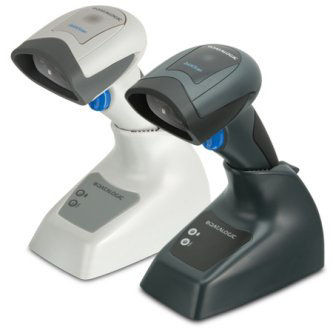
Both the Datalogic QBT2500-BK-BTK1 and the CipherLab A2564SMBKU0S1 are wireless handheld 1D linear imager barcode scanners designed for Bluetooth-based mobility in retail, warehouse, and logistics environments. Each ships as a kit with a USB base/dock and targets buyers who need cordless 1D scanning without a fixed cable tether. The comparison covers scan performance and symbology breadth, environmental ruggedness and physical design, and connectivity plus battery/power characteristics — the three axes that most directly drive a purchasing decision in this product class.

In This Guide
- Which scanner delivers broader symbology support and faster throughput for high-volume 1D scanning?
- Which unit is better sealed against dust and liquids for demanding deployment environments?
- How do the two scanners compare on wireless connectivity, battery capacity, and power requirements?
- Which should you choose: the QBT2500-BK-BTK1 or the A2564SMBKU0S1?
- Side-by-Side Specs
- FAQ
Which scanner delivers broader symbology support and faster throughput for high-volume 1D scanning?
The CipherLab A2564SMBKU0S1 provides a specified scan rate of 578 scans per second and lists 15+ distinct 1D symbologies including Codabar, Code 11, Code 39, Code 93, Code 128, GS1 DataBar (RSS), ISBT-128, Italian and French Pharmacodes, Industrial 2 of 5, Interleave 2 of 5, Matrix 2 of 5, MSI, Plessey, Telepen, and UPC/EAN/GS1-128. It also specifies a minimum print contrast of 15% and a documented scan range of 3–60 cm for Code 39 and 0.5–38 cm for UPC-A.
The Datalogic QBT2500-BK-BTK1 lists a 1D linear imager scan engine and names Code 39, Code 128, UPC, and EAN among its 1D symbologies. However, the provided specs also reference 2D symbologies (QR Code, Data Matrix, PDF417), creating an internal inconsistency between the stated '1D Linear Imager' scan type and the presence of 2D codes. No scan rate in scans-per-second is specified, and no minimum print contrast or explicit scan range is provided in the supplied data. Buyers requiring a confirmed scan rate or broad specialty 1D symbology coverage (e.g., ISBT-128, Pharmacodes, Plessey) will find the CipherLab spec sheet more complete on these dimensions.
Which unit is better sealed against dust and liquids for demanding deployment environments?
The CipherLab A2564SMBKU0S1 carries an IP65 rating, meaning it is fully dust-tight and protected against low-pressure water jets from any direction. This makes it suitable for light washdown, dusty warehouse floors, or outdoor receiving docks where moisture exposure is a realistic risk.
The Datalogic QBT2500-BK-BTK1 is rated IP52, which indicates protection against dust ingress sufficient to prevent harmful deposits (not full dust-tight) and protection against vertically dripping water with the device tilted up to 15°. IP52 is adequate for typical indoor retail or light warehouse environments but offers meaningfully less protection than IP65 in wet or high-particulate settings. Neither product's weight is dramatically different — the QBT2500-BK-BTK1 is specified at 159 g — and the CipherLab weight is not provided in the supplied specifications.
How do the two scanners compare on wireless connectivity, battery capacity, and power requirements?
The Datalogic QBT2500-BK-BTK1 specifies a 3,250 mAh Lithium-Ion battery and an input voltage of 5 VDC. Its connectivity options include Bluetooth, USB, and RS-232 via the base station, giving integrators flexibility for legacy POS systems that require a serial connection. The Bluetooth version beyond 'Bluetooth' is not further specified in the provided data.
The CipherLab A2564SMBKU0S1 specifies Bluetooth and USB dock connectivity. Battery capacity, input voltage, and specific Bluetooth version are not provided in the supplied specifications, preventing a direct numeric comparison on those points. Both units offer Bluetooth wireless operation and a USB dock; the Datalogic unit adds an RS-232 base option that CipherLab's supplied specs do not mention, which may matter for sites running older serial-interface hosts.
Which should you choose: the QBT2500-BK-BTK1 or the A2564SMBKU0S1?
Our take: The A2564SMBKU0S1 is the stronger choice when environmental ruggedness and broad 1D symbology coverage are the primary requirements. Its IP65 rating surpasses the QBT2500-BK-BTK1's IP52 by a full protection tier — fully dust-tight versus partial, and jet-water resistant versus drip-only. The CipherLab also specifies a documented 578 scans/second throughput rate and 15+ named symbologies including ISBT-128, Pharmacodes, and Plessey, none of which appear in the Datalogic's provided spec sheet. Conversely, the QBT2500-BK-BTK1 is the better-documented choice for battery endurance (3,250 mAh stated explicitly) and legacy serial integration (RS-232 via base), and carries a longer warranty at three years versus CipherLab's two. Buyers in medical, pharmaceutical, or high-dust/wet logistics environments should favor the CipherLab; buyers needing RS-232 compatibility or validated battery runtime data should favor the Datalogic.
Side-by-Side Comparison
Spec-for-spec, from manufacturer data.
| Specification | Datalogic QBT2500-BK-BTK1 | CipherLab A2564SMBKU0S1 |
|---|---|---|
| Product Type | Wireless Handheld Barcode Scanner | 1D Barcode Scanner (Handheld) |
| Scan Engine | 1D Linear Imager (2D symbologies also listed — verify with manufacturer) | 1D Linear Imager |
| IP Rating | IP52 | IP65 |
| Scan Rate | — | 578 scans/second |
| Scan Range (Code 39) | — | 3–60 cm |
| Scan Range (UPC-A) | — | 0.5–38 cm |
| Minimum Print Contrast | — | 15% |
| Bluetooth Connectivity | Yes | Yes |
| USB Connectivity | Yes (via base) | Yes (USB dock) |
| RS-232 Connectivity | Yes (via base) | — |
| Battery Capacity | 3,250 mAh Lithium-Ion | — |
| Input Voltage | 5 VDC | — |
| Weight | 159 g | — |
| Dimensions | 69 x 127 x 124 mm | — |
| Symbology Count (1D) | 4 named (Code 39, Code 128, UPC, EAN) | 15+ named |
| Warranty | 3-Year Limited | 2-Year |
Frequently Asked Questions
Which should you choose: the QBT2500-BK-BTK1 or the A2564SMBKU0S1?
The A2564SMBKU0S1 is the stronger choice when environmental ruggedness and broad 1D symbology coverage are the primary requirements. Its IP65 rating surpasses the QBT2500-BK-BTK1's IP52 by a full protection tier — fully dust-tight versus partial, and jet-water resistant versus drip-only. The CipherLab also specifies a documented 578 scans/second throughput rate and 15+ named symbologies including ISBT-128, Pharmacodes, and Plessey, none of which appear in the Datalogic's provided spec sheet. Conversely, the QBT2500-BK-BTK1 is the better-documented choice for battery endurance (3,250 mAh stated explicitly) and legacy serial integration (RS-232 via base), and carries a longer warranty at three years versus CipherLab's two. Buyers in medical, pharmaceutical, or high-dust/wet logistics environments should favor the CipherLab; buyers needing RS-232 compatibility or validated battery runtime data should favor the Datalogic.
Is the QBT2500-BK-BTK1 or A2564SMBKU0S1 better suited for a wet or dusty warehouse environment?
The CipherLab A2564SMBKU0S1 is the better fit. It carries an IP65 rating (fully dust-tight, protected against water jets), while the Datalogic QBT2500-BK-BTK1 is rated IP52 (partial dust protection, drip-resistant only). For receiving docks, cold-storage, or high-particulate environments, the IP65 rating provides a meaningful safety margin.
Does either scanner support legacy RS-232 serial POS or host connections?
The Datalogic QBT2500-BK-BTK1 specifies RS-232 connectivity via its base station, making it compatible with legacy serial-interface hosts. The CipherLab A2564SMBKU0S1's provided specifications list only Bluetooth and USB dock connectivity; RS-232 support is not mentioned in the supplied data.
Which scanner offers a longer warranty, and does either unit support 2D barcodes like QR Code?
The Datalogic QBT2500-BK-BTK1 carries a 3-year limited warranty versus the CipherLab A2564SMBKU0S1's 2-year warranty. Regarding 2D support: the Datalogic's provided spec data lists QR Code, Data Matrix, and PDF417 symbologies, but also states a '1D Linear Imager' scan engine — an internal inconsistency in the supplied specs that buyers should verify directly with Datalogic before assuming 2D capability. The CipherLab is specified consistently as a 1D-only scanner.
More Barcode Scanner Comparisons
- Datalogic QBT2500-BK-BTK1 vs CipherLab A2504S2BS0001
- Datalogic QBT2500-BK-BTK1 vs CipherLab A2560SCBS0001
- Datalogic QBT2500-BK-BTK1 vs Socket Mobile CX3532-2134
- Datalogic QBT2500-BK-BTK1 vs Datalogic QBT2131-BK-BTK1
- CipherLab A2504S2BS0001 vs Socket Mobile CX3532-2134
- CipherLab A2504S2BS0001 vs Socket Mobile CX4065-3128
Barcode Scanner Buying Guides
Get a Second Opinion on Your Camera Choice
Share your site layout, coverage goals, and budget. Our team will validate the camera selection, flag anything we would change, and recommend products that match the use case.