
Datalogic QBT2500-BK-BTK1 vs CipherLab A2504S2BS0001: Specification Comparison
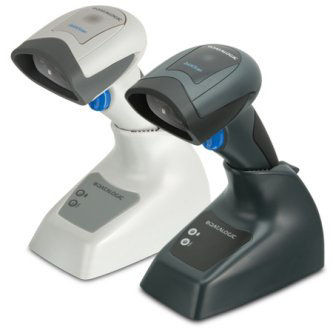
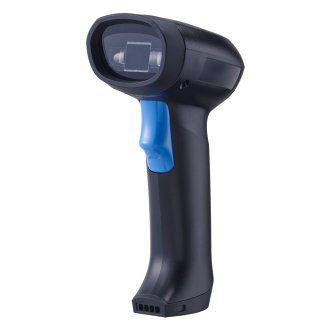
Both the Datalogic QBT2500-BK-BTK1 and the CipherLab A2504S2BS0001 are wireless Bluetooth handheld 1D linear imager barcode scanners targeting warehouse and retail mobility applications. The Datalogic unit ships with a base station providing USB and RS-232 connectivity fallback, while the CipherLab model connects exclusively via Bluetooth. This comparison evaluates the three dimensions most critical to a deployment decision: scan performance and symbology breadth, environmental durability and form factor, and connectivity with battery and warranty support.
In This Guide
- Which scanner delivers broader symbology coverage and faster scan throughput?
- Which unit is better sealed against dust and moisture for demanding environments?
- How do the two scanners compare on interface flexibility, battery life, and warranty coverage?
- Which should you choose: the QBT2500-BK-BTK1 or the A2504S2BS0001?
- Side-by-Side Specs
- FAQ
Which scanner delivers broader symbology coverage and faster scan throughput?
The CipherLab A2504S2BS0001 specifies a scan rate of 578 scans per second and a scan range of 3–60 cm for Code 39 and 0.5–38 cm for UPC-A, with a minimum print contrast of 15%. Its 1D symbology list is extensive: Code 39, Code 128, UPC/EAN/GS1-128, Codabar, Interleave 2 of 5, Code 93, Code 11, MSI, Plessey, Telepen, ISBT-128, Italian and French Pharmacodes, Matrix 2 of 5, Industrial 2 of 5, and GS1 DataBar (RSS).
The Datalogic QBT2500-BK-BTK1 specs do not state a scan rate or a scan range in the provided data. Its listed symbologies include Code 39, Code 128, UPC, EAN, QR Code, Data Matrix, and PDF417—the latter three being 2D formats that the CipherLab does not support. The Datalogic's listed scan engine field reads '2D' while its scan type is listed as '1D Linear Imager'; the 2D symbologies may reflect hardware capability not fully activated or a spec-sheet inconsistency in the provided data. Buyers requiring strictly 1D coverage will find the CipherLab's symbology list longer; buyers needing occasional 2D reads should verify Datalogic's actual engine capability with the manufacturer before purchase.
Which unit is better sealed against dust and moisture for demanding environments?
The CipherLab A2504S2BS0001 carries an IP65 rating, meaning it is fully dust-tight and protected against low-pressure water jets from any direction. This makes it suitable for environments with active dust, splashing liquids, or washdown-adjacent use cases such as food distribution or light manufacturing.
The Datalogic QBT2500-BK-BTK1 is rated IP52, which covers protection against limited dust ingress and dripping water falling at an angle up to 15°. IP52 is adequate for typical retail and light warehouse environments but falls short of IP65 for dusty or wet conditions. On dimensions, the Datalogic measures 69 × 127 × 124 mm and weighs 159 g. The CipherLab's weight and physical dimensions are not stated in the provided specifications. The Datalogic's lighter, stated weight of 159 g may be a comfort advantage in high-scan-volume shifts, but a direct ergonomic comparison cannot be made without CipherLab's dimensional data.
How do the two scanners compare on interface flexibility, battery life, and warranty coverage?
The Datalogic QBT2500-BK-BTK1 includes a base station that adds USB and RS-232 host interface options alongside Bluetooth, giving it multi-protocol flexibility for legacy POS terminals and modern USB hosts without an additional adapter. Its lithium-ion battery is rated at 3,250 mAh with a 5 VDC input. The provided specs do not state a rated shift life in hours for the Datalogic.
The CipherLab A2504S2BS0001 connects exclusively via Bluetooth per the provided specifications; no base station, USB cradle, or RS-232 path is listed. Battery capacity and input voltage are not specified in the provided data for the CipherLab, so no direct mAh comparison is possible. On warranty, the Datalogic carries a 3-year limited warranty versus the CipherLab's 2-year warranty—a meaningful distinction for enterprise procurement and total cost of ownership calculations over a typical 3–5 year deployment cycle.
Which should you choose: the QBT2500-BK-BTK1 or the A2504S2BS0001?
Our take: The QBT2500-BK-BTK1 is the stronger choice when interface flexibility, battery capacity transparency, and warranty length are the primary procurement criteria; the A2504S2BS0001 is the stronger choice when environmental sealing is the deciding factor. Concretely: the CipherLab's IP65 rating outclasses the Datalogic's IP52 in dusty or wet environments; the CipherLab's 578 scans-per-second rate is a stated performance figure the Datalogic lacks in the provided specs; and the Datalogic's 3,250 mAh battery and 3-year warranty compare favorably to the CipherLab's unspecified battery and 2-year coverage. The Datalogic's base station also adds USB and RS-232 fallback paths absent from the CipherLab. Buyers deploying in food distribution, light manufacturing, or any wet or high-dust setting should weight the IP65 advantage heavily; buyers prioritizing legacy-terminal compatibility or longer warranty coverage will favor the Datalogic.
Side-by-Side Comparison
Spec-for-spec, from manufacturer data.
| Specification | Datalogic QBT2500-BK-BTK1 | CipherLab A2504S2BS0001 |
|---|---|---|
| Product Type | Wireless Handheld Barcode Scanner | 1D Barcode Scanner (Handheld) |
| Scan Engine | 1D Linear Imager (2D also listed in specs — verify with mfg) | 1D Linear Imager |
| Scan Rate | — | 578 scans/second |
| Scan Range | — | Code 39: 3–60 cm; UPC-A: 0.5–38 cm |
| Min Print Contrast | — | 15% |
| IP Rating | IP52 | IP65 |
| Bluetooth | Yes | Yes |
| USB (via base) | Yes (base station) | — |
| RS-232 (via base) | Yes (base station) | — |
| Symbologies — 1D | Code 39, Code 128, UPC, EAN | Code 39, Code 128, UPC/EAN/GS1-128, Codabar, I 2of5, Code 93, Code 11, MSI, Plessey, Telepen, ISBT-128, Pharmacodes, Matrix 2of5, Industrial 2of5, GS1 DataBar |
| Symbologies — 2D | QR Code, Data Matrix, PDF417 (listed; verify engine activation) | — |
| Battery Capacity | 3,250 mAh Li-Ion | — |
| Input Voltage | 5 VDC | — |
| Weight | 159 g | — |
| Dimensions | 69 × 127 × 124 mm | — |
| Warranty | 3-Year Limited | 2-Year |
Frequently Asked Questions
Which should you choose: the QBT2500-BK-BTK1 or the A2504S2BS0001?
The QBT2500-BK-BTK1 is the stronger choice when interface flexibility, battery capacity transparency, and warranty length are the primary procurement criteria; the A2504S2BS0001 is the stronger choice when environmental sealing is the deciding factor. Concretely: the CipherLab's IP65 rating outclasses the Datalogic's IP52 in dusty or wet environments; the CipherLab's 578 scans-per-second rate is a stated performance figure the Datalogic lacks in the provided specs; and the Datalogic's 3,250 mAh battery and 3-year warranty compare favorably to the CipherLab's unspecified battery and 2-year coverage. The Datalogic's base station also adds USB and RS-232 fallback paths absent from the CipherLab. Buyers deploying in food distribution, light manufacturing, or any wet or high-dust setting should weight the IP65 advantage heavily; buyers prioritizing legacy-terminal compatibility or longer warranty coverage will favor the Datalogic.
Is the QBT2500-BK-BTK1 or A2504S2BS0001 better for wet or dusty warehouse environments?
The CipherLab A2504S2BS0001 is better suited, carrying an IP65 rating (fully dust-tight, protected against water jets) versus the Datalogic QBT2500-BK-BTK1's IP52 rating (limited dust protection, drip-resistant only). For food distribution, light manufacturing, or any environment with active moisture or heavy particulates, IP65 provides a meaningful safety margin that IP52 does not.
Which scanner supports more barcode types out of the box?
Based on the provided specifications, the CipherLab A2504S2BS0001 lists a longer 1D symbology set—including Codabar, Interleave 2 of 5, Code 93, Code 11, MSI, Plessey, Telepen, ISBT-128, Pharmacodes, and GS1 DataBar—that the Datalogic's spec sheet does not explicitly enumerate. The Datalogic lists QR Code, Data Matrix, and PDF417 as symbologies, which are 2D formats; buyers should confirm with Datalogic whether those 2D formats are fully enabled on this model before relying on them.
Does either scanner work with legacy RS-232 POS terminals?
Only the Datalogic QBT2500-BK-BTK1 supports RS-232, accessed through its included base station. The CipherLab A2504S2BS0001's provided specifications list Bluetooth as the sole connectivity option, with no RS-232 or USB cradle path noted. Deployments requiring integration with older serial-interface terminals should select the Datalogic.
More Barcode Scanner Comparisons
- Datalogic QBT2500-BK-BTK1 vs CipherLab A2560SCBS0001
- Datalogic QBT2500-BK-BTK1 vs CipherLab A2564SMBKU0S1
- Datalogic QBT2500-BK-BTK1 vs Socket Mobile CX3532-2134
- Datalogic QBT2500-BK-BTK1 vs Datalogic QBT2131-BK-BTK1
- CipherLab A2504S2BS0001 vs Socket Mobile CX3532-2134
- CipherLab A2504S2BS0001 vs Socket Mobile CX4065-3128
Barcode Scanner Buying Guides
Get a Second Opinion on Your Camera Choice
Share your site layout, coverage goals, and budget. Our team will validate the camera selection, flag anything we would change, and recommend products that match the use case.