
CipherLab A2200NBRN0001 vs CipherLab A2200NBUN0001: Specification Comparison
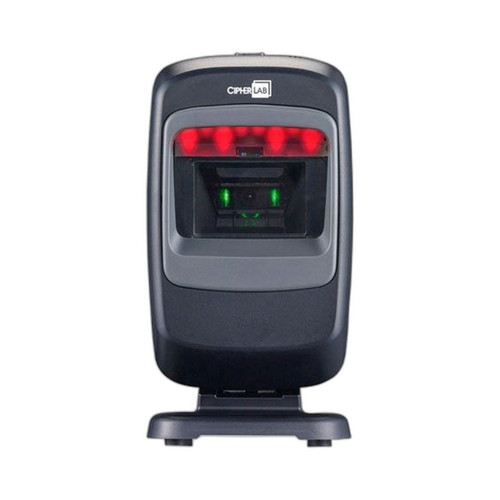
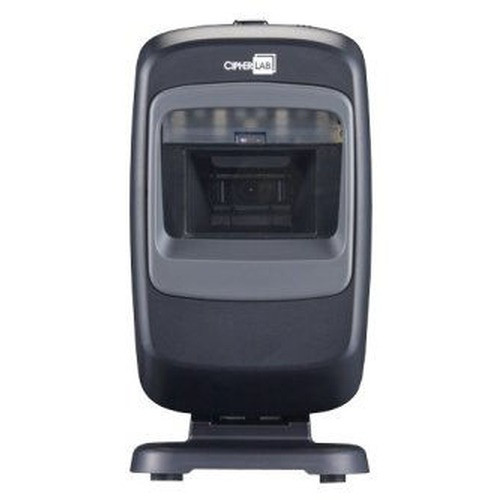
Both the CipherLab A2200NBRN0001 and A2200NBUN0001 are corded, handheld 2D barcode scanners from the same A2200 platform, sharing an identical physical footprint and the same IP52/drop-resistance rating. The sole decision axis is host interface: the A2200NBRN0001 connects via RS232 serial, while the A2200NBUN0001 connects via USB. Buyers choosing between them are selecting the interface that matches their POS terminal, kiosk controller, or industrial PC—not trading off scan performance, ruggedness, or form factor.
In This Guide
- Which host interface does each scanner support, and what does that mean for your installation?
- Do the two scanners read the same barcode types, and are there any symbology differences a buyer should know about?
- How do the two scanners compare on physical durability, operating environment, and mounting considerations?
- Which should you choose: the A2200NBRN0001 or the A2200NBUN0001?
- Side-by-Side Specs
- FAQ
Which host interface does each scanner support, and what does that mean for your installation?
The A2200NBRN0001 uses an RS232 serial interface. RS232 remains common in legacy POS systems, industrial controllers, kiosks, and embedded computing environments where COM-port connectivity is native or where serial-to-device isolation is preferred. No USB driver stack is involved, which can simplify deployment on locked-down or real-time systems.
The A2200NBUN0001 uses USB. USB is the dominant interface on modern POS terminals, tablets, and general-purpose PCs. It is plug-and-play on virtually every current operating system and eliminates the need for a separate RS232 port or USB-to-serial adapter. The spec sheet also lists an input voltage of 5 V 2 A max, consistent with bus-powered USB operation; no external power brick is required. The A2200NBRN0001 spec does not document a voltage rating, so power-supply requirements for that model should be confirmed with CipherLab.
Neither model is specified as wireless. Both are corded, so cable management and tether length are installation considerations common to both.
Do the two scanners read the same barcode types, and are there any symbology differences a buyer should know about?
Both models carry a 2D imaging engine and support the core barcode families decision-makers care about: QR Code, Data Matrix, PDF417, Aztec, MaxiCode, Code 128, Code 39, UPC/EAN, GS1-128, Codabar, Interleave 2 of 5, ISBT-128, Italian and French Pharmacode, MSI, Plessey, Telepen, and GS1 DataBar (RSS).
The A2200NBRN0001 spec explicitly lists MicroPDF417 and Composite codes among its 2D symbologies, and Code 93, Code 11, Chinese25 (N4680), and Matrix 2 of 5 among its 1D symbologies. The A2200NBUN0001 spec lists MicroPDF417, Micro QR Code, and HanXin in addition to the shared set, and also lists Code 93, Code 11, Chinese25, and Matrix 2 of 5 in its 1D column.
In practice, both scanners cover the full 1D/2D range required by retail, healthcare, and light industrial applications. The marginal symbology differences (HanXin and Micro QR Code appearing in the USB model's listed set; Composite Codes explicitly called out in the RS232 model's set) are unlikely to be a primary buying criterion unless a specific niche symbology is mandated. Buyers with HanXin or Micro QR Code requirements should note those appear in the A2200NBUN0001 spec but are not listed for the A2200NBRN0001.
How do the two scanners compare on physical durability, operating environment, and mounting considerations?
Both units share the same physical chassis: 83 × 80 × 150 mm (3.3 × 3.2 × 5.9 in), black color, IP52 dust and splash resistance, and a 1.5 m (4.9 ft) multiple-drop-onto-concrete rating. Scan pattern is presentation mode on both, supporting hands-free counter use.
The A2200NBUN0001 spec adds data points absent from the A2200NBRN0001 listing: weight is documented at 320 g / 11 oz (or 380 g / 13 oz—two figures appear in the spec, likely with and without cable), and storage temperature is rated −40 °C to 60 °C (−40 °F to 140 °F). Neither of these specs is provided for the RS232 model, so buyers deploying in temperature-extreme environments or needing weight data for ergonomic assessments should request the A2200NBRN0001 datasheet directly.
The A2200NBUN0001 spec lists a Mount Type of Rack, which is atypical for a handheld scanner and may reflect a data-entry artifact rather than an actual rack-mount capability; buyers should verify with CipherLab. No mount type is specified for the A2200NBRN0001. Both models carry a 2-year warranty.
Which should you choose: the A2200NBRN0001 or the A2200NBUN0001?
Our take: The A2200NBRN0001 is the stronger choice when the host system exposes a native RS232 COM port and USB connectivity is unavailable or undesirable—such as legacy POS terminals, embedded kiosks, or serial-isolated industrial controllers. The A2200NBUN0001 is the stronger choice for any modern host with a USB port, as it eliminates the need for an RS232 port or adapter and draws bus power at a documented 5 V 2 A max. Beyond interface, the two scanners are functionally identical in scan engine, form factor (83 × 80 × 150 mm), IP52 rating, 1.5 m drop spec, scan mode, and 2-year warranty. The USB model's spec additionally documents storage temperature (−40 °C to 60 °C) and weight (320 g / 380 g), data absent from the RS232 listing. Buyers with HanXin or Micro QR Code requirements should prefer the USB model, as those symbologies appear in its spec but not the RS232 model's. Interface compatibility with the host system is the definitive selection criterion.
Side-by-Side Comparison
Spec-for-spec, from manufacturer data.
| Specification | CipherLab A2200NBRN0001 | CipherLab A2200NBUN0001 |
|---|---|---|
| SKU | A2200NBRN0001 | A2200NBUN0001 |
| Interface | RS232 | USB |
| Input Voltage | — | 5 V 2 A Max |
| Form Factor | Handheld | Handheld |
| Scan Engine | 2D | 2D |
| Scan Mode | Presentation mode | Presentation mode |
| IP Rating | IP52 | IP52 |
| Drop Spec | 1.5 m onto concrete | 1.5 m onto concrete |
| Dimensions | 83 × 80 × 150 mm / 3.3 × 3.2 × 5.9 in | 83 × 80 × 150 mm / 3.3 × 3.2 × 5.9 in |
| Weight | — | 320 g / 11 oz (380 g / 13 oz) |
| Color | Black | Black |
| 1D Symbologies | Codabar; Code 39; Code 93; Code 128; GS1 DataBar; I 2of5; ISBT-128; Pharmacodes; Matrix 2of5; MSI; Plessey; Telepen; UPC; EAN; GS1-128; Code 11; Chinese25 | Codabar; Code 39; Code 93; Code 128; GS1 DataBar; I 2of5; ISBT-128; Pharmacodes; Matrix 2of5; MSI; Plessey; Telepen; UPC/EAN/GS1-128; Code 11; Chinese25 |
| 2D Symbologies | PDF417; MicroPDF417; Data Matrix; QR Code; Aztec; MaxiCode; Composite | PDF417; MicroPDF417; Data Matrix; QR Code; Micro QR Code; Aztec; MaxiCode; HanXin; Composite Codes |
| Storage Temperature | — | -40 °C to 60 °C / -40 °F to 140 °F |
| Warranty | 2-Year | 2-Year |
Frequently Asked Questions
Which should you choose: the A2200NBRN0001 or the A2200NBUN0001?
The A2200NBRN0001 is the stronger choice when the host system exposes a native RS232 COM port and USB connectivity is unavailable or undesirable—such as legacy POS terminals, embedded kiosks, or serial-isolated industrial controllers. The A2200NBUN0001 is the stronger choice for any modern host with a USB port, as it eliminates the need for an RS232 port or adapter and draws bus power at a documented 5 V 2 A max. Beyond interface, the two scanners are functionally identical in scan engine, form factor (83 × 80 × 150 mm), IP52 rating, 1.5 m drop spec, scan mode, and 2-year warranty. The USB model's spec additionally documents storage temperature (−40 °C to 60 °C) and weight (320 g / 380 g), data absent from the RS232 listing. Buyers with HanXin or Micro QR Code requirements should prefer the USB model, as those symbologies appear in its spec but not the RS232 model's. Interface compatibility with the host system is the definitive selection criterion.
Is the A2200NBRN0001 or A2200NBUN0001 better for a modern Windows POS terminal?
The A2200NBUN0001 (USB) is the practical choice for a modern Windows POS terminal. Current POS hardware and operating systems are plug-and-play with USB HID or CDC interfaces, requiring no driver installation. The A2200NBRN0001 requires an available RS232 COM port—native on some purpose-built POS systems but absent on most general-purpose terminals without an add-in card or USB-to-serial adapter.
Do both scanners read the same barcodes, or does one support more symbologies?
Both scanners cover all major 1D and 2D symbologies, including QR Code, Data Matrix, PDF417, Aztec, MaxiCode, Code 128, Code 39, UPC/EAN, and GS1-128. The A2200NBUN0001 spec explicitly lists Micro QR Code and HanXin, which do not appear in the A2200NBRN0001 spec. Composite Codes are explicitly listed for the RS232 model. For most retail, healthcare, and logistics workflows the difference is immaterial, but buyers requiring HanXin should prefer the USB model based on available spec data.
Are there any durability or environmental differences between the two models?
Both models carry identical ruggedness ratings: IP52 dust/splash resistance and 1.5 m multiple-drop-onto-concrete tolerance, in the same 83 × 80 × 150 mm chassis with a 2-year warranty. The A2200NBUN0001 spec additionally documents a storage temperature range of −40 °C to 60 °C and a weight of 320 g / 380 g—data not provided in the A2200NBRN0001 spec. Buyers with temperature-extreme storage requirements should request the RS232 model's full datasheet to confirm equivalent ratings before assuming parity.
More Barcode Scanner Comparisons
- Zebra DS8108 vs Datalogic GBT4600-HC-BTK1-HP
- Zebra DS8108 vs Datalogic GD4590-HCK10-HDR-B
- Zebra DS8108 vs Honeywell 1202G-2USB-5BF-N
- Zebra DS8108 vs Datalogic GBT4500-BK-BTK1DRA
- Zebra DS8108 vs Zebra DS3608
- Zebra DS8108 vs Zebra LI3608
Barcode Scanner Buying Guides
Get a Second Opinion on Your Camera Choice
Share your site layout, coverage goals, and budget. Our team will validate the camera selection, flag anything we would change, and recommend products that match the use case.