
Axis A4612 vs Camden CV-7600: Specification Comparison
Both the Axis A4612 and the Camden CV-7600 are wall-mounted network readers targeting modern physical access control deployments that support Bluetooth Low Energy (BLE) smartphone credentials alongside traditional card-based authentication. A buyer evaluating either unit is choosing between a PoE-powered IP-native mullion reader and a conventionally wired multi-protocol smart card reader with BLE support. This comparison examines credential breadth and protocol compatibility, power and mounting architecture, and environmental suitability to help integrators and IT buyers select the right reader for their door hardware and controller ecosystem.
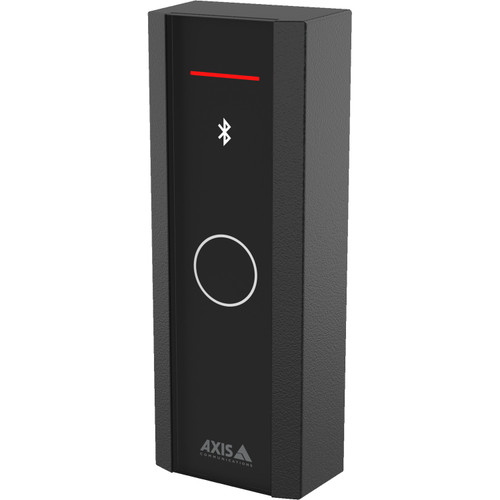
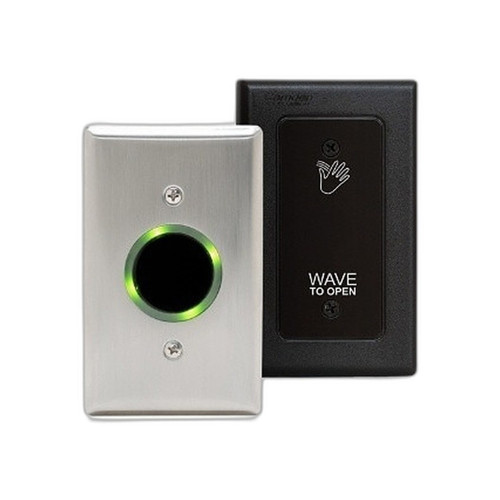
In This Guide
- Which reader supports more credential types and controller communication protocols?
- How do the two readers differ in power architecture and physical mounting options?
- Which unit is better suited for harsh environments, and what warranty protection does each carry?
- Which should you choose: the A4612 or the CV-7600?
- Side-by-Side Specs
- FAQ
Which reader supports more credential types and controller communication protocols?
The Camden CV-7600 holds a clear advantage in raw credential breadth. It explicitly supports DESFire, MIFARE, HID, and NFC/13.56 MHz card technologies, plus BLE smartphone credentials, giving integrators a five-format portfolio that eases phased migrations from legacy HID or MIFARE Classic deployments to modern DESFire EV3 or mobile-first environments. Its dual OSDP and Wiegand output means it can terminate on current IP-based access controllers over OSDP v2 as well as legacy Wiegand panels—an important hedge when a customer's controller refresh is on a multi-year roadmap.
The Axis A4612 specifies Bluetooth mobile credentials and RFID cards. The RFID specification does not enumerate specific card standards (e.g., DESFire, MIFARE, HID iCLASS), so the exact card-format compatibility cannot be confirmed from the provided specs. Its connectivity is described as Bluetooth, RFID, and IP-based; no OSDP or Wiegand output protocol is listed. Buyers whose controllers require OSDP or Wiegand should verify compatibility directly with Axis before specifying the A4612.
How do the two readers differ in power architecture and physical mounting options?
The Axis A4612 is powered exclusively via PoE (802.3af is implied by the 'PoE' designation, though the specific standard is not enumerated in the provided specs). This eliminates the need for a separate 12 V or 24 V power run to the door frame and simplifies infrastructure to a single Cat5e/Cat6 cable, which is attractive in new construction or full IP deployments. Its form factor is mullion-mount—designed for the narrow vertical stile between door panels—which constrains it to a specific installation geometry.
The Camden CV-7600 operates at 14 VDC (the supply type—local transformer, power supply, or PoE injector—is not specified in the provided specs). It lists Wall, Corner, and Rack as mount types, offering greater physical placement flexibility than a dedicated mullion form factor. The broader mount-type support means the CV-7600 can be surface-mounted on a wall beside a door, fitted into a corner bracket, or rack-mounted for lobby kiosk or reception deployments. Buyers with legacy low-voltage power infrastructure will likely find the 14 VDC CV-7600 easier to drop in without rewiring.
Which unit is better suited for harsh environments, and what warranty protection does each carry?
The Axis A4612 is explicitly rated for both indoor and outdoor use and is described as weather-resistant. No IP or IK ingress/impact rating is listed in the provided specs, so the precise degree of weatherproofing cannot be quantified, but the outdoor rating indicates the unit is designed to withstand precipitation and temperature variation at exterior door positions such as parking garage pedestals, loading docks, or perimeter access points.
The Camden CV-7600 does not carry an environmental or weather-resistance rating in the provided specs. No indoor/outdoor designation, IP rating, or operating temperature range is listed. Buyers considering exterior or semi-exposed installations should obtain Camden's environmental data sheet before specifying the CV-7600 in those locations.
On warranty, the Axis A4612 carries a 5-year warranty versus the CV-7600's 3-year warranty—a two-year gap that is meaningful for high-cycle door readers that may log tens of thousands of credential presentations annually. The longer coverage period reduces lifecycle replacement cost exposure over a typical five-year amortization window.
Which should you choose: the A4612 or the CV-7600?
Our take: The A4612 is the stronger choice when deploying a PoE IP infrastructure with outdoor or weather-exposed reader positions and a mobile-first credential strategy. Its PoE power eliminates low-voltage wiring runs, its weather-resistant outdoor rating covers perimeter and parking applications the CV-7600 cannot be confirmed to support, and its 5-year warranty outlasts the CV-7600's 3-year coverage by two years. However, the CV-7600 is the stronger choice for mixed-credential or controller-diverse environments: it explicitly supports five card/credential formats (DESFire, MIFARE, HID, NFC/13.56 MHz, and BLE) versus the A4612's unspecified RFID format, and its dual OSDP/Wiegand output ensures backward compatibility with legacy Wiegand panels. Integrators running a phased migration across a heterogeneous controller estate, or who need confirmed HID or MIFARE compatibility, should specify the CV-7600 and verify its environmental limits with Camden before any exterior installation.
Side-by-Side Comparison
Spec-for-spec, from manufacturer data.
| Specification | Axis A4612 | Camden CV-7600 |
|---|---|---|
| Product Type | Network Bluetooth + RFID Reader | Smart Card + BLE Reader |
| Credential Types | Bluetooth mobile, RFID (format unspecified) | DESFire, MIFARE, HID, NFC/13.56 MHz, BLE |
| BLE / Smartphone Credentials | Yes | Yes |
| RFID Card Standards Specified | — | DESFire, MIFARE, HID, NFC/13.56 MHz |
| Controller Output Protocol | IP-based (OSDP/Wiegand not listed) | OSDP and Wiegand (dual) |
| Power Type | PoE | 14 VDC (PoE not confirmed) |
| Form Factor / Mount Type | Mullion-mount | Wall, Corner, Rack |
| Indoor / Outdoor Rating | Indoor and outdoor | — |
| Weather Resistant | Yes | — |
| Audio Feedback | — | Tone |
| Keypad | — | Yes (listed as Reader Type) |
| Housing Color | White | — |
| Warranty | 5 years | 3 years |
| SKU | 03072-001 | CV-7600 |
Frequently Asked Questions
Which should you choose: the A4612 or the CV-7600?
The A4612 is the stronger choice when deploying a PoE IP infrastructure with outdoor or weather-exposed reader positions and a mobile-first credential strategy. Its PoE power eliminates low-voltage wiring runs, its weather-resistant outdoor rating covers perimeter and parking applications the CV-7600 cannot be confirmed to support, and its 5-year warranty outlasts the CV-7600's 3-year coverage by two years. However, the CV-7600 is the stronger choice for mixed-credential or controller-diverse environments: it explicitly supports five card/credential formats (DESFire, MIFARE, HID, NFC/13.56 MHz, and BLE) versus the A4612's unspecified RFID format, and its dual OSDP/Wiegand output ensures backward compatibility with legacy Wiegand panels. Integrators running a phased migration across a heterogeneous controller estate, or who need confirmed HID or MIFARE compatibility, should specify the CV-7600 and verify its environmental limits with Camden before any exterior installation.
Can the Axis A4612 or CV-7600 work with my existing Wiegand access controller?
The CV-7600 explicitly supports Wiegand output in addition to OSDP, so it is compatible with legacy Wiegand controllers out of the box. The A4612's provided specs do not list Wiegand or OSDP output—only IP-based connectivity—so Wiegand compatibility for the A4612 cannot be confirmed from the available data. Verify with Axis before specifying it on a Wiegand panel.
Which reader is better for an outdoor entrance like a parking garage or loading dock?
The Axis A4612 is explicitly rated for indoor and outdoor use and is described as weather-resistant, making it the only unit of the two with a confirmed outdoor rating in the provided specs. The CV-7600 does not list an environmental or weather-resistance rating, so its suitability for exposed outdoor positions cannot be confirmed without additional documentation from Camden.
Does either reader require a separate power supply, or can both run off the network switch?
The A4612 runs on PoE, so a single Cat5e/Cat6 cable from a PoE-capable switch or injector powers it—no separate electrical run is required. The CV-7600 operates at 14 VDC; its provided specs do not indicate whether it accepts PoE, so a conventional low-voltage power supply is likely required. Confirm with Camden whether a PoE adapter or midspan injector is a supported option for the CV-7600.
More Access Control Reader Comparisons
- Ubiquiti UA-G3-PRO-W vs Axis A4612
- Ubiquiti UA-G3-PRO-W vs Axis 02909-001
- Ubiquiti UA-G3-PRO-W vs Speco Technologies APCR35L
- Ubiquiti UA-G3-PRO-W vs Camden CV-7600
- Ubiquiti UA-G3-PRO-W vs Ubiquiti UA-G3-PRO-B
- Ubiquiti UA-G3-PRO-B vs Axis A4612
Access Control Reader Buying Guides
Get a Second Opinion on Your Camera Choice
Share your site layout, coverage goals, and budget. Our team will validate the camera selection, flag anything we would change, and recommend products that match the use case.