
Axis A1711 vs Axis A1711: Specification Comparison
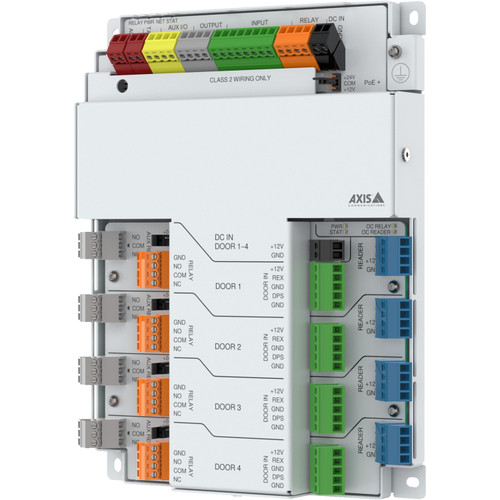
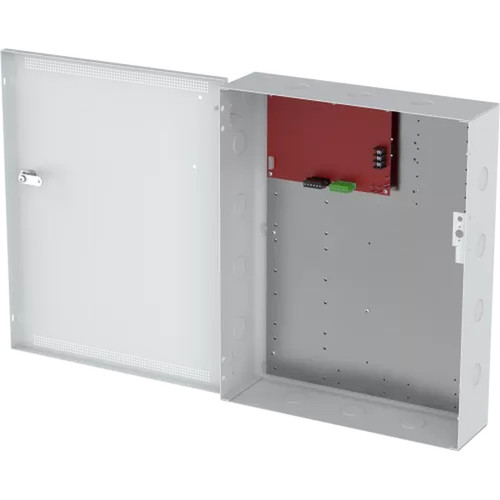
Both products are Axis A1711 4-Door Network Access Control Kits — wall-mount steel enclosures housing the AXIS A1710-B network door controller with an integrated 150W regulated DC power supply. The distinction lies in feature set: SKU 03336-004 is the standard kit with UL listing and PoE/ONVIF integration, while SKU 03338-004 is the FAI (Fire Alarm Interface) variant adding a dedicated FAI relay, onboard battery backup charging circuitry, and explicit AXIS Camera Station compatibility. Installers cross-shopping these are choosing between baseline compliance-grade access control and a fire-integrated, camera-station-aligned deployment.
In This Guide
Do both kits support the same door count and power output?
Both SKUs are rated for 4 independent doors and deliver a 150W regulated DC output to power door hardware — locks, readers, and REX devices — from a single enclosure. SKU 03336-004 specifies '4 doors simultaneous' and a '150W regulated DC with battery charging' supply. SKU 03338-004 likewise states '4 independent doors' and '150W DC regulated output,' and adds explicit mention of 'onboard charging circuitry for optional backup battery,' making the battery-backup architecture a named, documented feature rather than an implied one. Door capacity and raw power figures are identical; the FAI variant surfaces battery backup as a discrete, specified subsystem.
Which kit includes fire alarm interface capability and how does that affect installation scope?
This is the defining functional delta between the two SKUs. SKU 03338-004 (FAI) includes a 'dedicated FAI relay for building integration,' enabling the controller to release electric strikes or mag-locks on a fire alarm signal — a requirement in virtually all North American life-safety codes for electrically locked egress doors. SKU 03336-004 does not list an FAI relay in its specifications. Both kits carry the same steel tamper-protected enclosure (AXIS TA1202 referenced in 03336-004), but only the FAI variant is explicitly specified for fire-alarm-integrated deployments. Installers submitting to AHJs requiring failsafe egress on fire signal must verify relay compliance; the FAI SKU directly addresses that requirement while the standard SKU does not document it.
Are there differences in VMS and platform compatibility between the two kits?
SKU 03336-004 lists 'ONVIF-capable platforms' as its VMS compatibility, which covers a broad ecosystem of third-party access control and video management software. SKU 03338-004 expands on this with explicit support for 'AXIS Camera Station' in addition to 'ONVIF-compatible platforms.' For sites already standardized on AXIS Camera Station — Axis's native VMS — the FAI variant is the specified, validated option. For sites running third-party ONVIF-compliant platforms (Genetec, Milestone, Lenel, etc.), both kits are equally applicable per their stated specs. Neither SKU lists compatibility with non-ONVIF proprietary systems, and no additional integration middleware is specified for either.
Which should you choose: the A1711 or the A1711?
Our take: The 03338-004 FAI kit is the stronger choice when the installation requires fire alarm door release or AXIS Camera Station integration. The FAI variant adds a dedicated fire alarm interface relay — absent from the 03336-004 spec — making it the correct SKU for any electrically locked egress door subject to NFPA 101 or IBC life-safety requirements. It also explicitly names AXIS Camera Station compatibility, while the standard kit limits its VMS statement to generic ONVIF platforms. Both deliver identical door capacity (4 doors) and power output (150W regulated DC). The 03336-004 standard kit is the appropriate selection for AHJ-approved, UL-listed deployments where FAI is handled externally or is not required — its UL listing is explicitly specified, whereas the FAI variant's UL status is not stated in the provided specs. Platform choice and fire-code obligation are the two determinative selection criteria.
Side-by-Side Comparison
Spec-for-spec, from manufacturer data.
| Specification | Axis A1711 | Axis A1711 |
|---|---|---|
| MPN / SKU | 03336-004 | 03338-004 |
| Kit Designation | Standard | FAI (Fire Alarm Interface) |
| Door Capacity | 4 doors simultaneous | 4 independent doors |
| Integrated Controller | AXIS A1710-B | AXIS A1710-B |
| Power Supply Output | 150W regulated DC | 150W DC regulated output |
| Battery Backup | Battery charging mentioned | Onboard charging circuitry (explicit) |
| Fire Alarm Interface Relay | — | Dedicated FAI relay |
| Enclosure | Tamper-protected steel (AXIS TA1202) | Tamper-protected steel housing |
| Housing Color | White | White |
| UL Listed | Yes | Not specified |
| PoE Compatible | Yes | Not specified |
| VMS Compatibility | ONVIF-capable platforms | AXIS Camera Station; ONVIF-compatible platforms |
| Form Factor | Access Control Enclosure | Access Control Enclosure with Integrated Controller |
| Product Type | Controller (kit) | Controller (kit) |
| Datasheet | /content/product-datasheets/03336-004.pdf | /content/product-datasheets/03338-004.pdf |
Frequently Asked Questions
Which should you choose: the A1711 or the A1711?
The 03338-004 FAI kit is the stronger choice when the installation requires fire alarm door release or AXIS Camera Station integration. The FAI variant adds a dedicated fire alarm interface relay — absent from the 03336-004 spec — making it the correct SKU for any electrically locked egress door subject to NFPA 101 or IBC life-safety requirements. It also explicitly names AXIS Camera Station compatibility, while the standard kit limits its VMS statement to generic ONVIF platforms. Both deliver identical door capacity (4 doors) and power output (150W regulated DC). The 03336-004 standard kit is the appropriate selection for AHJ-approved, UL-listed deployments where FAI is handled externally or is not required — its UL listing is explicitly specified, whereas the FAI variant's UL status is not stated in the provided specs. Platform choice and fire-code obligation are the two determinative selection criteria.
Can either kit handle battery backup for door hardware during a power outage?
SKU 03338-004 (FAI) explicitly specifies 'onboard charging circuitry for optional backup battery,' documenting battery backup as a named feature. SKU 03336-004 references '150W regulated DC with battery charging' in its power supply description, suggesting charging capability is present, but does not call out a discrete battery backup subsystem. Installers requiring confirmed, spec-documented battery backup should specify the 03338-004; verify battery compatibility with Axis for the specific enclosure in both cases.
Is the A1711 FAI (03338-004) UL Listed like the standard kit (03336-004)?
The standard kit (03336-004) explicitly lists 'UL Listed' as a compliance spec and flags UL as a feature. The FAI variant (03338-004) does not include a UL listing statement in the provided specifications. Installers submitting to AHJs that require UL listing on the access control panel should confirm UL status directly with Axis for the 03338-004 before specifying it.
If my site runs a third-party ONVIF access control platform, does it matter which kit I order?
For purely ONVIF-based integrations, both kits are equally specified — both list ONVIF-compatible platform support. The FAI variant (03338-004) additionally names AXIS Camera Station, but that does not limit its ONVIF interoperability. The deciding factor between the two SKUs for a third-party ONVIF deployment is whether you need a built-in fire alarm interface relay (03338-004) or not (03336-004), and whether UL listing on the enclosure is an AHJ requirement.
More Access Controller Comparisons
- SDC 101-KDENA vs Axis A1711
- SDC 101-KDENA vs SDC MC-4PAK
- SDC 101-KDENA vs SDC PTH-4Q
- SDC MC-4PAK vs Axis A1711
- SDC PTH-4Q vs Axis A1711
- SDC 400U-RMB vs Axis A1711
Access Controller Buying Guides
Get a Second Opinion on Your Camera Choice
Share your site layout, coverage goals, and budget. Our team will validate the camera selection, flag anything we would change, and recommend products that match the use case.