
Best Access Control Panels for Multi-Door Sites
Multi-door access control panels — 4 to 8+ doors, scalability, OSDP reader support, and the I/O for a growing facility.

Jerry Tildsen
Access Control & Intercoms Specialist · Working integrator
Bottom line
Multi-door access control panel selection hinges on door count headroom, reader protocol (OSDP vs. Wiegand), enclosure strategy, and how cleanly the panel integrates with your chosen VMS or access software. The SKUs here span 4-door enclosure-ready units through 630-door scalable frames, so match panel capacity to your current door count plus a realistic 3-year growth buffer — over-speccing costs money, under-speccing forces a forklift upgrade. For sites running IP-based management or planning OSDP reader deployments, prioritize panels with native network connectivity and hardware that ships in a ready-to-mount enclosure to reduce field labor.
What This Setup Needs
Access control panels for multi-door commercial sites are not interchangeable — door count, wiring topology, power architecture, reader protocol, and software lock-in all drive total project cost more than the panel price tag itself. Evaluate these factors before you quote:
- Door capacity and scalability headroom: Panel capacity is a hard ceiling — once you hit it, you either add a sub-panel (if the architecture supports it) or replace the head-end. Count every reader position you need now, then add 25–50% for future phases. An 8-door panel at a site that routinely adds doors is a recurring cost center.
- Reader protocol — OSDP vs. Wiegand: Wiegand is legacy and unencrypted; OSDP v2 adds mutual authentication, encrypted communication, and supervised line monitoring. If your reader spec or security policy requires OSDP, confirm the panel supports it natively — not all mid-range panels do, and field retrofits are painful.
- Power architecture — AC vs. DC input and onboard lock power: Panels that accept both AC and DC input give installers flexibility and simplify battery-backed operation. Verify the onboard lock power budget (amps per door) against your strike/maglocks — undersized lock outputs mean external power supplies, extra wire runs, and more points of failure.
- Enclosure and form factor: A bare board requires an installer-supplied enclosure, knockouts, and a separate power supply — add cost and labor. Kitted or enclosure-inclusive options reduce field assembly time and ensure the power supply, battery compartment, and board are pre-matched. On retrofit jobs in finished spaces, enclosure dimensions matter as much as electrical specs.
- Software and VMS integration: Most mid-to-enterprise panels are certified for a specific set of access platforms (Genetec, Lenel, CCURE, proprietary). Confirm your software stack supports the panel via a native driver, not a generic OSDP wrapper — native drivers expose panel diagnostics, anti-passback, and event granularity that generic paths drop.
- I/O density — inputs, outputs, and auxiliary relays: Beyond door count, real sites need alarm inputs (REX, door contact, tamper), relay outputs (alarms, lighting, HVAC interlocks), and RS-485 buses for downstream readers and keypads. Low I/O density forces external I/O expanders that add complexity and failure points.
- Scalability path — sub-panels and distributed architecture: For campuses or buildings with 20+ doors on a roadmap, verify whether the head-end panel supports distributed sub-panels on a single credential database. Systems that require separate databases per panel are a management burden at scale and complicate enterprise reporting.
Our Picks
Selected from our catalog by spec-fit. All channel-direct and factory-new — not ranked by price.
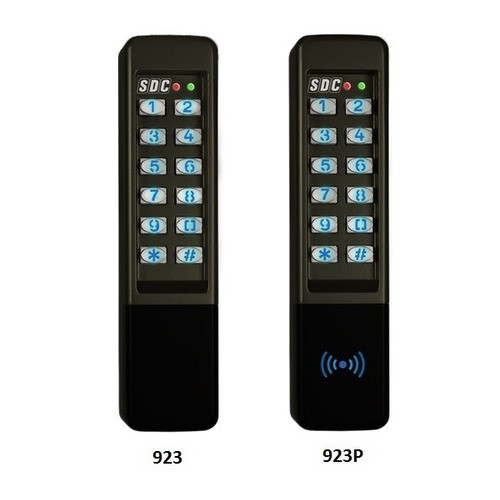
SDC 423MUL1G
10-Door
The SDC 423MUL1G is well-suited for mid-size commercial sites needing a single-panel solution that reaches 10 doors without sub-panel complexity — a strong fit when you want to cover a full floor or small building with one wired controller and room to grow beyond the typical 4- or 8-door tier.
View product →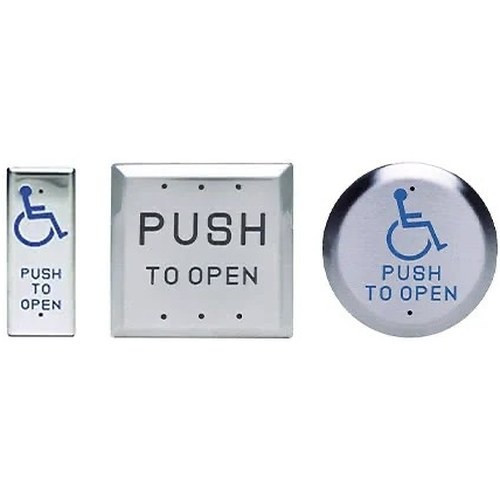
SDC 482R-KIT
630-Door
The SDC 482R-KIT is a strong fit for large-campus or enterprise deployments where aggregate door counts reach into the hundreds — its 630-door class and kitted housing format make it a practical head-end choice when the project demands centralized credential management across multiple buildings without multiplying standalone panels.
View product →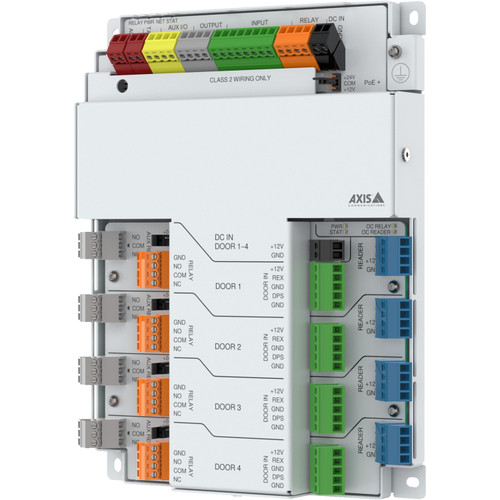
Axis A1711
4-Door
The Axis A1711 is well-suited for IP-centric installations where a 4-door enclosure-ready unit needs to slot into an Axis ecosystem — its AC/DC power flexibility and enclosed form factor reduce field assembly time, making it a practical fit for retrofit jobs or branch-office deployments where clean integration with Axis VMS and OSDP readers is the priority.
View product →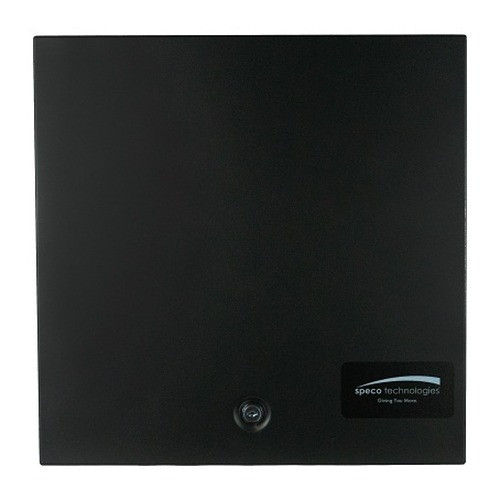
Speco Technologies A8P
8-Door
The Speco Technologies A8P is a strong fit for 8-door sites that need an integrated power solution in a single panel — the built-in power supply simplifies the bill of materials and reduces enclosure crowding, making it well-suited for new construction or tenant-improvement projects where keeping the head-end compact and self-contained matters.
View product →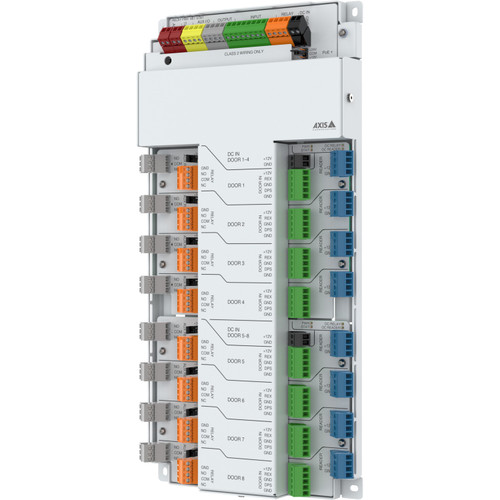
Axis TA1203
8-Door
The Axis TA1203 is well-suited as a companion enclosure for Axis access control deployments scaling to 8 doors — its dedicated Access Control Enclosure form factor is engineered to house Axis controllers in a protected, rack- or wall-mountable assembly, making it the right infrastructure choice when you are standardizing on the Axis access platform and need a clean, field-proven mounting solution.
View product →Frequently Asked Questions
How many doors can I control from a single access control panel?
It depends entirely on the panel architecture. Entry-level commercial panels typically handle 2–4 doors; mid-range units cover 8–10 doors from a single board. Enterprise-class systems like the SDC 482R-KIT are designed for 630-door deployments using distributed sub-panels tied to a central head-end. Always size to your 3-year growth projection, not your current door count — panel replacements are disruptive and expensive.
What is OSDP and do I need it over Wiegand for my readers?
OSDP (Open Supervised Device Protocol) is an RS-485 serial standard for reader-to-panel communication that adds bidirectional data, AES-128 encryption, and line supervision — Wiegand is a legacy one-way unencrypted format from the 1980s. For sites with a security policy that requires encrypted reader communication, OSDP v2 is the correct spec. It also enables reader status feedback (tamper, online/offline) that Wiegand cannot deliver. If your panel or reader mix is Wiegand-only, you can still deploy securely, but you lose those diagnostics.
Should I buy a panel with a built-in enclosure or spec the enclosure separately?
Enclosure-inclusive or kitted options reduce field labor and ensure the power supply, battery, and board are pre-matched and UL-listed as an assembly — that matters for inspections. Separate enclosures give integrators flexibility to right-size the box for local conduit layouts and to add I/O expanders or larger batteries. For standardized roll-outs across many similar sites, a kitted form factor wins on consistency and installation speed; for custom or retrofit jobs, a bare board with a field-selected enclosure often gives a cleaner result.
What access control software platforms work with these panels?
Panel-to-software compatibility is non-negotiable — a panel without a native driver for your chosen platform means you are dependent on a generic OSDP path that may omit anti-passback, elevator control, and panel-health events. Axis panels integrate natively with Axis Camera Station Secure Entry and are also supported by select third-party platforms via OSDP. SDC panels have their own integration ecosystem. Always confirm the driver certification matrix with your software vendor before finalizing hardware, not after.
How do I calculate lock power requirements for a multi-door panel?
Add up the hold current (in amps) for every electric strike or maglock on the panel, then add 20% headroom for inrush and future devices. A typical 12VDC maglock draws 500mA; an electric strike draws 250–400mA. An 8-door panel powering eight maglocks needs roughly 4–5A of lock power — panels with undersized onboard supplies (often 1–2A shared) require external power supplies per door cluster, which adds enclosure space, wiring, and cost. Confirm the panel's onboard lock power spec before assuming it covers all doors.
Can I expand a multi-door panel as my facility grows without replacing the head-end?
Some architectures support this and some do not. Panels designed for distributed deployments allow downstream sub-panels or I/O expanders to be added on an RS-485 bus, sharing one credential database and one management interface. Others are fixed-capacity — once you hit the door limit, expansion requires a second independent panel with its own database. Ask the manufacturer whether the panel supports sub-panel expansion, what the maximum node count is, and whether credential sync is native or requires middleware.
Related Resources
- Access Controller comparisons — head-to-head spec matchups
- Access Control Panel & Door Controller Buying Guide
- Best Door Controllers for a Small Business
- All product comparisons
Speccing this for a project?
Send us your requirements and our senior specialists will confirm specs, compatibility, availability and pricing — free, usually within one business day. Channel-direct, factory-new, serving commercial integrators since 2014.
Get a Free QuoteComparing for a project?
Send us the models you are weighing and our team will confirm specs, compatibility, availability, and pricing — free, usually within one business day.