
SDC 101-KDENA vs SDC PTH-4Q: Specification Comparison
Both the SDC 101-KDENA and the SDC PTH-4Q are wired, four-door access controllers from SDC carrying identical door capacity, credential ceiling, communication protocols, credential type, and warranty tier. A buyer evaluating mid-scale access control for a single building or campus would reasonably place both units on the same shortlist. The comparison below examines the three dimensions that most often drive a final decision for this product class: physical and electrical installation fit, feature set and override capability, and integration and protocol support.
In This Guide
Which controller fits my enclosure and electrical infrastructure?
The 101-KDENA is rated at 24 VDC input and weighs 2 lbs with a footprint of 4½" × 6 7/16" × 2". It supports both wall and rack mounting and is listed as PoE (802.3af)-capable, meaning it can draw power directly from a compliant PoE switch without a separate power supply. The PTH-4Q operates at 30 VDC input and is lighter at 1.2 lbs with a smaller 4½" × 4½" footprint; rack or wall mount compatibility is not stated in the provided specifications. For sites already running 24 VDC power infrastructure or a managed PoE switch fabric, the 101-KDENA aligns without additional conversion hardware. The PTH-4Q's 30 VDC requirement and smaller chassis may suit enclosure-constrained installs, but integrators will need to confirm a compatible supply is on hand, as this is not addressed in the available spec data.
What on-device features and manual override options does each controller provide?
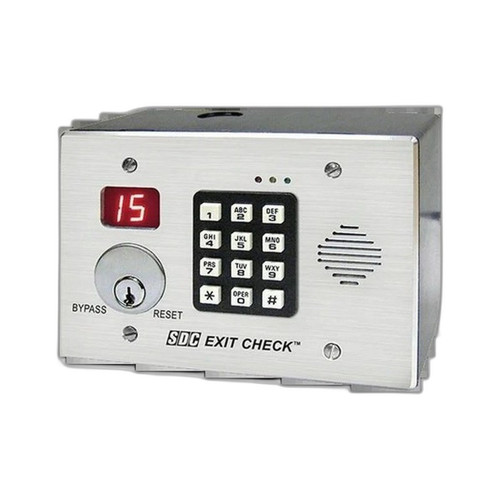
The 101-KDENA explicitly includes an integrated key switch for emergency manual override — a hardware failsafe that allows authorized personnel to bypass electronic access control without network connectivity or software. It also lists a keypad reader interface and HID credential compatibility. The PTH-4Q's provided specifications do not mention a key switch, manual override mechanism, or onboard reader interface type. Both units store 250,000 credentials on-device per their listed specs. The 101-KDENA's package contents note references components ordered separately, implying a modular accessory approach; the PTH-4Q's package contents are not described in the provided data. For installations where physical failsafe override is a code requirement or a client mandate, the 101-KDENA's documented key switch is a direct differentiator; the PTH-4Q's override provisions, if any, are not confirmed by the available specifications.
How do these controllers integrate with readers, networks, and VMS platforms?
Both controllers list OSDP and TCP/IP as their communication protocols, supporting encrypted reader communications over OSDP and direct network connectivity via TCP/IP. The 101-KDENA specifies HID-compatible reader technology, confirming interoperability with the HID reader ecosystem without additional middleware. The PTH-4Q lists HID as its credential type and cites compatibility with Genetec and Milestone VMS platforms in its product bullets — however, these integration claims appear in marketing-sourced bullet text rather than in the formal specification fields, so integrators should verify certification status directly with the VMS vendors before deployment. The 101-KDENA's VMS compatibility is not addressed in the provided specifications. Both units use wired connectivity exclusively; neither lists wireless or cellular fallback in the available spec data.
Which should you choose: the 101-KDENA or the PTH-4Q?
Our take: The 101-KDENA is the stronger choice when a 24 VDC or PoE power infrastructure is already in place and a documented hardware override is a project requirement. Key spec deltas: the 101-KDENA operates at 24 VDC versus the PTH-4Q's 30 VDC, making it directly compatible with standard PoE 802.3af switches without a separate converter; it includes an integrated key switch for emergency override, a capability absent from the PTH-4Q's provided specifications; and it weighs 2 lbs in a 4½" × 6 7/16" × 2" footprint with confirmed wall and rack mount options, versus the PTH-4Q's 1.2 lb, 4½" × 4½" chassis with unspecified mounting. The PTH-4Q warrants consideration for space-constrained enclosures or where Genetec/Milestone integration is a hard requirement, provided those platform claims are independently verified — they are not confirmed in the formal specification fields available for this comparison.
Side-by-Side Comparison
Spec-for-spec, from manufacturer data.
| Specification | SDC 101-KDENA | SDC PTH-4Q |
|---|---|---|
| Door Capacity | 4 doors | 4 doors |
| Credential / User Capacity | 250,000 | 250,000 |
| Communication Protocols | OSDP; TCP/IP | OSDP; TCP/IP |
| Input Voltage | 24 VDC | 30 VDC |
| PoE Support | 802.3af | — |
| Connectivity | Wired | Wired |
| Credential Type | HID | HID |
| Reader Interface | Keypad | — |
| Manual Override | Integrated key switch | — |
| Mount Type | Wall; Rack | — |
| Dimensions | 4½" × 6 7/16" × 2" | 4½" × 4½" |
| Weight | 2 lbs | 1.2 lbs |
| Warranty | Lifetime | Lifetime |
| VMS Platform Compatibility | — | Genetec; Milestone (bullet text only — verify independently) |
| Strike Type Listed | Magnetic Lock | — |
| Datasheet Available | Yes (/content/product-datasheets/101-KDENA.pdf) | Yes (/content/product-datasheets/PTH-4Q.pdf) |
Frequently Asked Questions
Which should you choose: the 101-KDENA or the PTH-4Q?
The 101-KDENA is the stronger choice when a 24 VDC or PoE power infrastructure is already in place and a documented hardware override is a project requirement. Key spec deltas: the 101-KDENA operates at 24 VDC versus the PTH-4Q's 30 VDC, making it directly compatible with standard PoE 802.3af switches without a separate converter; it includes an integrated key switch for emergency override, a capability absent from the PTH-4Q's provided specifications; and it weighs 2 lbs in a 4½" × 6 7/16" × 2" footprint with confirmed wall and rack mount options, versus the PTH-4Q's 1.2 lb, 4½" × 4½" chassis with unspecified mounting. The PTH-4Q warrants consideration for space-constrained enclosures or where Genetec/Milestone integration is a hard requirement, provided those platform claims are independently verified — they are not confirmed in the formal specification fields available for this comparison.
Does either controller support PoE power, or do both need a dedicated supply?
Only the 101-KDENA lists PoE (802.3af) support in its specifications, allowing it to draw power from a compliant PoE switch. The PTH-4Q is rated at 30 VDC but its power sourcing method is not described in the provided spec data, so a dedicated supply should be assumed until confirmed with SDC.
Which unit is better if my site requires a physical emergency override at the door controller?
The 101-KDENA includes an integrated key switch for manual override per its listed specifications. The PTH-4Q's specifications do not mention any override mechanism; buyers with a hard requirement for hardware failsafe should confirm directly with SDC whether the PTH-4Q offers this capability before selecting it.
Both controllers list OSDP and TCP/IP — is there a real integration difference between them?
At the protocol level both units are equivalent per their specs. The PTH-4Q's bullet copy references Genetec and Milestone VMS compatibility, but this claim appears in marketing-sourced text rather than the formal specification fields and should be verified with the VMS vendors. The 101-KDENA's VMS compatibility is not addressed in its available specifications. Neither unit lists wireless connectivity.
More Access Controller Comparisons
- SDC 101-KDENA vs Axis A1711
- SDC 101-KDENA vs SDC MC-4PAK
- SDC MC-4PAK vs Axis A1711
- SDC PTH-4Q vs Axis A1711
- SDC 400U-RMB vs Axis A1711
- SDC 400U-RMB vs SDC 101-KDENA
Access Controller Buying Guides
Get a Second Opinion on Your Camera Choice
Share your site layout, coverage goals, and budget. Our team will validate the camera selection, flag anything we would change, and recommend products that match the use case.