
APC by Schneider Electric SUA500PDR-S vs Vertiv GXT5-500LVRT2UXL: Specification Comparison
Both the APC SUA500PDR-S and the Vertiv GXT5-500LVRT2UXL are 500VA rack-mount uninterruptible power supplies targeting small server closets, edge deployments, and light network equipment loads in commercial and light-industrial settings. The core purchase decision turns on UPS topology (line-interactive vs. online double-conversion), output power capacity, outlet count and programmability, runtime characteristics, and management/connectivity depth—all areas where the two units diverge meaningfully despite sharing the same VA rating.
In This Guide
Which unit delivers cleaner, more reliable output power?
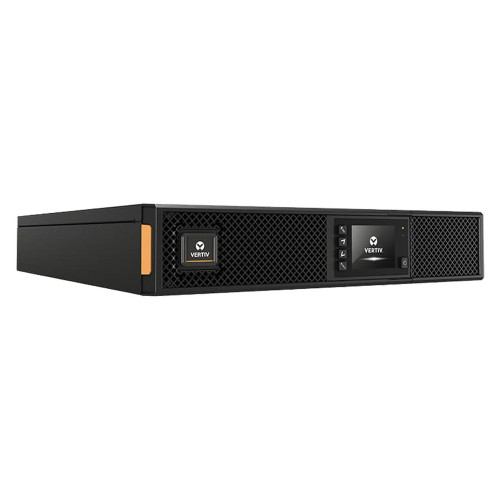
The GXT5-500LVRT2UXL uses online double-conversion topology, meaning utility power is continuously rectified to DC and then re-inverted to AC, so connected equipment never operates on raw utility voltage. Transfer time to battery is zero because the inverter is always active. Output is a pure sinewave regulated to ±3% across user-selectable voltages of 110, 115, 120, or 125 VAC. Output capacity matches the VA rating: 500 W at 500 VA, yielding a unity power factor.
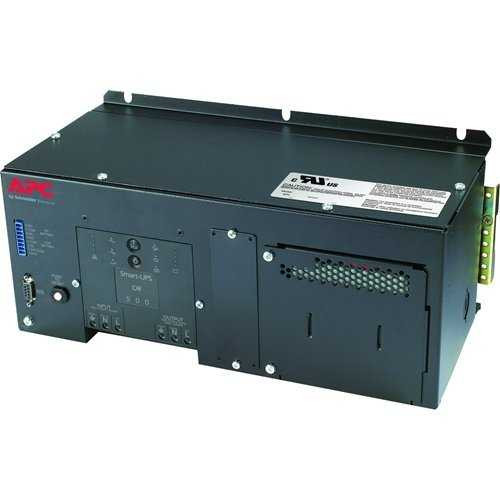
The SUA500PDR-S is line-interactive. In normal operation it passes conditioned utility power directly to the load, switching to inverter only on an outage or brownout. Output waveform type is not specified in the provided specs. Rated output is 320 W at 500 VA, a 0.64 power factor. The input operating window is 75–154 V, which the unit handles via AVR (automatic voltage regulation) before switching to battery. For purely resistive or near-unity-PF loads the lower watt rating constrains usable capacity.
How do runtime, battery design, and recharge time compare?
The GXT5-500LVRT2UXL specs cite 15–18 minutes at 50% load (250 W) and 8–10 minutes at 80% load (400 W). Its battery is hot-swappable sealed lead-acid (VRLA), meaning the unit can remain online during a battery replacement—a meaningful operational advantage in continuously staffed environments. Battery recharge time is not stated in the provided specs.
The SUA500PDR-S specs cite 21 minutes at half load (160 W, half of 320 W rated) and 7.4 minutes at full load (320 W). Battery recharge time is specified at 2 hours. The battery is sealed lead-acid (VRLA) but the hot-swap capability is not stated in the provided specs. The number of supported batteries is listed as one, with no mention of external battery pack compatibility in the provided specs. Direct runtime comparison at an identical watt load is not possible from the provided data because each manufacturer's 'half load' and 'full load' reference different absolute wattages.
Which unit offers more integration and remote management options?
The GXT5-500LVRT2UXL provides USB, RS485, and RS232 ports plus an optional RDU101 network card slot for SNMP/network management. A color LCD displays real-time load, runtime, voltage, and battery health. Management software compatibility is listed as PowerAlert, VMware, Windows Server, and Linux shutdown daemons. Four of six NEMA 5-15R outlets are programmable (load-shedding or sequencing). Certifications include UL 1778 4th ed., CSA 22.2 No. 107.1, Energy Star 2.0, RoHS2, REACH, and WEEE. Warranty is stated as 3-year advanced replacement covering UPS and battery with next-business-day shipment.
The SUA500PDR-S provides LED status indication; no communication ports, network card slots, or management software compatibility are mentioned in the provided specs. Three AC outlets are provided with no programmability noted. No certifications or warranty terms are stated in the provided specs. For deployments requiring remote monitoring, graceful server shutdown, or outlet-level control, the SUA500PDR-S spec data does not confirm those capabilities.
Which should you choose: the SUA500PDR-S or the GXT5-500LVRT2UXL?
Our take: The GXT5-500LVRT2UXL is the stronger choice when load-protection quality, management depth, and battery serviceability are primary requirements. Its online double-conversion topology eliminates transfer time and delivers a regulated pure sinewave at unity power factor (500 W vs. 320 W), giving it a 56% higher usable watt capacity at the same VA rating. Six outlets—four programmable—versus three non-programmable outlets on the SUA500PDR-S further expand its flexibility. Hot-swap batteries, a color LCD, and USB/RS485/RS232 plus optional SNMP connectivity directly address IT infrastructure and virtualization use cases. The SUA500PDR-S, however, specifies a 2-hour battery recharge time and a broader low-voltage input window down to 75 V, which may suit environments with severe brownouts and simpler loads. Buyers with basic edge-closet protection needs and no management requirement may find the SUA500PDR-S sufficient; those protecting servers, network gear, or any load requiring clean sinewave power should specify the GXT5-500LVRT2UXL.
Side-by-Side Comparison
Spec-for-spec, from manufacturer data.
| Specification | APC by Schneider Electric SUA500PDR-S | Vertiv GXT5-500LVRT2UXL |
|---|---|---|
| UPS Topology | Line-Interactive | Online Double Conversion |
| VA Capacity | 500 VA | 500 VA |
| Watt Capacity | 320 W | 500 W |
| Power Factor (rated) | 0.64 | 1.00 |
| Output Waveform | Not specified in provided specs | Pure Sinewave |
| Input Voltage Range | 75 – 154 V | 60 – 150 VAC |
| Input Frequency | 47 – 63 Hz | 50/60 Hz auto-sensing |
| Transfer Time to Battery | Not specified in provided specs | Zero (continuous online) |
| AC Outlets | 3 (non-programmable) | 6 NEMA 5-15R (4 programmable) |
| Battery Type | Sealed Lead Acid (VRLA) | Hot-Swappable VRLA |
| Runtime at ~50% Load | 21 min at 160 W | 15 – 18 min at 250 W |
| Runtime at Full / High Load | 7.4 min at 320 W | 8 – 10 min at 400 W |
| Battery Recharge Time | 2 hours | Not specified in provided specs |
| Communication Ports | Not specified in provided specs | USB, RS485, RS232; optional SNMP card |
| Display | LED | Color LCD (load, runtime, voltage, battery) |
| Efficiency | 94% | >92% at 50% load |
| Operating Temperature | 0 – 40 °C | 0 – 40 °C |
| Certifications | Not specified in provided specs | UL 1778, CSA 22.2 No. 107.1, Energy Star 2.0, RoHS2, REACH, WEEE |
| Warranty | Not specified in provided specs | 3-year advanced replacement (UPS + battery, next-business-day) |
| Form Factor | Rack (hard-wired input noted in title) | 2U Rack/Tower Convertible |
| Color | Black | Not specified in provided specs |
Frequently Asked Questions
Which should you choose: the SUA500PDR-S or the GXT5-500LVRT2UXL?
The GXT5-500LVRT2UXL is the stronger choice when load-protection quality, management depth, and battery serviceability are primary requirements. Its online double-conversion topology eliminates transfer time and delivers a regulated pure sinewave at unity power factor (500 W vs. 320 W), giving it a 56% higher usable watt capacity at the same VA rating. Six outlets—four programmable—versus three non-programmable outlets on the SUA500PDR-S further expand its flexibility. Hot-swap batteries, a color LCD, and USB/RS485/RS232 plus optional SNMP connectivity directly address IT infrastructure and virtualization use cases. The SUA500PDR-S, however, specifies a 2-hour battery recharge time and a broader low-voltage input window down to 75 V, which may suit environments with severe brownouts and simpler loads. Buyers with basic edge-closet protection needs and no management requirement may find the SUA500PDR-S sufficient; those protecting servers, network gear, or any load requiring clean sinewave power should specify the GXT5-500LVRT2UXL.
Can either of these UPS units power a server that requires a pure sinewave input?
The GXT5-500LVRT2UXL explicitly specifies a pure sinewave output via its online double-conversion inverter, making it compatible with active-PFC server power supplies that require sinewave. The SUA500PDR-S output waveform is not stated in the provided specs, so sinewave compatibility cannot be confirmed for that unit from the available data.
Which unit gives more runtime for a typical small network switch or NVR load?
A direct comparison requires normalizing to the same watt load, which the provided specs do not fully support. The GXT5-500LVRT2UXL states 15–18 minutes at 250 W (50% of 500 W) and 8–10 minutes at 400 W (80% of 500 W). The SUA500PDR-S states 21 minutes at 160 W (half of its 320 W rated output) and 7.4 minutes at 320 W. At lighter loads both units offer comparable durations, but the GXT5's higher watt ceiling means it sustains heavier loads with more headroom before battery runtime degrades.
Is the SUA500PDR-S or GXT5-500LVRT2UXL better suited for a rack-mount installation with remote monitoring?
The GXT5-500LVRT2UXL is designed for managed rack deployments: it is a 2U rack/tower convertible unit with USB, RS485, RS232, an optional SNMP network card slot, and compatibility with PowerAlert and hypervisor shutdown agents. The SUA500PDR-S provides no communication ports or management software compatibility in the provided specs, making remote monitoring and graceful shutdown integration unconfirmed for that model.
More UPS Comparisons
- Vertiv GXT5-500LVRT2UXL vs APC by Schneider Electric SUA500PDR-H
- Vertiv GXT5-500LVRT2UXL vs APC by Schneider Electric BE500G3
- Vertiv GXT5-500LVRT2UXL vs APC by Schneider Electric SCL500RM1UC
- Vertiv GXT5-500LVRT2UXL vs APC by Schneider Electric SCL500RMI1UC
- APC by Schneider Electric SUA500PDR-H vs Middle Atlantic S500R
- APC by Schneider Electric SUA500PDR-H vs APC by Schneider Electric BE500G3
UPS Buying Guides
Get a Second Opinion on Your Camera Choice
Share your site layout, coverage goals, and budget. Our team will validate the camera selection, flag anything we would change, and recommend products that match the use case.