
APC by Schneider Electric SRT8KXLT-IEC vs APC by Schneider Electric DLRT8KRMXLT: Specification Comparison
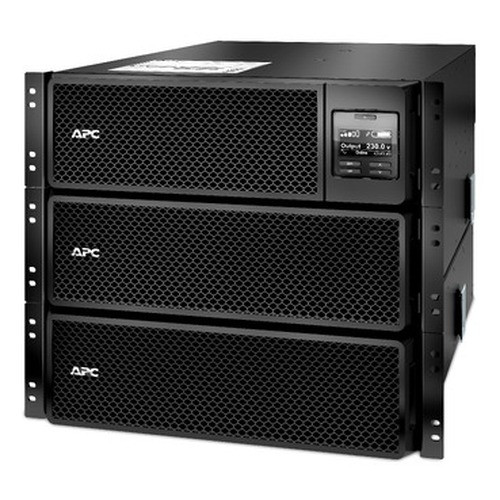
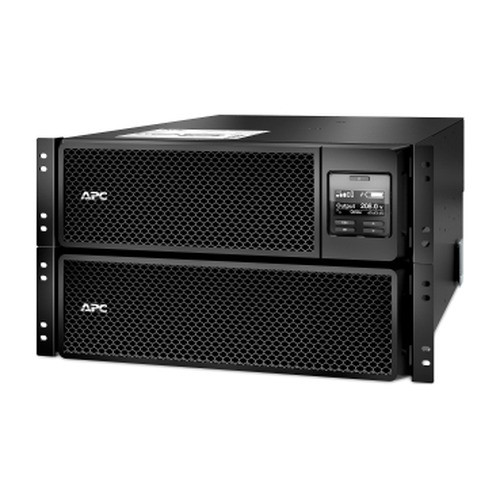
Both the SRT8KXLT-IEC and the DLRT8KRMXLT are 8000VA / 8000W double-conversion online UPS units from APC by Schneider Electric, targeting data centers, server rooms, and mission-critical IT infrastructure requiring pure sine-wave, zero-transfer-time power protection. The SRT8KXLT-IEC is an IEC-outlet tower unit; the DLRT8KRMXLT is a Dell-badged tower/rack-convertible unit with NEMA outlets. Both share the same core kVA/kW rating and input range, making them direct cross-shop candidates for buyers selecting an 8kVA online UPS.
In This Guide
- Which unit delivers better efficiency and output power quality?
- Which unit provides broader load protection and site-management features?
- Which unit better matches common rack and outlet requirements in the target environment?
- Which should you choose: the SRT8KXLT-IEC or the DLRT8KRMXLT?
- Side-by-Side Specs
- FAQ
Which unit delivers better efficiency and output power quality?
The SRT8KXLT-IEC specifies a single online-mode efficiency of 98.5%, while the DLRT8KRMXLT specifies 94% in online mode and 98% in ECO mode. For always-on double-conversion deployments where ECO mode is not used, the SRT8KXLT-IEC's 98.5% online efficiency is 4.5 percentage points higher than the DLRT8KRMXLT's 94% online figure—a meaningful difference in heat dissipation and energy cost at 8kW continuous load.
On output power quality, the SRT8KXLT-IEC specifies output voltage THD of 2% and a crest factor of 3:1, both indicators of clean sine-wave output suitable for sensitive loads. The DLRT8KRMXLT's spec sheet does not list output THD or crest factor, so a direct comparison on those metrics is not possible from the provided data.
Both units specify sine waveform output, 50/60 Hz output frequency, and an output voltage range of 208–240 V, so fundamental power delivery parameters are matched.
Which unit provides broader load protection and site-management features?
The SRT8KXLT-IEC includes Automatic Voltage Regulation (AVR), Emergency Power Off (EPO), and surge protection rated at 480 J. AVR and EPO are not listed in the DLRT8KRMXLT's provided spec sheet, so it is not confirmed from the available data whether those features are present on that model.
The DLRT8KRMXLT explicitly lists audible alarms and auto-restart, neither of which appears in the SRT8KXLT-IEC's provided specs. Audible alarms and auto-restart are baseline UPS features and may be present on the SRT8KXLT-IEC but are simply not confirmed in the data supplied.
The noise level of the SRT8KXLT-IEC is specified at 55 dB. No acoustics figure is provided for the DLRT8KRMXLT. For installations in semi-open office-adjacent spaces, 55 dB is worth noting.
Which unit better matches common rack and outlet requirements in the target environment?
The DLRT8KRMXLT specifies 6 AC outlets of types NEMA L6-20R and NEMA L6-30R—standard twist-lock receptacles common in North American data centers and server rooms. This gives buyers clear, confirmed outlet inventory for load planning.
The SRT8KXLT-IEC's outlet configuration is not listed in the provided specifications. As an IEC-outlet unit, it is oriented toward environments using IEC 60320 power strips or international equipment, but specific outlet types and quantities are not confirmed from the available data.
The DLRT8KRMXLT is described as tower/rack-convertible, offering deployment flexibility in both floor-standing and rack-mount configurations. The SRT8KXLT-IEC is presented as a tower unit; rack-mount capability is not confirmed from the provided specs. Buyers with rack-density constraints should note this distinction.
Which should you choose: the SRT8KXLT-IEC or the DLRT8KRMXLT?
Our take: The SRT8KXLT-IEC is the stronger choice when online-mode efficiency, confirmed AVR, EPO capability, and IEC outlet compatibility are the primary requirements. Its 98.5% online efficiency outperforms the DLRT8KRMXLT's 94% online figure by 4.5 percentage points—at 8kW continuous load that difference is operationally significant for energy cost and thermal management. It also explicitly confirms AVR and EPO, which are unconfirmed on the DLRT8KRMXLT from the available specs. The DLRT8KRMXLT is the stronger fit for North American environments requiring NEMA L6-20R and L6-30R twist-lock outlets, confirmed tower/rack-convertible form factor, and explicit auto-restart behavior; its 98% ECO-mode efficiency is competitive if ECO mode is operationally acceptable. Buyers in Dell-integrated infrastructure environments may also find the DLRT8KRMXLT's branding and outlet ecosystem better aligned. Neither unit's battery runtime, communication card slots, nor weight are provided in the supplied specs, so those dimensions cannot be compared here.
Side-by-Side Comparison
Spec-for-spec, from manufacturer data.
| Specification | APC by Schneider Electric SRT8KXLT-IEC | APC by Schneider Electric DLRT8KRMXLT |
|---|---|---|
| UPS Topology | Double-conversion (Online) | Double-conversion (Online) |
| Output Power Capacity | 8 kVA | 8 kVA |
| Output Power | 8000 W | 8000 W |
| Waveform | Sine | Sine |
| Input Voltage Range | 100–275 V | 100–275 V |
| Input Frequency | 40–70 Hz | 40/70 Hz |
| Output Voltage Range | 208–240 V | 208–240 V |
| Output Frequency | 50/60 Hz | 50/60 Hz |
| Efficiency (Online Mode) | 98.5% | 94% |
| Efficiency (ECO Mode) | — | 98% |
| Surge Energy Rating | 480 J | 480 J |
| Output Voltage THD | 2% | — |
| Crest Factor | 3:1 | — |
| AVR | Yes | — |
| Emergency Power Off (EPO) | Yes | — |
| Surge Protection | Yes | Yes |
| Audible Alarm | — | Yes |
| Auto-Restart | — | Yes |
| AC Outlet Types | — | NEMA L6-20R, NEMA L6-30R |
| AC Outlet Quantity | — | 6 |
| Noise Level | 55 dB | — |
| Form Factor | Tower | Tower/Rack-convertible |
Frequently Asked Questions
Which should you choose: the SRT8KXLT-IEC or the DLRT8KRMXLT?
The SRT8KXLT-IEC is the stronger choice when online-mode efficiency, confirmed AVR, EPO capability, and IEC outlet compatibility are the primary requirements. Its 98.5% online efficiency outperforms the DLRT8KRMXLT's 94% online figure by 4.5 percentage points—at 8kW continuous load that difference is operationally significant for energy cost and thermal management. It also explicitly confirms AVR and EPO, which are unconfirmed on the DLRT8KRMXLT from the available specs. The DLRT8KRMXLT is the stronger fit for North American environments requiring NEMA L6-20R and L6-30R twist-lock outlets, confirmed tower/rack-convertible form factor, and explicit auto-restart behavior; its 98% ECO-mode efficiency is competitive if ECO mode is operationally acceptable. Buyers in Dell-integrated infrastructure environments may also find the DLRT8KRMXLT's branding and outlet ecosystem better aligned. Neither unit's battery runtime, communication card slots, nor weight are provided in the supplied specs, so those dimensions cannot be compared here.
Is the SRT8KXLT-IEC or DLRT8KRMXLT more efficient for continuous 24/7 online operation?
Based on the provided specs, the SRT8KXLT-IEC is more efficient in continuous online mode at 98.5% versus the DLRT8KRMXLT's 94% online efficiency. The DLRT8KRMXLT reaches 98% only in ECO mode, which bypasses full double-conversion protection during stable utility power.
Which unit is better suited for a standard North American server rack with twist-lock PDUs?
The DLRT8KRMXLT is the confirmed fit: its spec sheet lists 6 NEMA L6-20R and L6-30R outlets and a tower/rack-convertible form factor. The SRT8KXLT-IEC's outlet types and quantities are not listed in the provided specifications, and its IEC designation indicates it targets IEC 60320 power environments.
Does either unit support Emergency Power Off (EPO) for compliance with data center safety codes?
EPO is explicitly confirmed on the SRT8KXLT-IEC. The DLRT8KRMXLT's provided spec sheet does not list EPO, so that feature cannot be confirmed for it from the available data. Buyers with EPO requirements should verify directly with APC whether the DLRT8KRMXLT supports EPO before purchasing.
More UPS Comparisons
- APC by Schneider Electric SRT8KXLT30 vs Vertiv GXT5LI-8000MVRT4UXLN
- APC by Schneider Electric SRT8KXLT30 vs Vertiv GXT5LI-8000GVRT3UXLN
- APC by Schneider Electric SRT8KXLT30 vs APC by Schneider Electric SRT8KRMXLT-IEC
- APC by Schneider Electric DLRT8KRMXLT vs Vertiv GXT5LI-8000MVRT4UXLN
- APC by Schneider Electric DLRT8KRMXLT vs Vertiv GXT5LI-8000GVRT3UXLN
- APC by Schneider Electric DLRT8KRMXLT vs APC by Schneider Electric SRT8KRMXLT-IEC
UPS Buying Guides
Get a Second Opinion on Your Camera Choice
Share your site layout, coverage goals, and budget. Our team will validate the camera selection, flag anything we would change, and recommend products that match the use case.