
APC by Schneider Electric SRT8KXLI vs Vertiv GXT5LI-8000MVRT4UXLN: Specification Comparison
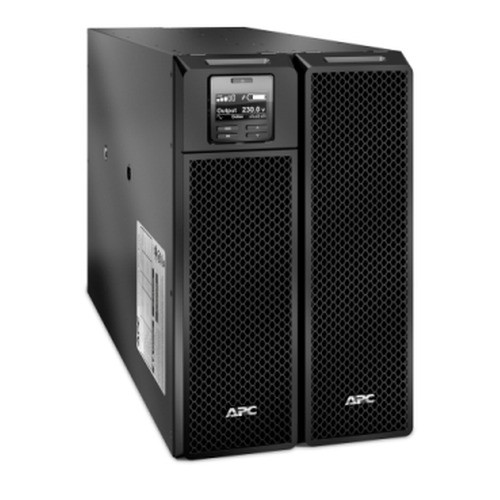
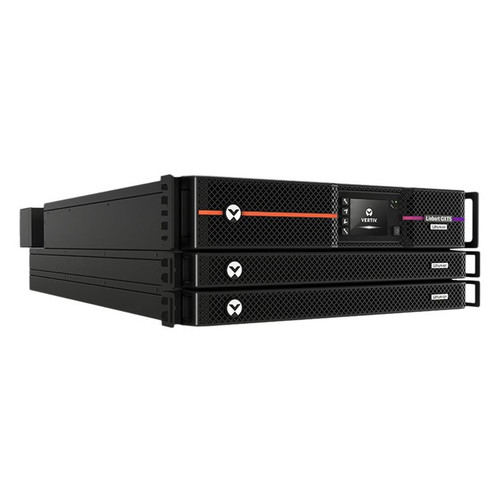
Both the APC Smart-UPS SRT8KXLI and the Vertiv GXT5 GXT5LI-8000MVRT4UXLN are 8000VA double-conversion online UPS units targeting critical IT and facility loads requiring pure sine-wave, zero-transfer-time power protection. They occupy the same power class and topology tier, making them direct cross-shop candidates for data center rows, server rooms, and edge deployments where runtime scalability and output quality are primary concerns. This comparison examines their power characteristics, physical and environmental footprint, and connectivity and compliance attributes based strictly on the published specifications for each model.
In This Guide
- How do the power ratings, input range, and output quality compare between the SRT8KXLI and GXT5LI-8000MVRT4UXLN?
- What are the physical footprint, weight, and operating environment specs for each unit?
- How do the two UPS units differ in interface options, output configuration, and management connectivity?
- Which should you choose: the SRT8KXLI or the GXT5LI-8000MVRT4UXLN?
- Side-by-Side Specs
- FAQ
How do the power ratings, input range, and output quality compare between the SRT8KXLI and GXT5LI-8000MVRT4UXLN?
Both units share an 8000VA / 8000W rating at unity power factor, meaning neither carries a derating penalty at full load—a meaningful spec for dense compute environments where kW draw is the binding constraint rather than kVA.
Input voltage range diverges significantly. The SRT8KXLI accepts 100–476 V AC, an unusually wide window that accommodates international mains, generator droop, and utility browndowns without switching to battery. The GXT5LI-8000MVRT4UXLN specifies 120V/240V input (hardwired L1, L2, N, G), indicating a North American split-phase design; its exact minimum and maximum input voltage tolerance are not stated in the provided specifications.
On output quality, the SRT8KXLI publishes a Total Harmonic Distortion figure of ≤3% and a crest factor of 3:1, both relevant for sensitive electronics. The GXT5LI-8000MVRT4UXLN does not provide output THD or crest factor in the supplied specs. The SRT8KXLI targets 220–240 V single-phase output; the GXT5LI-8000MVRT4UXLN is user-configurable for 120V/208V or 120V/240V, giving it split-phase flexibility the SRT8KXLI does not offer.
The SRT8KXLI lists a surge energy rating of 480 J and includes surge protection and an Emergency Power Off (EPO) function. Neither surge energy rating nor EPO is specified for the GXT5LI-8000MVRT4UXLN in the available data.
What are the physical footprint, weight, and operating environment specs for each unit?
Physical dimensions and weight are only provided for the GXT5LI-8000MVRT4UXLN: 6.9 in H × 16.9 in W × 35 in D, weighing 156.3 lbs. The SRT8KXLI's dimensions and weight are not included in the supplied specifications, preventing a direct rack-space or floor-load comparison.
Operating temperature is likewise only documented for the GXT5LI-8000MVRT4UXLN: 32°F to 104°F (0°C to 40°C), with a 10% output derating noted at 50°C. The SRT8KXLI's operating temperature range is absent from the provided specs.
Noise output is specified only for the SRT8KXLI at 55 dB, relevant in open-office or lab environments. No acoustic rating is available for the GXT5LI-8000MVRT4UXLN.
The GXT5LI-8000MVRT4UXLN carries a defined set of safety and emissions listings: UL 1642, UL 1973, UL 1778, CSA 22.2 No. 107.3, c-UL, FCC Part 15 Class A, and Energy Star 2.0. No equivalent listing data is provided for the SRT8KXLI in the supplied specifications.
How do the two UPS units differ in interface options, output configuration, and management connectivity?
The GXT5LI-8000MVRT4UXLN explicitly lists its interface options: Serial Port, Network RJ-45 (via RDU101 card), and USB. This covers the three standard UPS management paths—direct serial, network SNMP/HTTP card, and local USB—relevant for integration with DCIM platforms or hypervisor shutdown agents. The SRT8KXLI's interface and communications options are not detailed in the provided specifications.
Output voltage configurability differs: the GXT5LI-8000MVRT4UXLN is user-configurable between 120V/208V and 120V/240V split-phase, useful when the load mix includes both 120V devices and 208V three-wire equipment. The SRT8KXLI outputs 220–240 V single-phase; no configurable output voltage mode is mentioned.
The SRT8KXLI includes audible alarms and an EPO input per spec. Neither alarm nor EPO details appear in the GXT5LI-8000MVRT4UXLN's provided data. Input frequency acceptance for the SRT8KXLI spans 40–70 Hz, accommodating generator frequency variation; no input frequency range is stated for the GXT5LI-8000MVRT4UXLN.
Battery chemistry is implicit for the GXT5LI-8000MVRT4UXLN: its UL 1642 and UL 1973 listings are Li-Ion specific, confirming a lithium-ion battery pack—a meaningful advantage for weight, cycle life, and runtime-per-pound. The SRT8KXLI's battery chemistry is not specified in the provided data.
Which should you choose: the SRT8KXLI or the GXT5LI-8000MVRT4UXLN?
Our take: The SRT8KXLI is the stronger choice when the installation requires a wide international input voltage window (100–476 V vs. unspecified for the GXT5LI-8000MVRT4UXLN), published output quality guarantees (≤3% THD, 3:1 crest factor, both absent on the Vertiv), and a documented surge energy rating (480 J). The GXT5LI-8000MVRT4UXLN holds a clear edge for North American split-phase environments needing user-configurable 120V/208V or 120V/240V output, confirmed lithium-ion battery chemistry per UL 1642/1973 listings (lower weight-to-runtime ratio and longer cycle life), Energy Star 2.0 certification, and documented network management via RDU101 card. Buyers deploying in a North American data center with mixed 120V and 208V loads, and who value Li-Ion runtime economics, should favor the Vertiv. Buyers needing broad global input tolerance, tight output THD specs, or EPO integration with strict waveform requirements should favor the APC.
Side-by-Side Comparison
Spec-for-spec, from manufacturer data.
| Specification | APC by Schneider Electric SRT8KXLI | Vertiv GXT5LI-8000MVRT4UXLN |
|---|---|---|
| Topology | Double-Conversion Online | Double-Conversion Online |
| Power Rating (VA) | 8000 VA | 8000 VA |
| Power Rating (W) | 8000 W | 8000 W |
| Input Voltage Range | 100–476 V | 120V/240V (hardwired; exact min/max not specified) |
| Input Frequency | 40–70 Hz | — |
| Output Voltage | 220–240 V single-phase | 120V/208V or 120V/240V (user-configurable) |
| Output Wiring | — | Hardwired (L1, L2, N, G) |
| Output THD | ≤3% | — |
| Crest Factor | 3:1 | — |
| Surge Energy Rating | 480 J | — |
| Battery Chemistry | — | Lithium-Ion (per UL 1642 / UL 1973) |
| EPO | Yes | — |
| Interface Options | — | Serial, USB, Network RJ-45 (RDU101) |
| Noise Level | 55 dB | — |
| Operating Temperature | — | 0°C to 40°C (10% derating at 50°C) |
| Certifications / Listings | — | UL 1642, UL 1973, UL 1778, CSA 22.2 No. 107.3, c-UL, FCC Part 15 Class A, Energy Star 2.0 |
| Dimensions (H × W × D) | — | 6.9 in × 16.9 in × 35 in |
| Weight | — | 156.3 lbs |
Frequently Asked Questions
Which should you choose: the SRT8KXLI or the GXT5LI-8000MVRT4UXLN?
The SRT8KXLI is the stronger choice when the installation requires a wide international input voltage window (100–476 V vs. unspecified for the GXT5LI-8000MVRT4UXLN), published output quality guarantees (≤3% THD, 3:1 crest factor, both absent on the Vertiv), and a documented surge energy rating (480 J). The GXT5LI-8000MVRT4UXLN holds a clear edge for North American split-phase environments needing user-configurable 120V/208V or 120V/240V output, confirmed lithium-ion battery chemistry per UL 1642/1973 listings (lower weight-to-runtime ratio and longer cycle life), Energy Star 2.0 certification, and documented network management via RDU101 card. Buyers deploying in a North American data center with mixed 120V and 208V loads, and who value Li-Ion runtime economics, should favor the Vertiv. Buyers needing broad global input tolerance, tight output THD specs, or EPO integration with strict waveform requirements should favor the APC.
Which unit is better suited for a North American data center with both 120V and 208V loads?
The GXT5LI-8000MVRT4UXLN is designed for this scenario. Its output is user-configurable between 120V/208V and 120V/240V split-phase, and its hardwired (L1, L2, N, G) input is matched to North American split-phase service. The SRT8KXLI outputs 220–240V single-phase and is better aligned with international or single-voltage deployments.
Does either UPS use lithium-ion batteries, and does that matter for my installation?
Yes—the GXT5LI-8000MVRT4UXLN's UL 1642 (Li-Ion Battery Cells) and UL 1973 (Li-Ion Battery Pack w/UPS) listings confirm it uses a lithium-ion battery pack, which typically offers longer cycle life, faster recharge, and better energy density than VRLA alternatives. The SRT8KXLI's battery chemistry is not specified in the available data, so a direct comparison cannot be made from these specs alone.
Can either UPS be monitored remotely over the network?
The GXT5LI-8000MVRT4UXLN explicitly lists a Network RJ-45 interface via the RDU101 management card, along with Serial and USB ports. The SRT8KXLI's interface and network management options are not detailed in the provided specifications; prospective buyers should consult APC documentation for communications card compatibility.
More UPS Comparisons
- APC by Schneider Electric SRT8KXLT30 vs Vertiv GXT5LI-8000MVRT4UXLN
- APC by Schneider Electric SRT8KXLT30 vs Vertiv GXT5LI-8000GVRT3UXLN
- APC by Schneider Electric SRT8KXLT30 vs APC by Schneider Electric SRT8KRMXLT-IEC
- APC by Schneider Electric DLRT8KRMXLT vs Vertiv GXT5LI-8000MVRT4UXLN
- APC by Schneider Electric DLRT8KRMXLT vs Vertiv GXT5LI-8000GVRT3UXLN
- APC by Schneider Electric DLRT8KRMXLT vs APC by Schneider Electric SRT8KRMXLT-IEC
UPS Buying Guides
Get a Second Opinion on Your Camera Choice
Share your site layout, coverage goals, and budget. Our team will validate the camera selection, flag anything we would change, and recommend products that match the use case.