
APC by Schneider Electric SRT8KXLI vs APC by Schneider Electric DLRT8KRMXLT: Specification Comparison
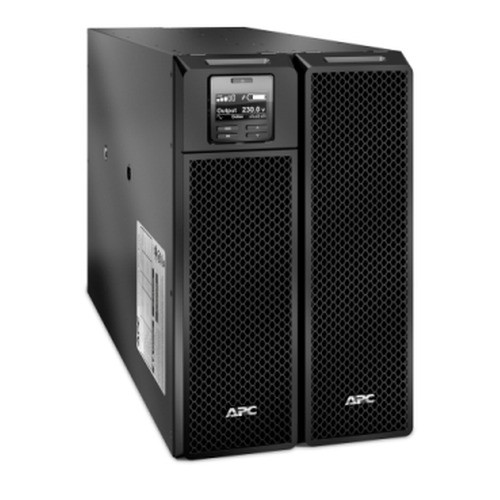
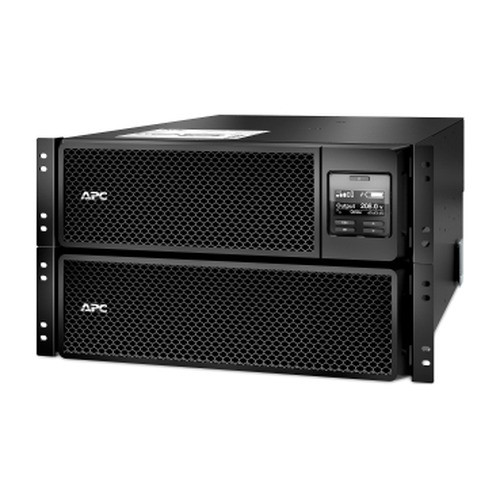
Both the SRT8KXLI and DLRT8KRMXLT are APC Smart-UPS SRT double-conversion online UPS units rated at 8000VA / 8000W, making them directly cross-shoppable in the large-capacity single-phase UPS segment. The key differentiators center on input voltage range, output voltage compatibility, form factor flexibility, and outlet configuration — factors that determine whether each unit fits a given facility's electrical infrastructure and load equipment. Neither topology nor power rating separates them; the decision turns on site-specific voltage and receptacle requirements.
In This Guide
- Which unit accepts a wider range of incoming utility voltages?
- Which unit's output voltage and receptacle configuration matches your load equipment?
- Which unit provides better documented runtime efficiency and operational management features?
- Which should you choose: the SRT8KXLI or the DLRT8KRMXLT?
- Side-by-Side Specs
- FAQ
Which unit accepts a wider range of incoming utility voltages?
The SRT8KXLI accepts input voltages from 100 V to 476 V, a 376 V window that covers both standard 230 V and high-leg or TN-S three-phase-derived feeds common in international and industrial environments. The DLRT8KRMXLT's input range is 100 V to 275 V — a 175 V window — which is suited to 208 V North American utility feeds but offers no headroom for higher international voltages.
Input frequency acceptance is listed as 40–70 Hz for the SRT8KXLI and 40/70 Hz for the DLRT8KRMXLT. The SRT8KXLI specification explicitly covers the full continuous range; the DLRT8KRMXLT specification states only the two endpoint values, leaving the continuous range unconfirmed in the provided data.
For sites outside North America or those drawing from high-voltage distribution panels, the SRT8KXLI's broader 476 V ceiling is a substantive advantage. For standard 208 V North American data-center rows, both units fall within range.
Which unit's output voltage and receptacle configuration matches your load equipment?
The SRT8KXLI outputs 220–240 V, targeting 230 V IEC-standard loads found outside North America and in some specialized lab or telecom environments. No output receptacle types or quantities are listed in the provided specifications for the SRT8KXLI, so outlet-level details cannot be confirmed.
The DLRT8KRMXLT outputs 208–240 V and includes six AC outlets specified as NEMA L6-20R and NEMA L6-30R — the twist-lock receptacles standard on North American 208 V data-center PDUs, rack servers, and high-density networking gear. This makes it immediately compatible with typical U.S. enterprise rack environments without adapters.
Buyers should match output voltage to their load equipment's nameplate before purchasing. The 208 V minimum on the DLRT8KRMXLT makes it unsuitable for loads requiring a strict 220 V floor; the 220 V minimum on the SRT8KXLI makes it unsuitable for loads designed only for 208 V nominal.
Which unit provides better documented runtime efficiency and operational management features?
The DLRT8KRMXLT provides efficiency figures: 94% in online double-conversion mode and 98% in ECO mode. At 8000 W continuous load, the 6% conversion loss in online mode translates to approximately 510 W of heat dissipation — relevant to cooling budget planning. ECO mode reduces this significantly but introduces a brief transfer gap. The SRT8KXLI does not include efficiency ratings in the provided specifications.
The DLRT8KRMXLT specifies an auto-restart capability, meaning the unit can resume operation after a utility outage without manual intervention. The SRT8KXLI does not list auto-restart in the provided data.
The SRT8KXLI specifies Emergency Power Off (EPO) support, output voltage THD of 3%, a crest factor of 3:1, and a noise level of 55 dB. None of these are listed for the DLRT8KRMXLT in the provided data. EPO is a code-required safety feature in many data center and industrial installations, and its confirmed presence on the SRT8KXLI is a meaningful differentiator where local regulations mandate it.
Which should you choose: the SRT8KXLI or the DLRT8KRMXLT?
Our take: The SRT8KXLI is the stronger choice when the installation requires a wide international input voltage range (up to 476 V vs. the DLRT8KRMXLT's 275 V ceiling), confirmed EPO support for code-compliant data-center or industrial facilities, and 230 V IEC output for non-North-American load equipment. The DLRT8KRMXLT is the stronger choice for standard North American 208 V environments: it provides documented efficiency ratings (94% online / 98% ECO) that the SRT8KXLI specs do not supply, confirms auto-restart operation, and ships with six NEMA L6-20R/L6-30R outlets ready for direct rack attachment without adapters or PDU intermediaries. Buyers on 208 V North American infrastructure who value a fully specified outlet bank and documented efficiency should favor the DLRT8KRMXLT; buyers on 230 V or variable international feeds, or those where EPO and a tighter output THD guarantee matter, should favor the SRT8KXLI.
Side-by-Side Comparison
Spec-for-spec, from manufacturer data.
| Specification | APC by Schneider Electric SRT8KXLI | APC by Schneider Electric DLRT8KRMXLT |
|---|---|---|
| UPS Topology | Double-conversion (Online) | Double-conversion (Online) |
| Output Power Capacity | 8 kVA | 8 kVA |
| Output Power | 8000 W | 8000 W |
| Waveform | Sine | Sine |
| Input Voltage Min | 100 V | 100 V |
| Input Voltage Max | 476 V | 275 V |
| Input Frequency | 40–70 Hz | 40/70 Hz |
| Output Voltage Min | 220 V | 208 V |
| Output Voltage Max | 240 V | 240 V |
| Output Frequency | 50/60 Hz | 50/60 Hz |
| Surge Energy Rating | 480 J | 480 J |
| Efficiency (Online) | — | 94% |
| Efficiency (ECO Mode) | — | 98% |
| Emergency Power Off (EPO) | Yes | — |
| Output Voltage THD | 3% | — |
| Noise Level | 55 dB | — |
| Crest Factor | 3:1 | — |
| Auto-Restart | — | Yes |
| AC Outlet Types | — | NEMA L6-20R, NEMA L6-30R |
| AC Outlets Quantity | — | 6 |
| Audible Alarms | Yes | Yes |
| Surge Protection | Yes | Yes |
Frequently Asked Questions
Which should you choose: the SRT8KXLI or the DLRT8KRMXLT?
The SRT8KXLI is the stronger choice when the installation requires a wide international input voltage range (up to 476 V vs. the DLRT8KRMXLT's 275 V ceiling), confirmed EPO support for code-compliant data-center or industrial facilities, and 230 V IEC output for non-North-American load equipment. The DLRT8KRMXLT is the stronger choice for standard North American 208 V environments: it provides documented efficiency ratings (94% online / 98% ECO) that the SRT8KXLI specs do not supply, confirms auto-restart operation, and ships with six NEMA L6-20R/L6-30R outlets ready for direct rack attachment without adapters or PDU intermediaries. Buyers on 208 V North American infrastructure who value a fully specified outlet bank and documented efficiency should favor the DLRT8KRMXLT; buyers on 230 V or variable international feeds, or those where EPO and a tighter output THD guarantee matter, should favor the SRT8KXLI.
Can I use the SRT8KXLI or DLRT8KRMXLT on a standard 208 V North American data-center feed?
Both units accept input down to 100 V, so both will operate on a 208 V feed. However, the DLRT8KRMXLT's input ceiling is 275 V — adequate for 208 V — and its output minimum is 208 V, matching North American rack equipment directly. The SRT8KXLI outputs a minimum of 220 V, which may not satisfy loads spec'd for 208 V nominal. For a 208 V North American environment, the DLRT8KRMXLT is the better fit based on the provided specifications.
Does either UPS support Emergency Power Off (EPO) for data-center compliance?
Yes — the SRT8KXLI explicitly lists EPO support in the provided specifications. The DLRT8KRMXLT does not list EPO in its provided specifications, so its EPO capability cannot be confirmed from the data available. If EPO is a code or facility requirement, the SRT8KXLI is the confirmed choice.
Which unit is more energy-efficient in continuous online operation?
Only the DLRT8KRMXLT includes efficiency data in the provided specifications: 94% in online double-conversion mode and 98% in ECO mode. No efficiency rating is listed for the SRT8KXLI. Buyers for whom heat load and power cost are critical should note that efficiency data for the SRT8KXLI is absent from the provided specs and would need to be sourced from APC's official datasheets before a meaningful comparison can be made.
More UPS Comparisons
- APC by Schneider Electric SRT8KXLT30 vs Vertiv GXT5LI-8000MVRT4UXLN
- APC by Schneider Electric SRT8KXLT30 vs Vertiv GXT5LI-8000GVRT3UXLN
- APC by Schneider Electric SRT8KXLT30 vs APC by Schneider Electric SRT8KRMXLT-IEC
- APC by Schneider Electric DLRT8KRMXLT vs Vertiv GXT5LI-8000MVRT4UXLN
- APC by Schneider Electric DLRT8KRMXLT vs Vertiv GXT5LI-8000GVRT3UXLN
- APC by Schneider Electric DLRT8KRMXLT vs APC by Schneider Electric SRT8KRMXLT-IEC
UPS Buying Guides
Get a Second Opinion on Your Camera Choice
Share your site layout, coverage goals, and budget. Our team will validate the camera selection, flag anything we would change, and recommend products that match the use case.