
APC by Schneider Electric GVMSB160KHS vs APC by Schneider Electric GVMSB160KG65S: Specification Comparison
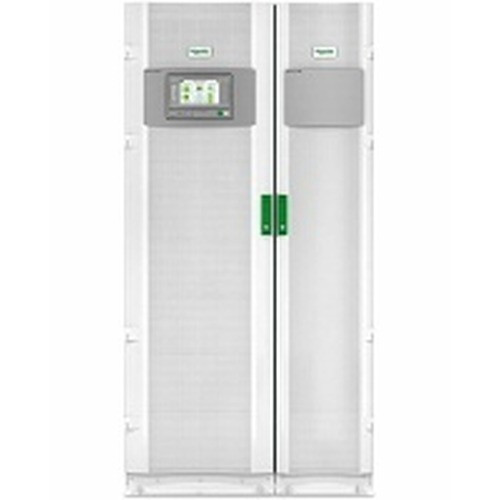
Both the GVMSB160KHS and GVMSB160KG65S are APC by Schneider Electric Galaxy VM 160 kVA three-phase, double-conversion online UPS systems designed for large data center and critical infrastructure deployments. The GVMSB160KHS targets 400 V single-feed environments with backfeed protection, while the GVMSB160KG65S is rated for 480 V systems with a 65 kAIC short-circuit current rating and a 5x8 startup service. This comparison examines their electrical compatibility, operating environment tolerances, and management capabilities based on available published specifications.
In This Guide
- Which model fits your site's voltage, current, and power architecture?
- Which model is better suited to your facility's environmental conditions?
- Which model offers more complete monitoring, management, and operational features?
- Which should you choose: the GVMSB160KHS or the GVMSB160KG65S?
- Side-by-Side Specs
- FAQ
Which model fits your site's voltage, current, and power architecture?
The GVMSB160KHS is explicitly specified for a 400 V input/output environment (input range 250–600 V, output range 380–415 V, three-phase in and out), with a rated output power of 144,000 W and a maximum current of 262 A. Its input frequency window is 40–70 Hz, providing tolerance for generator-backed sources. Input and output THD are both specified at 3%, and an input power factor of 1 is stated, indicating near-unity PF correction. The GVMSB160KHS also includes backfeed protection as part of its configuration.
The GVMSB160KG65S is specified for a 480 V single input/output environment and carries a 65 kAIC short-circuit current interrupting rating, which is a critical safety parameter for sites with high available fault current on the utility feed. Its maximum power draw is listed at 160,000 W. No input/output voltage range, current rating, THD, power factor, or frequency tolerance is provided in the available specifications for this model. Buyers on 480 V North American distribution infrastructure should note the GVMSB160KG65S's explicit 480 V rating, while 400 V IEC-standard facilities are served by the GVMSB160KHS.
Which model is better suited to your facility's environmental conditions?
The GVMSB160KG65S provides a full set of published environmental specifications: operating temperature 0–65 °C, relative humidity 5–95 %, operating altitude up to 1,000 m, and an acoustical noise level of 55 dBA. These figures allow facilities teams to validate installation site suitability directly against the datasheet.
The GVMSB160KHS provides none of these environmental parameters in the available specification data — operating temperature range, humidity tolerance, altitude rating, and noise level are all absent. Installers and data center facilities managers specifying the GVMSB160KHS must consult the full product datasheet or APC technical documentation separately before confirming environmental compliance. This is a meaningful gap when comparing the two models on a specification sheet basis.
Which model offers more complete monitoring, management, and operational features?
The GVMSB160KG65S specifies one network interface with a 1000BASE-T (Gigabit Ethernet) management port, enabling integration with network management systems, DCIM platforms, and APC's EcoStruxure ecosystem. Physical form factor is listed as 0U, half-depth.
The GVMSB160KHS specifies ECO mode (yes) and Emergency Power Off (EPO) capability (yes) — both operationally significant features for large UPS deployments. ECO mode reduces energy consumption during stable utility conditions. EPO enables facility-level emergency shutdown compliance. No network management interface, form factor, or remote monitoring capability is specified for the GVMSB160KHS in the available data. Conversely, the GVMSB160KG65S does not have ECO mode or EPO listed in its available specifications. Neither model's specification set is complete enough to make a definitive management-capability comparison; both require review of the full manufacturer datasheet.
Which should you choose: the GVMSB160KHS or the GVMSB160KG65S?
Our take: The GVMSB160KHS is the stronger choice when the facility operates on 400 V IEC-standard three-phase distribution and requires documented THD performance and backfeed protection at the UPS level. Key differentiators from the available specs: the GVMSB160KHS states a 3% output voltage THD and 3% input current THD, a unity input power factor, and an output current rating of 262 A — none of which are provided for the GVMSB160KG65S. The GVMSB160KG65S, conversely, is the correct selection for 480 V North American distribution, brings a published 65 kAIC fault-current rating relevant to high-fault-current utility services, and is the only model of the two with a specified network management interface (1000BASE-T). Neither model's published spec set is complete; both require full manufacturer datasheets before final specification. Platform qualifier: 400 V IEC data centers specify the GVMSB160KHS; 480 V NEC-code North American facilities specify the GVMSB160KG65S.
Side-by-Side Comparison
Spec-for-spec, from manufacturer data.
| Specification | APC by Schneider Electric GVMSB160KHS | APC by Schneider Electric GVMSB160KG65S |
|---|---|---|
| UPS Topology | Double-conversion (Online) | — |
| Rated kVA Class | 160 kVA | 160 kVA |
| Output Power (W) | 144,000 W | 160,000 W (max power draw) |
| Input Voltage Range | 250–600 V | 480 V (nominal; range not specified) |
| Output Voltage Range | 380–415 V | 480 V (nominal; range not specified) |
| Number of Input Phases | 3 | — |
| Number of Output Phases | 3 | — |
| Input Frequency | 40–70 Hz | — |
| Output Frequency | 50/60 Hz | — |
| Maximum Output Current | 262 A | — |
| Input Power Factor | 1 | — |
| Output Voltage THD | 3% | — |
| Input Current THD | 3% | — |
| ECO Mode | Yes | — |
| Emergency Power Off (EPO) | Yes | — |
| Short-Circuit Current Rating | — | 65 kAIC |
| Network Management Interface | — | 1000BASE-T (1 port) |
| Operating Temperature | — | 0–65 °C |
| Operating Humidity | — | 5–95 % |
| Operating Altitude | — | 1,000 m |
| Noise Level | — | 55 dBA |
| Form Factor | — | 0U, half-depth |
| Backfeed Protection | Yes (included) | — |
Frequently Asked Questions
Which should you choose: the GVMSB160KHS or the GVMSB160KG65S?
The GVMSB160KHS is the stronger choice when the facility operates on 400 V IEC-standard three-phase distribution and requires documented THD performance and backfeed protection at the UPS level. Key differentiators from the available specs: the GVMSB160KHS states a 3% output voltage THD and 3% input current THD, a unity input power factor, and an output current rating of 262 A — none of which are provided for the GVMSB160KG65S. The GVMSB160KG65S, conversely, is the correct selection for 480 V North American distribution, brings a published 65 kAIC fault-current rating relevant to high-fault-current utility services, and is the only model of the two with a specified network management interface (1000BASE-T). Neither model's published spec set is complete; both require full manufacturer datasheets before final specification. Platform qualifier: 400 V IEC data centers specify the GVMSB160KHS; 480 V NEC-code North American facilities specify the GVMSB160KG65S.
Is the GVMSB160KHS or GVMSB160KG65S better for a North American 480 V data center?
Based on the available specifications, the GVMSB160KG65S is rated for a 480 V single input/output environment and carries a 65 kAIC short-circuit current rating suited to North American utility services. The GVMSB160KHS is specified for 400 V (output range 380–415 V), making it the appropriate choice for IEC-standard 400 V three-phase facilities. Voltage compatibility is non-negotiable — confirm your site's distribution voltage before specifying either model.
Which model provides better power quality specs — the GVMSB160KHS or GVMSB160KG65S?
The GVMSB160KHS is the only model of the two with published power quality figures in the available data: output voltage THD of 3%, input current THD of 3%, and an input power factor of 1. None of these figures are provided in the available specifications for the GVMSB160KG65S. If documented THD and power factor are required for load compatibility or regulatory compliance, the GVMSB160KHS has the published data; the GVMSB160KG65S would require reference to its full manufacturer datasheet.
Does either the GVMSB160KHS or GVMSB160KG65S support remote network management?
Of the two, only the GVMSB160KG65S has a network management interface specified in the available data — one port at 1000BASE-T (Gigabit Ethernet). The GVMSB160KHS does not list a network interface in its available specifications. The GVMSB160KHS does specify ECO mode and Emergency Power Off (EPO), which are not listed for the GVMSB160KG65S. For full management capability details on either unit, consult the complete APC by Schneider Electric product datasheet.
Get a Second Opinion on Your Camera Choice
Share your site layout, coverage goals, and budget. Our team will validate the camera selection, flag anything we would change, and recommend products that match the use case.