
Aiphone IX-SOFT-3 vs Aiphone IX-MV7-B: Specification Comparison
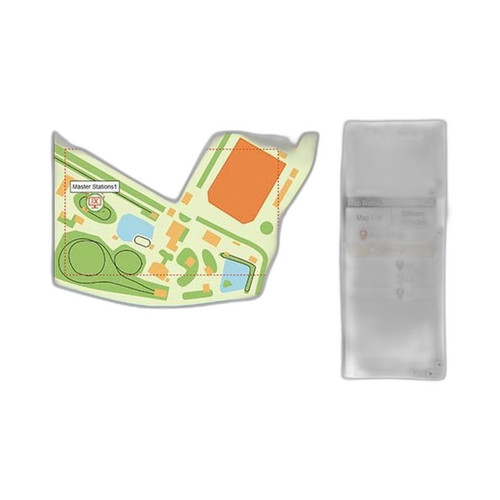
Both the Aiphone IX-SOFT-3 and the IX-MV7-B are master stations within the Aiphone IX Series IP intercom ecosystem, serving the same functional role: receiving calls from door and sub stations, enabling two-way audio/video communication, and managing station access. The IX-SOFT-3 is a PC-based software master station bundle, while the IX-MV7-B is a dedicated 7-inch touchscreen hardware master station. Buyers deploying IX Series intercoms will directly cross-shop these two as the central operator interface.
In This Guide
- How do station capacity and scalability compare between these two master stations?
- What are the hardware, power, and installation differences between these two master stations?
- Which master station offers broader protocol support and third-party integration?
- Which should you choose: the IX-SOFT-3 or the IX-MV7-B?
- Side-by-Side Specs
- FAQ
How do station capacity and scalability compare between these two master stations?
The IX-SOFT-3 supports up to 499 stations per software instance, with the bundle providing 3 transferable lifetime licenses that can each run on separate Windows PCs simultaneously. This means a single bundle purchase can distribute master-station functionality across up to 3 networked PCs, each supervising up to 499 stations. The address book capacity is not separately listed in the IX-SOFT-3 specs, but the 499-station ceiling governs the maximum supervised deployment size per instance.
The IX-MV7-B is a single dedicated hardware unit with a station address book capacity of 500 entries and 8 speed-dial buttons. It supports 50 bell schedule events per day. While the address book nominally holds one more entry than the IX-SOFT-3's 499-station limit, the IX-MV7-B is a single-point terminal with no native multi-unit software bundling. Scaling to multiple operator positions requires purchasing additional IX-MV7-B units individually.
For installations requiring multiple simultaneous operator positions or centralized PC-based dispatch, the IX-SOFT-3's 3-license bundle provides built-in redundancy and distribution. The IX-MV7-B's 500-entry address book is functionally equivalent in reach but is constrained to a single physical station.
What are the hardware, power, and installation differences between these two master stations?
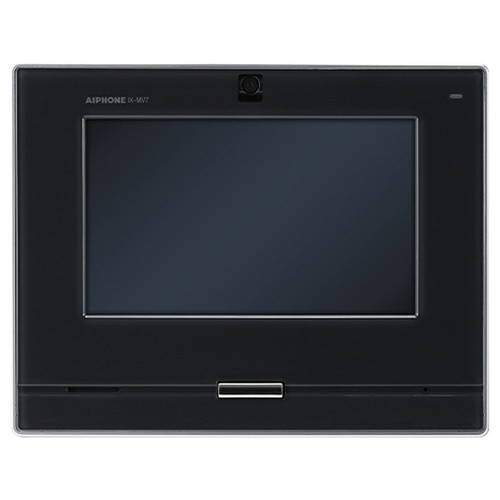
The IX-MV7-B is a self-contained hardware appliance with defined physical dimensions (6-3/4" H × 8-11/16" W × 1-1/4" D), a built-in 7-inch LCD touchscreen, an 8Ω 0.5W speaker, a 600Ω audio input, 2 contact outputs, and 4 trigger inputs. It is powered entirely via PoE (IEEE 802.3af Class 0) at 4.32W — no local power adapter or PC is required. It operates between 32°F and 104°F (0°C–40°C) and carries UL 62368-1 and cUL 62368-1 safety certifications. Minimum illumination for the built-in camera is 5 lux.
The IX-SOFT-3 carries no independent hardware — it is a software application deployed on Windows 7 Professional or later with a minimum 2 GHz CPU. It requires an existing PC, monitor, speakers, and microphone, as well as a network connection. The product specs list no power consumption, no physical dimensions, no camera, no contact outputs, and no trigger inputs. Mount type is listed as 'Rack,' which likely refers to deployment context rather than a hardware chassis.
The IX-MV7-B is the clear choice when a turnkey, self-powered, wall-mounted terminal is needed. The IX-SOFT-3 is appropriate only where suitable Windows PCs are already available and a dedicated hardware station is not required.
Which master station offers broader protocol support and third-party integration?
The IX-MV7-B specifies an extensive protocol stack: IPv4, IPv6, TCP, UDP, SIP, HTTP, HTTPS, RTSP, RTP, RTCP, IGMP, MLD, SMTP, SFTP, DHCP, NTP, and DNS. It also supports IEEE 802.1x port security and SIP compatibility, enabling integration with enterprise SIP PBX environments. No VMS compatibility list is provided in the IX-MV7-B specs.
The IX-SOFT-3 specifies VMS compatibility with ONVIF Profile S, Cisco Unified Call Manager, Alcatel-Lucent OmniPCx Enterprise, and OxO Connect. Security features include TLS 1.2 encryption and CRAM-MD5 authentication for email. Audio codecs are G.711 (µ-law and A-law) and G.722. Video codecs are H.264/AVC and Motion-JPEG at up to 1280×768 resolution. The IX-SOFT-3 does not list a specific network protocol stack.
Buyers integrating with enterprise UC platforms (Cisco, Alcatel-Lucent, OxO) benefit from the IX-SOFT-3's named VMS certifications. The IX-MV7-B's SIP support and full protocol stack make it more versatile for generic SIP PBX integration, but no named VMS certifications are listed in its specifications.
Which should you choose: the IX-SOFT-3 or the IX-MV7-B?
Our take: The IX-SOFT-3 is the stronger choice when the deployment requires multiple simultaneous operator positions, named VMS integration, or PC-based dispatch in an environment where Windows workstations are already available. Key spec deltas: the IX-SOFT-3 bundles 3 lifetime licenses versus the IX-MV7-B's single-unit footprint; the IX-SOFT-3 explicitly certifies compatibility with Cisco Unified Call Manager, Alcatel-Lucent OmniPCx Enterprise, and OxO Connect, while the IX-MV7-B lists no named VMS certifications; and the IX-SOFT-3 delivers up to 1280×768 video resolution versus the IX-MV7-B's 480p camera. Conversely, the IX-MV7-B is the right choice when a self-contained, PoE-powered, wall-mounted terminal is required — it draws only 4.32W, needs no PC, carries UL safety certifications, includes 2 contact outputs and 4 trigger inputs, and operates in verified 0°C–40°C environments. Platform qualifier: for SIP PBX environments without a named UC platform, the IX-MV7-B's broad SIP and protocol support is advantageous.
Side-by-Side Comparison
Spec-for-spec, from manufacturer data.
| Specification | Aiphone IX-SOFT-3 | Aiphone IX-MV7-B |
|---|---|---|
| Product Type | Software Master Station Bundle | Hardware IP Video Master Station |
| Form Factor | Software (PC-based) | Dedicated hardware appliance |
| License / Unit Count | 3 transferable lifetime licenses | Single unit |
| Station Capacity | Up to 499 stations per instance | 500-entry address book |
| Speed Dial Buttons | 50 per license | 8 |
| Display | — | 7" LCD touchscreen |
| Camera Resolution | — | 480p |
| Video Codec | H.264/AVC, Motion-JPEG | H.264/AVC, Motion-JPEG |
| Video Resolution | 1280×768 | — |
| Audio Codec | G.711 (µ-law, A-law), G.722 | G.711, G.722 |
| Power Source | Host PC (no spec provided) | PoE IEEE 802.3af Class 0 |
| Power Draw | — | 4.32W |
| Contact Outputs | — | 2 |
| Trigger Inputs | — | 4 |
| VMS / UC Compatibility | ONVIF Profile S, Cisco UCM, Alcatel-Lucent OmniPCx, OxO Connect | — |
| SIP Support | — | Yes |
| Security | TLS 1.2, CRAM-MD5 | IEEE 802.1x |
| Operating Temperature | — | 32°F–104°F (0°C–40°C) |
| Safety Certifications | — | UL 62368-1, cUL 62368-1 |
| OS Requirement | Windows 7 Professional or later | — |
| Warranty | 2-Year | — |
Frequently Asked Questions
Which should you choose: the IX-SOFT-3 or the IX-MV7-B?
The IX-SOFT-3 is the stronger choice when the deployment requires multiple simultaneous operator positions, named VMS integration, or PC-based dispatch in an environment where Windows workstations are already available. Key spec deltas: the IX-SOFT-3 bundles 3 lifetime licenses versus the IX-MV7-B's single-unit footprint; the IX-SOFT-3 explicitly certifies compatibility with Cisco Unified Call Manager, Alcatel-Lucent OmniPCx Enterprise, and OxO Connect, while the IX-MV7-B lists no named VMS certifications; and the IX-SOFT-3 delivers up to 1280×768 video resolution versus the IX-MV7-B's 480p camera. Conversely, the IX-MV7-B is the right choice when a self-contained, PoE-powered, wall-mounted terminal is required — it draws only 4.32W, needs no PC, carries UL safety certifications, includes 2 contact outputs and 4 trigger inputs, and operates in verified 0°C–40°C environments. Platform qualifier: for SIP PBX environments without a named UC platform, the IX-MV7-B's broad SIP and protocol support is advantageous.
Is the IX-SOFT-3 or IX-MV7-B better for larger deployments with multiple operator positions?
The IX-SOFT-3 is better suited for multi-operator deployments. Its 3-license bundle allows up to three Windows PCs to simultaneously function as master stations, each capable of supervising up to 499 stations. The IX-MV7-B is a single hardware terminal; scaling to multiple operator positions requires purchasing additional units individually.
Does either master station work without a dedicated PC or server?
Yes — the IX-MV7-B is a standalone hardware unit powered by PoE (IEEE 802.3af, 4.32W) and requires no PC. The IX-SOFT-3, by contrast, is a software application that must be installed on Windows 7 Professional or later with a minimum 2 GHz CPU; it has no standalone hardware and cannot operate without a host PC.
Which unit supports integration with enterprise phone systems like Cisco or Alcatel-Lucent?
The IX-SOFT-3 explicitly lists compatibility with Cisco Unified Call Manager, Alcatel-Lucent OmniPCx Enterprise, and OxO Connect, as well as ONVIF Profile S. The IX-MV7-B supports SIP and a broad IP protocol stack but does not list compatibility with any specific UC or VMS platform in its provided specifications.
More Intercom Comparisons
- Aiphone IX-MV7-HB vs Code Blue SLNP0029
- Aiphone IX-MV7-HB vs Axis I5304
- Aiphone IX-MV7-HB vs Aiphone IX-MV7-B
- Aiphone IX-MV7-HB vs Aiphone IXG-MK
- Code Blue SLNP0029 vs Aiphone IX-MV7-B
- Code Blue SLNP0029 vs Aiphone IXG-MK
Intercom Buying Guides
Get a Second Opinion on Your Camera Choice
Share your site layout, coverage goals, and budget. Our team will validate the camera selection, flag anything we would change, and recommend products that match the use case.