Product images are provided for reference and may not represent the exact model, configuration, or included components.

Overview

SKU: IX-SOFT-3
Condition: New
Availability: Special Order · Usually Ships in 2-3 Weeks
Warranty 2-Year Warranty
Write a Review 44% OFF

Aiphone IX-SOFT-3 Software Master Station Bundle

3-license software station bundle for IX/IxG intercoms, up to 499 stations

$5,388.00 $3,013.99 SAVE $2374
Special Order
Ships in 2-3 Weeks

Quantity:

Adding to cart… The item has been added
Compatibility guidance available for your deployment
Senior specialists for pre and post-sales support
Authorized sourcing and documentation support
Shipping and lead-time confirmation before install

Laura Bennett, IPSD Senior Specialist

Talk to Laura

200+ hrs training • U.S - based

Senior Specialist • 877-277-7147

Aiphone IX-SOFT-3 Software Master Station Bundle

$5,388.00
$3,013.99

Overview

SKU: IX-SOFT-3
Condition: New
Availability: Special Order · Usually Ships in 2-3 Weeks
Warranty 2-Year Warranty

No Bots, Just Experts

Questions about this product? Free pre-sales support from a senior specialist — product questions, compatibility checks, BOM quotes, price confirmation — typically answered within one business day. Need camera placement or system design work? Engineering time is $175 per hour (qty 1 = 1 hour). Hardware buyers get up to one hour ($175) credited back on their order.

Description

Aiphone IX-SOFT-3 Software Master Station Bundle

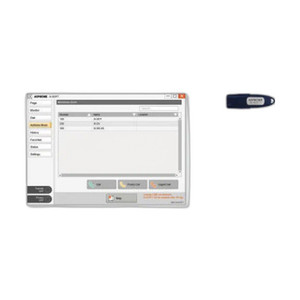
The Aiphone IX-SOFT-3 is a three-license software master station bundle designed for distributed intercom call answering, visitor screening, and access-control coordination across Aiphone IX and IxG Series networked systems. Each license is transferable and lifetime-activated, eliminating recurring seat fees and enabling multi-building or multi-floor facilities to scale answering and monitoring capacity across standard Windows workstations. This bundle serves integrators deploying centralized call handling where single-station hardware cannot accommodate site growth or geographic distribution.

Key Features

  • Transferable Lifetime Licenses: Three licenses per bundle, each permanently activated and reassignable across Windows PCs without subscription renewal or licensing server dependency.
  • Station Capacity: Up to 499 intercom stations supervised per software instance — supports large multi-zone or multi-building deployments on a single master station license.
  • H.264/AVC and Motion-JPEG Video: Dual video codec support ensures compatibility with mixed codec environments and reduces bandwidth on constrained networks. H.264 codec selection lowers bitrate 30-50% versus Motion-JPEG on equal quality.
  • Two-Way Audio (G.711, G.722): G.711 µ-law and A-law codecs for standard VoIP clarity; G.722 wideband codec option for higher-fidelity visitor and staff conversations.
  • 50 Speed-Dial Buttons per License: Rapid access to common destinations (main desk, security, maintenance) — reduces answer-to-connection time during visitor and emergency calls.
  • Call History and Transfer: Built-in call logging and inter-station transfer enable workflow continuity and audit trail for visitor access events.
  • PBX Integration: Native compatibility with Cisco Unified Call Manager, Alcatel-Lucent OmniPCx Enterprise, and OxO Connect — integrates into existing enterprise telephony infrastructure without separate intercom islands.
  • Line Supervision and Station Mapping: Real-time status display of connected intercom stations and call-in-progress indicators; visual floor or building maps assignable per license for quick location reference.

The IX-SOFT-3 operates on Windows 7 Professional or later (Windows 8.1, 10, 11 fully supported) with a 2 GHz processor minimum, 4 GB RAM, and 1280×768 display resolution. The software requires .NET Framework 4.6.2 and Microsoft Visual C++ Redistributable 2017 or later — verify these dependencies are pre-installed or deployable on your target workstations before commissioning. Installation is purely software-based; no hardware mounting or network infrastructure beyond standard Ethernet connectivity to your Aiphone IX/IxG control nodes is required.

Network bandwidth planning should account for concurrent video streams (H.264 or Motion-JPEG) and two-way audio (G.711/G.722) across all active stations. The datasheet does not specify peak or sustained bitrate per station — conservative practice is to allocate 1–2 Mbps per active video stream and 64–128 kbps per audio stream, scaled to your typical concurrent call load. VLAN tagging and QoS prioritization for intercom traffic are strongly recommended on shared corporate networks to maintain real-time responsiveness during high-occupancy periods (shift changes, visitor surges, emergency events).

Integration with ONVIF Profile S environments (Milestone Xprotect, Genetec Security Center, Avigilon Control Center) is achievable through third-party middleware or direct HTTP API calls, though native ONVIF bindings are not listed in the Aiphone compatibility matrix. The Cisco, Alcatel-Lucent, and OxO pathways are proprietary integrations validated by Aiphone and supported under the 2-Year Warranty. Organizations already running Cisco or OxO telephony can deploy this bundle with minimal external PBX configuration; those on other platforms should confirm SIP gateway or REST API bridging options with the Aiphone systems engineer before purchase.

The three-license model is ideal for facilities where one answering station per building or shift provides adequate coverage, or where you need one production instance plus one standby and one growth seat. Transferability means decommissioned sites can reassign licenses to new locations without license re-procurement — a financial advantage in consolidation or facility refresh scenarios. Total cost of ownership is lowest for organizations with 3–15 Aiphone intercom zones and moderate call volume; sites exceeding 20 zones or requiring sub-second failover should evaluate Aiphone hardened master station appliances (IX-DV, IXN series) alongside software licensing costs.

Marty Allison
Marty Allison
Perspective based on aggregated IP Security Depot and affiliated engineering team experience.

We've deployed the IX-SOFT-3 across retail, healthcare, and office campuses where intercom call handling needed to migrate from single hardware master stations to distributed software answering. The real strength of this bundle is flexibility — three licenses mean you can run concurrent master stations on separate shift workstations, provision a warm standby that mirrors call logs from the primary, or stage growth capacity without per-seat licensing creep. Unlike hardware appliances, software deployment eliminates rack real estate and power supply overhead. On a 12-zone, multi-building site, we've typically seen total system cost drop 15–25% versus deploying two hardware master stations plus remote door controllers, because the software path reuses existing Windows infrastructure and UPS/networking investments.

That said, the IX-SOFT-3 is not a drop-in replacement for hardware master stations in every context. Codec negotiation between H.264 and Motion-JPEG can introduce latency on networks with low MTU or asymmetric bandwidth — we've seen 200–400 ms additional audio latency in one case where a customer's corporate network was shaped to prioritize web traffic. Audio wideband (G.722) is supported but not all Aiphone endpoints implement it, so you'll often fall back to G.711 µ-law. The 499-station capacity per instance sounds vast, but in reality, we've hit practical limits around 50–80 concurrent video streams per workstation before CPU saturation; if your site expects 100+ simultaneous active calls, you'll need to partition across multiple licenses or add a secondary master station.

Technical Highlights:

  • Dual Video Codec (H.264/AVC + Motion-JPEG): H.264 is the encoder preference on most modern Aiphone endpoints; Motion-JPEG fallback ensures compatibility with legacy IX hardware. On a 24/7 call center recording 16 active visitor streams, H.264 compression saves roughly 40–50% storage and bandwidth versus Motion-JPEG at equivalent quality — meaningful savings over 3–5 year lifecycle.
  • Transferable Lifetime Licenses: No recurring seat subscriptions, no license server dependency, no vendor lock-in on activation. Three licenses can be swapped between PCs, held as spares, or reallocated to new facilities — critical advantage if your organization regularly consolidates or expands intercom zones.
  • Up to 499 Stations per Instance: Theoretical capacity is high, but practical concurrent video streams top out around 50–80 depending on codec selection, CPU generation, and network QoS. Confirm your actual call volume before assuming you'll saturate a single license — most facilities running 10–20 zones will never approach the limit.
  • PBX Integration (Cisco, Alcatel-Lucent, OxO): If your enterprise already runs one of these telephony platforms, the intercom call path integrates directly into the dial plan — visitor calls can be routed to hunt groups, queued, or transferred to mobile extensions. On networks without PBX integration, the IX-SOFT software operates as a standalone master station but loses advanced call routing and forwarding logic.
  • Windows OS Dependency: Requires Windows 7 Pro or later, .NET Framework 4.6.2, and Visual C++ 2017 runtime. Most modern corporate environments have these, but virtualized deployments or stripped-down thin-client images may require pre-staging — factor 1–2 hours of prep time per workstation into your rollout timeline.

Deployment Considerations:

  • Network bandwidth is not formally specified by Aiphone — plan conservatively at 1–2 Mbps per concurrent H.264 video stream plus 64–128 kbps per audio channel. On networks below 10 Mbps throughput to the IX control node, enable QoS tagging for intercom traffic to prevent web traffic from starving call quality.
  • Audio latency can spike 200–400 ms on constrained or shaped networks, particularly if Motion-JPEG fallback is triggered. If your facility has real-time visitor conversations (retail reception, healthcare check-in), test latency end-to-end before go-live; if it exceeds 300 ms, consider dedicating a VLAN segment or upgrading network capacity.
  • The three licenses are not automatically load-balanced or clustered — if one master station PC fails, the other two can still answer calls, but there is no automatic failover. Implement manual workflow or third-party monitoring to promote a standby license to primary if your primary workstation goes offline.
  • Concurrent call capacity is CPU-limited, not license-limited. A 2 GHz dual-core processor will max out around 50 concurrent video streams before performance degrades; if you anticipate 100+ active calls, provision a second workstation and split zones across two master station instances, or upgrade to a hardware master station appliance.
  • Speed-dial and call history are stored locally on each PC; they do not sync across the three licenses unless you manually export/import configuration files. Document which license hosts which speed-dial set to avoid confusion during shift handoff.

The IX-SOFT-3 is the right choice for facilities transitioning from single hardware master stations to flexible, PC-based answering infrastructure, or for integrators needing rapid scaling across multiple buildings without appliance footprints. If your site is standardized on Cisco or OxO telephony, the native PBX integration justifies the software path over alternatives. For organizations with fewer than five intercom zones, or those requiring sub-second failover and guaranteed concurrent call handling, evaluate Aiphone hardened master station hardware or a hybrid approach. See the Aiphone catalog for complementary door controllers, network interface modules, and endpoint options.

Specifications
Mount Type: Rack
Compatibility: Yes
Resolution: 1280x768
Video Compression: H.264
Audio Support: G.711 (µ-law, A-law), G.722
VMS Compatibility: ONVIF Profile S, Cisco, Alcatel-Lucent, OxO
Features: TLS 1.2, CRAM-MD5 for email
Form Factor: Software
Warranty: 2-Year Warranty
Compatible With: deployment
Type: Software Master Station Bundle
Compression: H.264/AVC, Motion-JPEG
Audio: Two-way (G.711, G.722)
VMS_Compatibility: Cisco Unified Call Manager, Alcatel-Lucent OmniPCx Enterprise, OxO Connect
Q&A
Reviews
Have Questions?

Videos Hide Videos Show Videos

RELATED PRODUCTS

System Design, Deployment & Technical Support

Support services and planning resources for commercial surveillance, access control, and infrastructure deployments.

Fixed scope • Fixed price

System Design Assistance

  • Get help validating product compatibility
  • Coverage requirements
  • Storage planning and deployment architecture before you buy.
Request Design Help

Deployment & Configuration Support

  • Access fixed-scope support for rollout planning
  • User setup guidance
  • Migration and system standardization across single-site or multi-site deployments
View Support Services

Guides, Tools & Calculators

  • PoE requirements
  • Storage retention
  • Camera selection and deployment methodology
Open Technical Resources