
Aiphone IX-MV7-HW-JP vs Aiphone IX-MV7-B: Specification Comparison
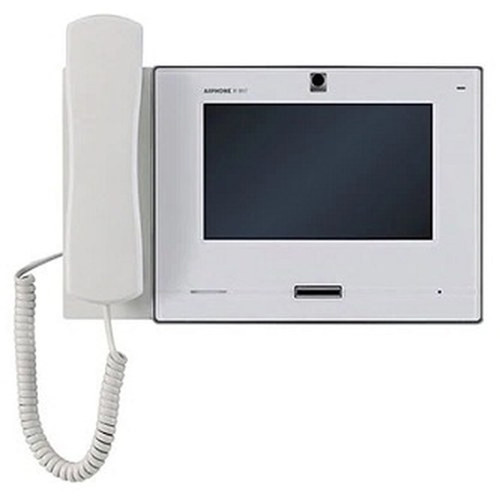
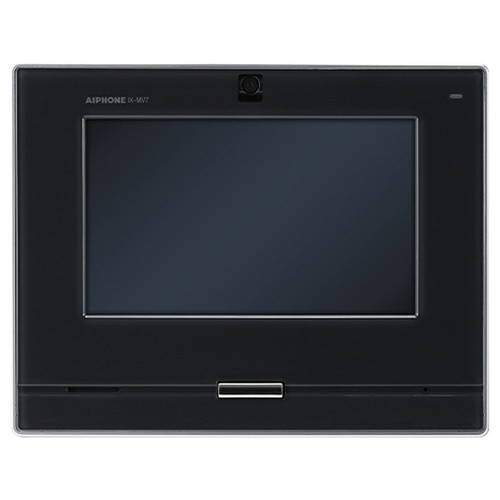
Both the Aiphone IX-MV7-HW-JP and IX-MV7-B are PoE-powered, 7-inch touchscreen IP video master stations designed for the Aiphone IX Series intercom platform. They occupy the same product class — indoor master/guard stations used at reception desks or security posts to monitor, communicate with, and control door stations. A buyer evaluating either unit will weigh display and camera quality, communication features and I/O flexibility, and protocol/compliance pedigree. This comparison examines those three axes using only the published specifications for each model.
In This Guide
- How do the display resolution and camera quality differ between the IX-MV7-HW-JP and IX-MV7-B?
- Which unit offers greater communication flexibility and I/O capability for integration with access control or automation systems?
- How do the two models compare on network protocol support, compliance certifications, and interoperability standards?
- Which should you choose: the IX-MV7-HW-JP or the IX-MV7-B?
- Side-by-Side Specs
- FAQ
How do the display resolution and camera quality differ between the IX-MV7-HW-JP and IX-MV7-B?
Both units share the same 7-inch LCD touchscreen form factor, but the IX-MV7-HW-JP specifies an 800×400 TFT panel while the IX-MV7-B lists its screen only as '7-inch LCD' with no resolution figure provided in the available specifications.
On the integrated camera, the gap is clear: the IX-MV7-HW-JP carries a 1/3-inch CMOS sensor capable of 720p (1MP) capture, whereas the IX-MV7-B is rated at 480p. The IX-MV7-B adds a minimum illumination figure of 5 lux, which the IX-MV7-HW-JP specifications do not include, so low-light performance cannot be directly compared.
Both units support H.264/AVC and Motion JPEG video compression, giving installers codec flexibility on either platform.
Which unit offers greater communication flexibility and I/O capability for integration with access control or automation systems?
The IX-MV7-HW-JP specifies full-duplex operation in either handset or hands-free mode. The IX-MV7-B supports hands-free and push-to-talk modes; full-duplex handset operation is not listed in its specifications. Audio codec support is documented only for the IX-MV7-B (G.711 and G.722); the IX-MV7-HW-JP specs do not enumerate audio codecs.
For audio hardware, the IX-MV7-B specifies an 8Ω 0.5W speaker output and a 600Ω audio input impedance. Equivalent speaker output data is absent from the IX-MV7-HW-JP specs, though both list audio input support.
The IX-MV7-B provides substantially richer I/O and programmability: 2 contact outputs, 4 trigger inputs, an address book of 500 station entries, 8 speed-dial buttons, and 50 bell schedule events per day. None of these parameters appear in the IX-MV7-HW-JP specifications, so buyers requiring hardware relay outputs or large directory capacity should note this gap.
How do the two models compare on network protocol support, compliance certifications, and interoperability standards?
The IX-MV7-HW-JP is documented as ONVIF Profile S compliant and SIP compatible, alongside TAA compliance — relevant for U.S. federal and government procurement. Safety certifications listed are UL 62368-1 and cUL 62368-1.
The IX-MV7-B also carries UL 62368-1 and cUL 62368-1, and its specification sheet enumerates an extensive network protocol stack: IPv4, IPv6, TCP, UDP, SIP, HTTP, HTTPS, RTSP, RTP, RTCP, IGMP, MLD, SMTP, SFTP, DHCP, NTP, and DNS. It also supports IEEE 802.1x port-based network access control. ONVIF Profile S status and TAA compliance are not listed for the IX-MV7-B.
Both units draw identical power — PoE IEEE 802.3af Class 0 at 4.32W maximum — so no infrastructure differentiation exists on the power side. The IX-MV7-HW-JP does not specify an operating temperature range; the IX-MV7-B is rated 32°F to 104°F (0°C to 40°C).
Which should you choose: the IX-MV7-HW-JP or the IX-MV7-B?
Our take: The IX-MV7-HW-JP is the stronger choice when camera resolution, display quality, TAA compliance, and ONVIF interoperability are the primary requirements. Its 720p/1MP camera outresolves the IX-MV7-B's 480p sensor, its display is explicitly rated at 800×400 versus an unspecified resolution on the B model, and it carries TAA and ONVIF Profile S certifications absent from the IX-MV7-B's published specs. Conversely, the IX-MV7-B is the better fit when I/O depth, network flexibility, and directory scale matter most: it adds 2 contact outputs, 4 trigger inputs, a 500-entry address book, 8 speed-dial buttons, and a broad 16-protocol network stack including IPv6 and IEEE 802.1x — none of which appear in the IX-MV7-HW-JP documentation. Choose the IX-MV7-HW-JP for government, ONVIF-integrated, or high-resolution-monitoring deployments; choose the IX-MV7-B for SIP-heavy enterprise environments requiring relay outputs and large station directories.
Side-by-Side Comparison
Spec-for-spec, from manufacturer data.
| Specification | Aiphone IX-MV7-HW-JP | Aiphone IX-MV7-B |
|---|---|---|
| Display Size | 7-inch TFT LCD touchscreen | 7-inch LCD touchscreen |
| Display Resolution | 800×400 | Not specified |
| Integrated Camera | 1/3" CMOS, 720p (1MP) | 480p |
| Minimum Illumination | — | 5 lux |
| Video Compression | H.264, Motion JPEG | H.264/AVC, Motion JPEG |
| Audio Codec | — | G.711, G.722 |
| Communication Mode | Full-duplex handset or hands-free | Hands-free / Push-to-talk |
| Speaker Output | — | 8Ω 0.5W |
| Power Source | PoE IEEE 802.3af Class 0 | PoE IEEE 802.3af Class 0 |
| Power Draw | 4.32W max | 4.32W |
| Contact Outputs | — | 2 |
| Trigger Inputs | — | 4 |
| Station Address Book | — | 500 entries |
| Speed Dial Buttons | — | 8 |
| Protocol Support | SIP, ONVIF Profile S | IPv4/6, TCP, UDP, SIP, HTTP/S, RTSP, RTP, RTCP, IGMP, MLD, SMTP, SFTP, DHCP, NTP, DNS |
| Port Security | — | IEEE 802.1x |
| TAA Compliance | Yes | — |
| ONVIF Profile S | Yes | — |
| Safety Certifications | UL 62368-1, cUL 62368-1 | UL 62368-1, cUL 62368-1 |
| Operating Temperature | — | 32°F – 104°F (0°C – 40°C) |
| Dimensions (H×W×D) | 8-1/16" H × 11" W × 2-3/16" D | 6-3/4" H × 8-11/16" W × 1-1/4" D |
| Mount Type | Wall | Not specified |
| Warranty | 2-year | — |
Frequently Asked Questions
Which should you choose: the IX-MV7-HW-JP or the IX-MV7-B?
The IX-MV7-HW-JP is the stronger choice when camera resolution, display quality, TAA compliance, and ONVIF interoperability are the primary requirements. Its 720p/1MP camera outresolves the IX-MV7-B's 480p sensor, its display is explicitly rated at 800×400 versus an unspecified resolution on the B model, and it carries TAA and ONVIF Profile S certifications absent from the IX-MV7-B's published specs. Conversely, the IX-MV7-B is the better fit when I/O depth, network flexibility, and directory scale matter most: it adds 2 contact outputs, 4 trigger inputs, a 500-entry address book, 8 speed-dial buttons, and a broad 16-protocol network stack including IPv6 and IEEE 802.1x — none of which appear in the IX-MV7-HW-JP documentation. Choose the IX-MV7-HW-JP for government, ONVIF-integrated, or high-resolution-monitoring deployments; choose the IX-MV7-B for SIP-heavy enterprise environments requiring relay outputs and large station directories.
Is the IX-MV7-HW-JP or IX-MV7-B better for U.S. federal or government projects?
Based on available specifications, the IX-MV7-HW-JP is the documented choice for federal projects — it lists TAA compliance explicitly. TAA compliance is not stated in the IX-MV7-B specifications, which would typically disqualify it from TAA-restricted procurements.
Which model should I choose if I need to trigger door locks or external devices directly from the master station?
The IX-MV7-B specifies 2 contact outputs and 4 trigger inputs, making it the option with documented hardware relay capability. The IX-MV7-HW-JP specifications do not list contact outputs or trigger inputs, so hardware I/O integration cannot be confirmed for that model.
Both units say PoE — will either one require a higher-wattage PoE switch port?
No. Both the IX-MV7-HW-JP and IX-MV7-B are rated at PoE IEEE 802.3af Class 0 with a maximum draw of 4.32W. A standard 802.3af port (15.4W budget) is sufficient for either unit.
More Intercom Comparisons
- Aiphone IX-MV7-HB vs Code Blue SLNP0029
- Aiphone IX-MV7-HB vs Axis I5304
- Aiphone IX-MV7-HB vs Aiphone IX-MV7-B
- Aiphone IX-MV7-HB vs Aiphone IXG-MK
- Code Blue SLNP0029 vs Aiphone IX-MV7-B
- Code Blue SLNP0029 vs Aiphone IXG-MK
Intercom Buying Guides
Get a Second Opinion on Your Camera Choice
Share your site layout, coverage goals, and budget. Our team will validate the camera selection, flag anything we would change, and recommend products that match the use case.