
Aiphone IX-MV7-B vs Aiphone IXG-MK: Specification Comparison
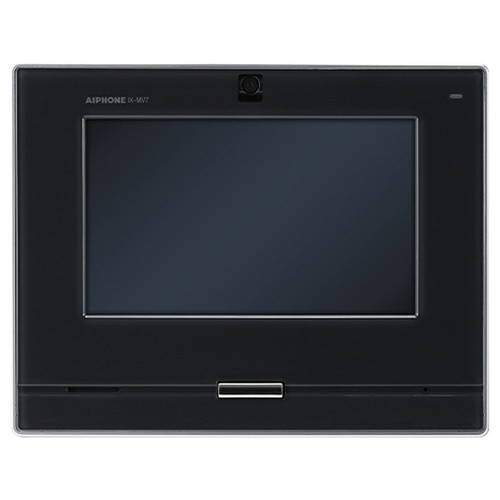
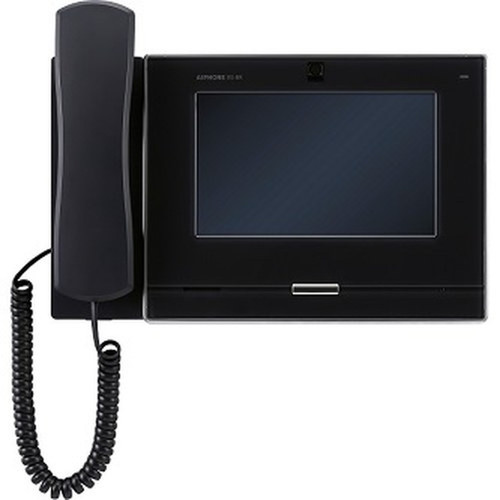
Both the Aiphone IX-MV7-B and IXG-MK are IP-based video intercom stations designed for enterprise and commercial access-control environments — specifically, master and guard station roles within SIP-compatible IX/IXG-series systems. Each features a 7-inch touchscreen, PoE power, H.264 video compression, and two-way audio, positioning them as credible cross-shop candidates for integrators selecting a central operator console. This comparison evaluates them across display and video capability, power and physical footprint, and protocol/integration depth.
In This Guide
- Which station delivers better display and video capability for operator monitoring?
- How do power budget and physical dimensions compare for installation planning?
- Which station offers deeper protocol support and system integration features?
- Which should you choose: the IX-MV7-B or the IXG-MK?
- Side-by-Side Specs
- FAQ
Which station delivers better display and video capability for operator monitoring?
The IX-MV7-B specifies a 7-inch LCD at 480p camera resolution with a minimum illumination of 5 lux and dual video codec support (H.264/AVC and Motion JPEG). The IXG-MK's marketing tagline references 720p video and H.264/MJPEG compression, which would represent a meaningful step up in incoming video clarity for visitor verification — however, the IXG-MK's formal spec fields list only 'H.264' and 'MJPEG' under compression without confirming a native camera resolution in the structured data; the 720p figure appears only in unverified tagline copy.
The IX-MV7-B's 480p figure is a confirmed spec. If the IXG-MK's 720p claim is accurate, it offers sharper visitor images at the guard desk — a relevant advantage in lobby or security-office deployments where facial recognition at the station matters. Buyers requiring a verified resolution figure should request Aiphone's IXG-MK datasheet (referenced at /content/product-datasheets/IXG-MK.pdf) before finalizing a decision.
How do power budget and physical dimensions compare for installation planning?
Both stations are powered via PoE IEEE 802.3af. The IX-MV7-B draws a confirmed 4.32W (Class 0), well within the 15.4W 802.3af ceiling and compatible with nearly any managed PoE switch port. The IXG-MK specifies PoE 802.3af with a ceiling of less than 13W — a notably higher upper bound that may require switch-port budget planning in dense deployments, though actual draw under normal operation may be lower; no confirmed idle or typical draw figure is provided.
Dimensionally, the IX-MV7-B measures 6-3/4" H × 8-11/16" W × 1-1/4" D, making it a slimmer wall-mount profile. The IXG-MK is larger at 8-1/16" H × 11" W × 2-3/16" D and supports both wall and rack mounting (stand included), with Cat-5e or Cat-6 wiring specified. The IX-MV7-B's operating temperature range is confirmed at 32°–104°F (0°–40°C); no operating temperature range is listed in the IXG-MK's provided specs.
Which station offers deeper protocol support and system integration features?
The IX-MV7-B carries an extensive, explicitly verified protocol stack: IPv4, IPv6, TCP, UDP, SIP, HTTP, HTTPS, RTSP, RTP, RTCP, IGMP, MLD, SMTP, SFTP, DHCP, NTP, and DNS. It also specifies IEEE 802.1x port security, two contact outputs, four trigger inputs, an 8Ω/0.5W speaker, 600Ω audio input, and a 500-entry station address book with 50 bell-schedule events per day and 8 speed-dial buttons. These parameters give integrators precise wiring and programmability data.
The IXG-MK confirms ONVIF compliance — a spec absent from the IX-MV7-B's listed data — and supports call recording (storage capacity field). Its audio modes include both VOX/handset and hands-free full-duplex plus push-to-talk, consistent with a dedicated guard-desk role. However, the IXG-MK's structured spec sheet does not enumerate individual IP protocols, contact outputs, trigger inputs, or address-book depth, leaving integrators to consult the Aiphone datasheet for those parameters.
Which should you choose: the IX-MV7-B or the IXG-MK?
Our take: The IX-MV7-B is the stronger choice when protocol transparency, low confirmed power draw, and programmable I/O depth are the deciding factors. Its 4.32W confirmed draw versus the IXG-MK's up-to-13W ceiling gives clearer PoE switch-budget certainty; its 16-protocol stack and IEEE 802.1x port security are fully enumerated; and its two contact outputs plus four trigger inputs are explicitly specified where the IXG-MK provides none of those figures. The IXG-MK counters with confirmed ONVIF compliance (absent from IX-MV7-B specs), call-recording capability, rack-mount flexibility, and a 720p video claim — though that resolution is unverified in structured spec fields. Choose the IX-MV7-B for feature-rich SIP master-station roles where I/O control and protocol depth matter; choose the IXG-MK for dedicated guard-desk or security-office posts where ONVIF interoperability and call-recording are operational requirements.
Side-by-Side Comparison
Spec-for-spec, from manufacturer data.
| Specification | Aiphone IX-MV7-B | Aiphone IXG-MK |
|---|---|---|
| Station Role | IP Video Master Station | IP Video Guard Station |
| Screen Size | 7" LCD | 7" touchscreen |
| Camera Resolution | 480p (confirmed) | 720p (tagline only, unverified in structured specs) |
| Min Illumination | 5 lux | — |
| Video Codec | H.264/AVC, Motion JPEG | H.264, MJPEG |
| Audio Codec | G.711, G.722 | — |
| Communication Mode | Hands-free / Push-to-talk | Hands-free full-duplex / Push-to-talk / VOX-handset |
| Power Source | PoE IEEE 802.3af Class 0 | PoE IEEE 802.3af |
| Power Draw | 4.32W (confirmed) | <13W (ceiling only) |
| ONVIF | — | Yes |
| Call Recording | — | Yes |
| IEEE 802.1x Port Security | Yes | — |
| Contact Outputs | 2 | — |
| Trigger Inputs | 4 | — |
| Station Address Book | 500 entries | — |
| Speed Dial Buttons | 8 | — |
| Bell Schedule Events | 50 per day | — |
| Mount Type | Wall | Wall or Rack (stand included) |
| Wiring | — | Cat-5e or Cat-6 |
| Dimensions (H × W × D) | 6-3/4" × 8-11/16" × 1-1/4" | 8-1/16" × 11" × 2-3/16" |
| Operating Temperature | 32°–104°F (0°–40°C) | — |
| Compliance / Certification | UL 62368-1, cUL 62368-1 | 2-Year Warranty (no safety cert listed) |
Frequently Asked Questions
Which should you choose: the IX-MV7-B or the IXG-MK?
The IX-MV7-B is the stronger choice when protocol transparency, low confirmed power draw, and programmable I/O depth are the deciding factors. Its 4.32W confirmed draw versus the IXG-MK's up-to-13W ceiling gives clearer PoE switch-budget certainty; its 16-protocol stack and IEEE 802.1x port security are fully enumerated; and its two contact outputs plus four trigger inputs are explicitly specified where the IXG-MK provides none of those figures. The IXG-MK counters with confirmed ONVIF compliance (absent from IX-MV7-B specs), call-recording capability, rack-mount flexibility, and a 720p video claim — though that resolution is unverified in structured spec fields. Choose the IX-MV7-B for feature-rich SIP master-station roles where I/O control and protocol depth matter; choose the IXG-MK for dedicated guard-desk or security-office posts where ONVIF interoperability and call-recording are operational requirements.
Is the IX-MV7-B or IXG-MK better for larger deployments with many door stations?
The IX-MV7-B specifies a 500-entry station address book and 8 speed-dial buttons, giving operators structured access to a large number of endpoints from a single master station. The IXG-MK does not list an address-book capacity or speed-dial count in the provided specs, so a direct numerical comparison cannot be made. Integrators planning large deployments should verify IXG-MK address-book limits against Aiphone's published datasheet before committing.
Which station is easier to integrate with third-party VMS or access-control platforms?
The IXG-MK explicitly confirms ONVIF compliance, which is the most widely used interoperability standard for VMS and access-control integration. The IX-MV7-B does not list ONVIF in its provided specs, though it carries a broad SIP and RTSP/RTP protocol stack that supports many IP-based integrations. If ONVIF certification is a hard requirement for your platform, the IXG-MK has a confirmed advantage.
Can both stations be rack-mounted in a security control room?
The IXG-MK explicitly supports wall and rack mounting with a stand included, making it purpose-designed for security-room installation. The IX-MV7-B's spec sheet lists only wall-mount dimensions (6-3/4" H × 8-11/16" W × 1-1/4" D) and does not reference rack mounting; buyers who need a rack-integrated guard console should favor the IXG-MK or confirm alternative mounting options with Aiphone.
More Intercom Comparisons
- Aiphone IX-MV7-HB vs Code Blue SLNP0029
- Aiphone IX-MV7-HB vs Axis I5304
- Aiphone IX-MV7-HB vs Aiphone IX-MV7-B
- Aiphone IX-MV7-HB vs Aiphone IXG-MK
- Code Blue SLNP0029 vs Aiphone IX-MV7-B
- Code Blue SLNP0029 vs Aiphone IXG-MK
Intercom Buying Guides
Get a Second Opinion on Your Camera Choice
Share your site layout, coverage goals, and budget. Our team will validate the camera selection, flag anything we would change, and recommend products that match the use case.