
ACTi ZNR-224 vs ACTi ZNR-425: Specification Comparison
Both the ACTi ZNR-224 and ZNR-425 are 32-channel rackmount NVRs from the same manufacturer, targeting installer and IT buyers who need a dedicated hardware recorder for mid-scale IP camera deployments. The comparison focuses on the three dimensions that most directly drive purchasing decisions for this class of device: channel throughput and analytics capability, storage architecture and power design, and integration and connectivity support. Neither unit ships with hard drives, placing both squarely in the self-configured, enterprise and professional segment.
In This Guide
- Which NVR delivers higher throughput and onboard analytics for 32-channel deployments?
- How do the two units differ in storage capacity and power architecture?
- Which unit offers broader integration, connectivity, and VMS compatibility?
- Which should you choose: the ZNR-224 or the ZNR-425?
- Side-by-Side Specs
- FAQ
Which NVR delivers higher throughput and onboard analytics for 32-channel deployments?
The ZNR-224 is rated at 192 Mbps aggregate recording throughput across its 32 channels, giving approximately 6 Mbps per channel headroom. It adds an onboard Deep Learning Processing Unit (DLPU) that runs object detection and behavioral analytics locally without offloading to a separate server or VMS.
The ZNR-425 is rated at 160 Mbps across the same 32 channels, or roughly 5 Mbps per channel. No analytics engine or DLPU is listed in its specifications; onboard analytics capability for the ZNR-425 is not specified.
For deployments where edge analytics—such as object classification or behavioral triggers—must run on the recorder itself, the ZNR-224's 32 Mbps throughput advantage and documented DLPU are meaningful differentiators. Where analytics are handled upstream by a VMS or camera-side, the throughput gap narrows in practical significance.
How do the two units differ in storage capacity and power architecture?
The ZNR-224 is a 2-bay NVR. Bay count is the primary storage constraint: with two drive slots, maximum raw capacity is limited to two drives regardless of individual drive size. Drive interface type is not specified in the provided specs.
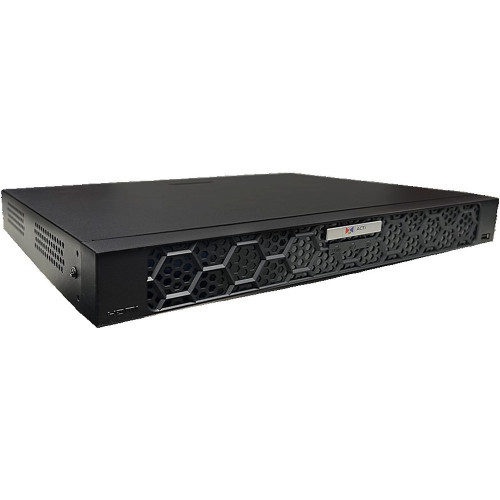
The ZNR-425 is a 4-bay unit accepting 3.5-inch SATA or SAS drives (disks not included). Four bays double the maximum drive count relative to the ZNR-224, directly supporting longer retention windows or RAID-protected configurations without external expansion.
On power, the ZNR-425 carries a specified 150 W power draw. No power consumption figure is listed for the ZNR-224—only its 12 V DC input voltage is noted. Installers sizing UPS capacity or rack power budgets for the ZNR-224 will need to obtain that figure from the manufacturer's full datasheet.
Which unit offers broader integration, connectivity, and VMS compatibility?
The ZNR-224 lists ONVIF Profile S and Profile T compliance, VGA output, and audio input/output. Its VMS compatibility entry explicitly references ONVIF Profile S/T, and it is described as suited for enterprise-grade environments.
The ZNR-425 lists VGA connectivity and audio input supported. ONVIF compliance is not specified in the provided specs for the ZNR-425, nor is a VMS compatibility entry. Its target environment is described as professional.
For integrators standardizing on ONVIF-based VMS platforms or requiring bidirectional audio at the recorder level, the ZNR-224's documented Profile S/T compliance and audio output are concrete advantages. The ZNR-425's ONVIF status cannot be confirmed from the available specs and would require vendor verification before assuming compatibility with an ONVIF-mandatory VMS.
Which should you choose: the ZNR-224 or the ZNR-425?
Our take: The ZNR-224 is the stronger choice when edge analytics, ONVIF VMS integration, and higher recording throughput are priorities. It outpaces the ZNR-425 by 32 Mbps (192 vs. 160 Mbps), adds a documented DLPU for onboard deep-learning analytics absent from the ZNR-425's specs, and carries verified ONVIF Profile S/T compliance where the ZNR-425's ONVIF support is unspecified. The ZNR-425 counters with four drive bays versus two, making it the better fit when maximizing on-device storage capacity or enabling RAID redundancy without external expansion. Power draw for the ZNR-224 is unspecified, complicating UPS planning. Choose the ZNR-224 for analytics-forward, ONVIF-integrated enterprise environments; choose the ZNR-425 where storage density and drive flexibility outweigh the need for onboard analytics.
Side-by-Side Comparison
Spec-for-spec, from manufacturer data.
| Specification | ACTi ZNR-224 | ACTi ZNR-425 |
|---|---|---|
| Type | 32-Channel 2-Bay Rackmount NVR | 32-Channel Rackmount NVR |
| Channels | 32 | 32 |
| Recording Throughput | 192 Mbps | 160 Mbps |
| Storage Bays | 2-bay (user-supplied) | 4-bay, 3.5-inch SATA/SAS (disks not included) |
| Mount Type | Rack | Rack |
| Form Factor | Rackmount | 2U Rackmount |
| Onboard Analytics | Deep Learning (DLPU) | — |
| ONVIF Compliance | Profile S/T | — |
| VGA Output | Yes | Yes |
| Audio | Input and output | Input supported |
| Power Input/Draw | 12V DC (draw not specified) | 150W |
| Target Environment | Enterprise-grade | Professional |
| Brand | ACTi | ACTi |
| MPN | ZNR-224 | ZNR-425 |
Frequently Asked Questions
Which should you choose: the ZNR-224 or the ZNR-425?
The ZNR-224 is the stronger choice when edge analytics, ONVIF VMS integration, and higher recording throughput are priorities. It outpaces the ZNR-425 by 32 Mbps (192 vs. 160 Mbps), adds a documented DLPU for onboard deep-learning analytics absent from the ZNR-425's specs, and carries verified ONVIF Profile S/T compliance where the ZNR-425's ONVIF support is unspecified. The ZNR-425 counters with four drive bays versus two, making it the better fit when maximizing on-device storage capacity or enabling RAID redundancy without external expansion. Power draw for the ZNR-224 is unspecified, complicating UPS planning. Choose the ZNR-224 for analytics-forward, ONVIF-integrated enterprise environments; choose the ZNR-425 where storage density and drive flexibility outweigh the need for onboard analytics.
Is the ZNR-224 or ZNR-425 better for longer video retention?
The ZNR-425 is better suited for extended retention. Its four 3.5-inch SATA/SAS bays accommodate twice as many drives as the ZNR-224's two bays, allowing more total raw capacity. The ZNR-224's 2-bay design limits on-unit storage regardless of drive size, so longer retention would require networked storage expansion.
Does either NVR support onboard AI or deep learning analytics?
Yes, but only the ZNR-224. Its specifications include an onboard Deep Learning Processing Unit (DLPU) for local object detection and behavioral analytics. The ZNR-425's specifications do not list any analytics engine or DLPU, so analytics capability for that model is not confirmed from available specs.
Will both NVRs work with my existing ONVIF-based VMS?
The ZNR-224 is documented as ONVIF Profile S and Profile T compliant, making it compatible with VMS platforms that require either profile. The ZNR-425's ONVIF compliance is not stated in the provided specifications; buyers should confirm ONVIF support directly with ACTi before deploying it in an ONVIF-mandatory environment.
Get a Second Opinion on Your Camera Choice
Share your site layout, coverage goals, and budget. Our team will validate the camera selection, flag anything we would change, and recommend products that match the use case.