
ACTi Z79 vs Speco Technologies O4FT1M: Specification Comparison
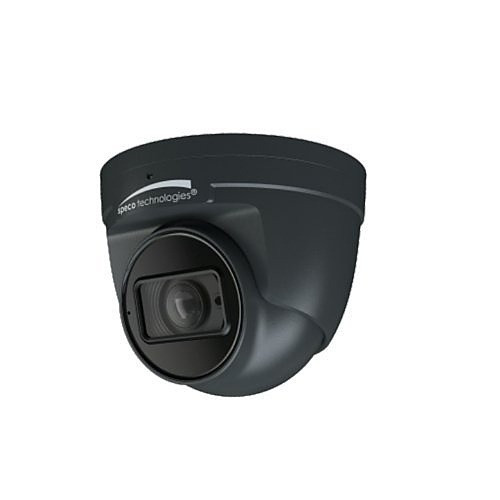
Both the ACTi Z79 and Speco Technologies O4FT1M are 4MP outdoor turret cameras aimed at commercial and light-industrial surveillance installations. They occupy the same resolution tier, share a fixed-lens (or varifocal) form factor, and target PoE-based IP deployments. This comparison evaluates their imaging capabilities, physical ruggedness and installation requirements, and VMS/analytics integration characteristics so integrators and IT buyers can align the right model to their specific project constraints.

In This Guide
How do the imaging specs compare?
The ACTi Z79 ships with a fixed 2.8 mm, F2.0 lens and delivers 4 MP output encoded in H.265 or H.264 dual-stream. It carries a WDR designation and IR illumination described as adaptive, though the spec sheet does not publish a rated IR distance, minimum illumination figure, or image-sensor size. The Speco O4FT1M uses a 1/1.8-inch CMOS sensor—a notably large format for a 4 MP turret—paired with a motorized 2.8–12 mm varifocal lens, enabling remote zoom and focus adjustment without physical access to the camera. The O4FT1M resolves 2576×1452 at 30 fps (with a datasheet reference to 2688×1520), encodes in H.265+, H.264+, and MJPEG, and lists True WDR. Neither model publishes a minimum-illumination lux value in the provided specs.
Low-light differentiation is meaningful here. The O4FT1M is branded with Speco's 'Flexible Intensifier' night-vision technology, which the spec identifies as a distinct low-light approach beyond standard IR. The Z79 specifies IR and adaptive IR illumination but provides no intensity or range rating. The O4FT1M's 1/1.8-inch sensor is physically larger than what ACTi discloses for the Z79 (sensor size not stated), which generally correlates with better low-light sensitivity. Buyers with demanding low-light requirements should note this distinction, while acknowledging that neither datasheet publishes lux numbers for a definitive comparison.
What about installation and environment?
The ACTi Z79 carries IP68 and IK10 ratings in a metal housing. IP68 certifies protection against continuous submersion beyond 1 meter—a higher ingress-protection grade than IP67. IK10 is the maximum impact-resistance rating under IEC 62262, confirming the enclosure withstands 20-joule direct strikes. The Z79 operates from -40 °C to 60 °C (-40 °F to 140 °F). It supports wall and ceiling mounting and draws up to 13 W over a single 802.3af PoE port, eliminating any separate DC run.
The Speco O4FT1M is rated IP67, which covers temporary submersion up to 1 meter for 30 minutes—solid outdoor protection but one tier below the Z79's IP68. No IK impact rating is published for the O4FT1M. Its operating temperature range is stated as -40 °F to 140 °F, matching the Z79's cold-end floor. The O4FT1M accepts 802.3af PoE or DC 12 V, giving installers a dual-power fallback absent on the Z79. Actual power draw is 7.0 W—roughly half the Z79's 13 W maximum—which reduces switch budget per port and may matter on large deployments or existing non-high-power PoE infrastructure.
Which fits your VMS and analytics better?
The ACTi Z79 declares ONVIF compliance and is confirmed compatible with ONVIF-capable VMS platforms. It includes a built-in microphone and supports on-board MicroSD storage for edge recording. No edge video analytics beyond standard motion detection are listed in the provided specifications.
The Speco O4FT1M is certified to ONVIF Profile T—a more specific and current profile than a bare ONVIF declaration, covering H.265 streaming, metadata, and PTZ configuration channels. It includes microphone support but no IK rating or on-board storage specification in the provided data. Where the O4FT1M differentiates substantially is edge analytics: five engines are listed—motion detection, line crossing, intrusion detection, face detection, and vehicle detection—all described as operating without add-on VMS licenses. The Z79 spec does not list any comparable analytics. The O4FT1M also carries a stated 3-year warranty; no warranty term is published for the Z79.
Which should you choose: the Z79 or the O4FT1M?
Our take: The O4FT1M is the stronger choice when edge analytics, flexible optics, or dual-power redundancy are project requirements. Its motorized 2.8–12 mm varifocal lens allows post-install field-of-view adjustment the Z79's fixed 2.8 mm lens cannot match. Its five on-camera analytics engines—line crossing, intrusion, face detection, vehicle detection, and motion—run without add-on licenses, a concrete cost and complexity advantage over the Z79, which lists none. Power draw of 7.0 W versus the Z79's 13 W maximum also reduces PoE switch budget on large camera counts. The Z79 asserts a clear edge in physical ruggedness: IP68 submersion resistance versus the O4FT1M's IP67, and an IK10 impact rating the O4FT1M does not publish. Choose the Z79 where the installation environment involves flooding risk, washdown, or deliberate vandalism, and where a fixed wide-angle view is sufficient.
Side-by-Side Comparison
Spec-for-spec, from manufacturer data.
| Specification | ACTi Z79 | Speco Technologies O4FT1M |
|---|---|---|
| Resolution | 4 MP | 4 MP (2576×1452; ref. 2688×1520) |
| Image Sensor | — | 1/1.8" CMOS |
| Lens / Focal Length | 2.8 mm fixed, F2.0 | 2.8–12 mm motorized varifocal |
| IR / Night Vision | IR; Adaptive IR (range not stated) | Flexible Intensifier (range not stated) |
| WDR | WDR | True WDR |
| Max Frame Rate | — | 30 fps |
| Video Compression | H.265; H.264 | H.265+; H.264+; MJPEG |
| IP Rating | IP68 | IP67 |
| IK / Impact Rating | IK10 | — |
| Operating Temperature | -40 °C to 60 °C | -40 °F to 140 °F (-40 °C to 60 °C) |
| Power Input | PoE 802.3af only | PoE 802.3af or DC 12 V |
| Power Consumption | 13 W max | 7.0 W |
| ONVIF | ONVIF | ONVIF Profile T |
| Edge Analytics | — | Motion, Line Crossing, Intrusion, Face Detection, Vehicle Detection |
| Audio | Built-in microphone | Microphone |
| On-board Storage | MicroSD | — |
| Warranty | — | 3 years |
Frequently Asked Questions
Which should you choose: the Z79 or the O4FT1M?
The O4FT1M is the stronger choice when edge analytics, flexible optics, or dual-power redundancy are project requirements. Its motorized 2.8–12 mm varifocal lens allows post-install field-of-view adjustment the Z79's fixed 2.8 mm lens cannot match. Its five on-camera analytics engines—line crossing, intrusion, face detection, vehicle detection, and motion—run without add-on licenses, a concrete cost and complexity advantage over the Z79, which lists none. Power draw of 7.0 W versus the Z79's 13 W maximum also reduces PoE switch budget on large camera counts. The Z79 asserts a clear edge in physical ruggedness: IP68 submersion resistance versus the O4FT1M's IP67, and an IK10 impact rating the O4FT1M does not publish. Choose the Z79 where the installation environment involves flooding risk, washdown, or deliberate vandalism, and where a fixed wide-angle view is sufficient.
Is the Z79 or O4FT1M better for low-light performance?
Based on the published specs, the O4FT1M has a stated advantage: it uses a 1/1.8-inch CMOS sensor—a large format that generally captures more light—and features Speco's Flexible Intensifier night-vision technology. The Z79 specifies IR and adaptive IR illumination but does not publish sensor size, IR range, or minimum lux values. Neither datasheet provides a lux figure, so a definitive numeric comparison cannot be made from the available specs alone.
Which camera is more physically rugged for harsh outdoor sites?
The ACTi Z79 is the more rugged unit by rated specifications. It carries IP68 (continuous submersion beyond 1 m) versus the O4FT1M's IP67 (temporary submersion to 1 m for 30 minutes), and an IK10 impact rating—the highest under IEC 62262—that the O4FT1M does not publish. The Z79's metal housing reinforces this. For washdown environments, flood-prone mounting locations, or sites with vandalism exposure, the Z79's published ratings are stronger.
Do either of these cameras support edge analytics without an additional VMS license?
Yes, but only the Speco O4FT1M. Its spec lists five on-device analytics engines—motion detection, line crossing, intrusion detection, face detection, and vehicle detection—described as operating without add-on licenses. The ACTi Z79 spec does not list any edge analytics capabilities beyond ONVIF VMS compatibility.
More IP Camera Comparisons
Get a Second Opinion on Your Camera Choice
Share your site layout, coverage goals, and budget. Our team will validate the camera selection, flag anything we would change, and recommend products that match the use case.