
ACTi Q450 vs Pelco SRXF3-8360-ES: Specification Comparison
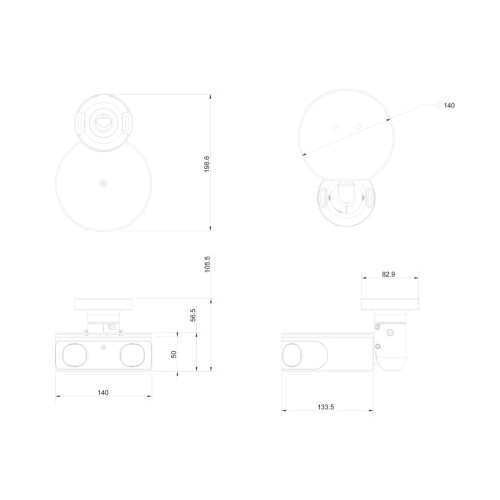
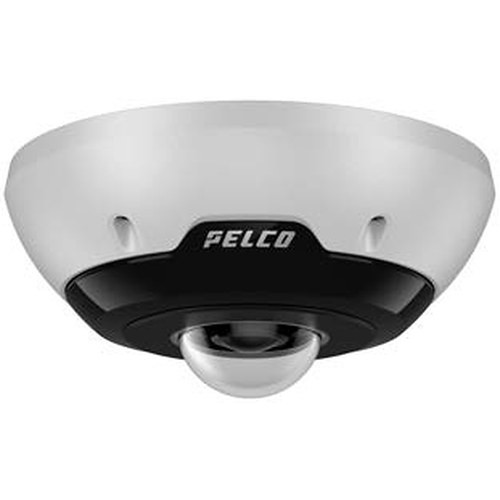
Both the ACTi Q450 and the Pelco SRXF3-8360-ES are 8MP outdoor-rated fixed cameras targeting wide-area coverage, making them legitimate cross-shop candidates for perimeter and open-area surveillance projects. The Q450 achieves panoramic coverage via dual 2.8mm lenses in a bullet form factor, while the SRXF3-8360-ES uses a single 2.7mm fisheye lens in a dome form factor for true 360° coverage. This comparison examines imaging performance, installation requirements, and integration capabilities based solely on published specifications.
In This Guide
How do the imaging specs compare?
Both cameras deliver 8MP resolution, but their optical approaches differ significantly. The ACTi Q450 uses two fixed 2.8mm lenses to achieve a 180° horizontal field of view, effectively splitting the 8MP sensor output across two imagers. The Pelco SRXF3-8360-ES uses a single 2.7mm f/2.5 fisheye lens to capture a full 360° field of view at a native resolution of 3264×2448 pixels. The Pelco's frame rate is specified at 12.5 fps at full resolution; no equivalent frame rate figure is provided in the ACTi Q450 specs.
For low-light performance, the Pelco SRXF3-8360-ES specifies a minimum illumination of 0.10 lux with day/night operation, and lists WDR up to 83 dB. The ACTi Q450 provides Adaptive IR illumination and WDR, but neither a lux value nor a WDR dB figure is stated in the provided specifications. The Q450 lists IR as its night-vision mechanism; the Pelco also lists IR at 850nm with day/night switching. IR range is not specified for either camera.
What about installation and environment?
The Pelco SRXF3-8360-ES carries IP66 and IP67 ingress ratings plus an IK10 impact rating, and is rated for operation from −40°C to +60°C, making it suitable for harsh outdoor deployments including vandal-prone or extreme-temperature environments. It ships in a white fisheye dome form factor and supports wall, ceiling, pole, pendant, and corner mounting. Its dimensions are 153.5mm × 153.5mm × 71.3mm with a weight of approximately 1.001 kg including the wall mount.
The ACTi Q450 is described as outdoor-capable in a panoramic bullet form factor, but its IP rating, IK rating, operating temperature range, dimensions, and weight are not provided in the available specifications. Power for the Q450 is PoE at a stated 13W draw. The Pelco SRXF3-8360-ES requires PoE+ (802.3at, Class 3), which demands a PoE+ capable switch port or injector—an important infrastructure consideration compared to standard PoE.
Which fits your VMS and analytics better?
Both cameras support ONVIF, though they differ in profile depth. The Pelco SRXF3-8360-ES explicitly lists ONVIF Profile S and Profile T compliance, enabling richer metadata and streaming interoperability with compatible VMS platforms. The ACTi Q450 states ONVIF compliance and is listed as compatible with ONVIF-compliant VMS platforms, but no specific ONVIF profiles are cited in the provided specs.
The Pelco SRXF3-8360-ES includes on-board Pelco Smart Analytics with 8 behaviors, HTTPS encryption, microSD local storage, and microphone support for audio capture. The ACTi Q450 specifications do not list edge analytics, on-board storage, audio capability, or HTTPS encryption. Both cameras support H.265 and H.264 compression. The Pelco also references HD Stream Smart Codec bandwidth management technology; no equivalent bandwidth management feature is noted for the Q450.
Which should you choose: the Q450 or the SRXF3-8360-ES?
Our take: The SRXF3-8360-ES is the stronger choice when complete 360° situational awareness, verified environmental hardening, and integrated edge analytics are the priorities. On documented specs, the Pelco covers twice the horizontal field of view (360° vs 180°) from a single mount, is rated to both IP66/IP67 and IK10 versus no stated rating for the Q450, and operates down to −40°C compared to no stated temperature floor for the ACTi. It also adds 8-behavior on-board analytics, microSD local storage, and ONVIF Profile S/T—none of which are specified for the Q450. The ACTi Q450 merits consideration where a standard PoE switch (not PoE+) is already deployed, where the 180° dual-lens bullet form factor better suits a linear perimeter run, or where the installer ecosystem is already ACTi/ONVIF-generic. Buyers should request ACTi Q450 environmental and low-light data sheets to close remaining specification gaps before finalizing selection.
Side-by-Side Comparison
Spec-for-spec, from manufacturer data.
| Specification | ACTi Q450 | Pelco SRXF3-8360-ES |
|---|---|---|
| Resolution | 8MP | 8MP (3264×2448) |
| Lens / Focal Length | 2× Fixed 2.8mm | 2.7mm f/2.5 |
| Field of View | 180° HOV (dual imager) | 360° fisheye |
| Form Factor | Panoramic Bullet | Fisheye Dome |
| Min Illumination (Lux) | — | 0.10 lux |
| IR Night Vision | Adaptive IR | IR 850nm; Day/Night |
| WDR | WDR (dB not specified) | WDR up to 83 dB |
| Max Frame Rate | — | 12.5 fps at full resolution |
| Video Compression | H.265; H.264 | H.265; H.264 |
| ONVIF | Yes (profiles not specified) | Profile S; Profile T |
| Edge Analytics | — | Pelco Smart Analytics; 8 behaviors |
| Audio | — | Microphone supported |
| On-Board Storage | — | microSD |
| Power Input | PoE (13W) | PoE+ 802.3at (Class 3) |
| IP Rating | — | IP66 / IP67 |
| IK / Impact Rating | — | IK10 |
| Operating Temperature | — | −40°C to +60°C |
| HTTPS Encryption | — | Yes |
| Warranty | — | 5-year |
| Dimensions | — | 153.5mm × 153.5mm × 71.3mm |
| Weight | — | 1.001 kg (with wall mount) |
Frequently Asked Questions
Which should you choose: the Q450 or the SRXF3-8360-ES?
The SRXF3-8360-ES is the stronger choice when complete 360° situational awareness, verified environmental hardening, and integrated edge analytics are the priorities. On documented specs, the Pelco covers twice the horizontal field of view (360° vs 180°) from a single mount, is rated to both IP66/IP67 and IK10 versus no stated rating for the Q450, and operates down to −40°C compared to no stated temperature floor for the ACTi. It also adds 8-behavior on-board analytics, microSD local storage, and ONVIF Profile S/T—none of which are specified for the Q450. The ACTi Q450 merits consideration where a standard PoE switch (not PoE+) is already deployed, where the 180° dual-lens bullet form factor better suits a linear perimeter run, or where the installer ecosystem is already ACTi/ONVIF-generic. Buyers should request ACTi Q450 environmental and low-light data sheets to close remaining specification gaps before finalizing selection.
Is the ACTi Q450 or the Pelco SRXF3-8360-ES better for low-light performance?
Based on available specs, the Pelco SRXF3-8360-ES has a documented minimum illumination of 0.10 lux with day/night switching and IR at 850nm. The ACTi Q450 lists Adaptive IR and day/night capability but does not specify a lux rating in the provided specifications, so a direct numerical comparison cannot be made from the data at hand.
Can I use either camera with my existing standard PoE switch?
The ACTi Q450 is powered by standard PoE at 13W, which is compatible with 802.3af PoE switches. The Pelco SRXF3-8360-ES requires PoE+ (802.3at, Class 3), so it needs a PoE+ capable switch port or a PoE+ injector. If your existing infrastructure is 802.3af only, the Q450 is the plug-in-ready option.
Which camera offers better vandal resistance for an exposed outdoor installation?
The Pelco SRXF3-8360-ES is rated IK10 for impact resistance and carries both IP66 and IP67 ingress ratings, making it a documented choice for exposed or vandal-prone locations. The ACTi Q450 does not list an IK rating or IP rating in the provided specifications, so its vandal resistance cannot be assessed from the available data.
Get a Second Opinion on Your Camera Choice
Share your site layout, coverage goals, and budget. Our team will validate the camera selection, flag anything we would change, and recommend products that match the use case.