
ACTi Q450 vs Pelco SRXF3-8180-ES: Specification Comparison
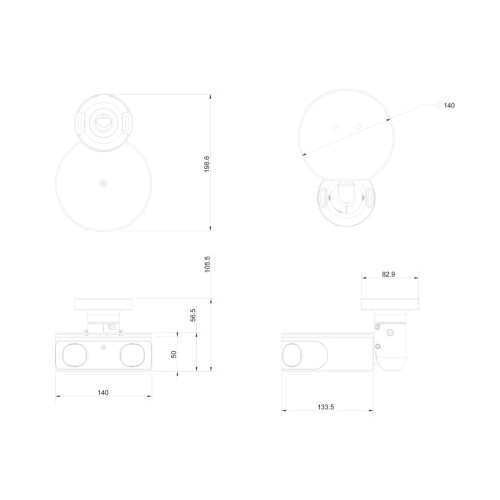
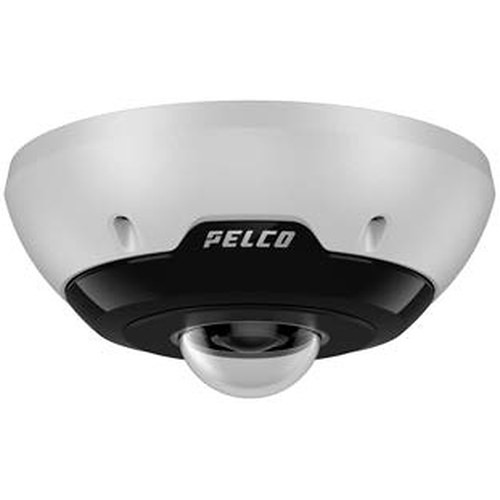
Both the ACTi Q450 and Pelco SRXF3-8180-ES are outdoor-rated, 8MP fixed cameras designed for wide-area panoramic coverage, making them direct cross-shop candidates for perimeter and open-space surveillance. The Q450 uses a dual-imager panoramic bullet form factor with two fixed 2.8mm lenses, while the SRXF3-8180-ES is a single-sensor fisheye in a dome housing. This comparison examines imaging performance, installation requirements, and VMS/analytics integration to help integrators and IT buyers select the right architecture for their coverage and platform needs.
In This Guide
How do the imaging specs compare?
Both cameras deliver 8MP resolution, but they achieve wide-area coverage through different optical architectures. The ACTi Q450 uses two fixed 2.8mm lenses to produce a 180° horizontal field of view, combining the dual sensors into a stitched panoramic image. The Pelco SRXF3-8180-ES employs a single 2.7mm f/2.5 fisheye lens to capture a 180° or 360° field of view at a native resolution of 3264×2448. Notably, the SRXF3-8180-ES spec sheet also references a 3840×2160 resolution figure, which is inconsistent with the 3264×2448 value; the higher figure cannot be confirmed from the provided specs alone. Maximum frame rate for the Pelco is specified at 12.5 fps at full resolution, while no frame rate figure is provided for the ACTi Q450.
In low-light conditions, the two cameras take meaningfully different approaches. The ACTi Q450 relies on built-in Adaptive IR illumination for night vision, with Day/Night switching, but no minimum illumination lux value is provided in the supplied specifications. The Pelco SRXF3-8180-ES achieves low-light performance through a rated minimum illumination of 0.10 lux combined with a Day/Night mechanism, without specifying active IR illuminators; the spec sheet references 'IR; 850nm; Day/Night' in one field, but no IR range or cut-filter confirmation is explicitly stated. Both cameras include WDR; the Pelco specifies WDR up to 83 dB, while no WDR dB value is provided for the ACTi Q450.
What about installation and environment?
The Pelco SRXF3-8180-ES carries dual weatherproofing ratings of IP66 and IP67, plus an IK10 vandal-impact rating, and is confirmed outdoor-ready. It operates across a wide temperature range of -40°C to +60°C, making it suitable for harsh climates. It is powered by PoE+ (802.3at, PoE Class 3), which requires a PoE+ capable switch or injector. Mounting options listed include wall, ceiling, pole, pendant, and corner configurations. The unit weighs approximately 1.0 kg with wall mount and measures 153.5mm × 153.5mm × 71.3mm.
The ACTi Q450 is a panoramic bullet form factor powered by standard PoE at 13W, which is within the PoE (802.3af) budget and does not require a PoE+ switch. However, no IP weatherproofing rating, IK impact rating, operating temperature range, dimensions, or weight are provided in the supplied specifications for the Q450, making a direct environmental durability comparison impossible from available data.
Which fits your VMS and analytics better?
Both cameras support ONVIF compliance. The Pelco SRXF3-8180-ES is certified to ONVIF Profile S and Profile T, providing broader VMS interoperability including H.265 streaming under Profile T. The ACTi Q450 is stated as ONVIF-compliant and compatible with ONVIF-compliant VMS platforms, but the specific ONVIF Profile (S, T, G, etc.) is not stated in the provided specifications. Both cameras support H.265 and H.264 compression.
The Pelco SRXF3-8180-ES includes Pelco Smart Analytics with 8 on-board behavior detection capabilities, HTTPS encryption, microphone/audio support, and onboard microSD storage. The ACTi Q450 does not list any edge analytics, audio input/output, onboard storage, or HTTPS encryption in the provided specifications. For deployments requiring on-camera analytics, audio monitoring, or local redundant storage, the Pelco SRXF3-8180-ES offers documented capabilities that are absent from the ACTi Q450's available spec data.
Which should you choose: the Q450 or the SRXF3-8180-ES?
Our take: The SRXF3-8180-ES is the stronger choice when environmental hardening, edge analytics, and documented VMS profile compliance are decision drivers. The Pelco carries confirmed IP66/IP67 and IK10 ratings versus no published IP or IK rating for the Q450; it specifies a 0.10 lux minimum illumination versus no lux figure for the Q450; and it delivers 8 on-board analytics behaviors plus microSD storage that the Q450 spec sheet does not mention. However, the Q450's standard PoE requirement (13W, 802.3af-compatible) is an installation advantage over the SRXF3-8180-ES's mandatory PoE+ (802.3at) infrastructure. The Q450 may be preferable on PoE-budget-constrained switch deployments or where dual-imager stitched panoramas are preferred over fisheye de-warping. Buyers should request ACTi's full datasheet to confirm IP rating and lux performance before a final decision.
Side-by-Side Comparison
Spec-for-spec, from manufacturer data.
| Specification | ACTi Q450 | Pelco SRXF3-8180-ES |
|---|---|---|
| Resolution | 8MP | 8MP (3264×2448 specified; 3840×2160 also referenced — inconsistent) |
| Camera Type / Form Factor | Panoramic Bullet (dual-imager) | Fisheye Dome |
| Lens / Focal Length | 2× Fixed 2.8mm | 2.7mm f/2.5 |
| Field of View | 180° HOV (stitched) | 180° or 360° |
| Min Illumination (Lux) | — | 0.10 lux |
| IR / Night Vision | Adaptive IR; Day/Night | Day/Night; IR 850nm referenced — IR range not stated |
| WDR | WDR (dB not stated) | WDR up to 83 dB |
| Max Frame Rate | — | 12.5 fps at full resolution |
| Video Compression | H.265; H.264 | H.265; H.264 |
| ONVIF Compliance | ONVIF-compliant (profile not stated) | ONVIF Profile S; Profile T |
| Edge Analytics | — | Pelco Smart Analytics; 8 behaviors |
| Audio | — | Microphone supported |
| Onboard Storage | — | microSD |
| Power Input | PoE (13W) | PoE+ / 802.3at (Class 3) |
| IP Rating | — | IP66; IP67 |
| IK / Impact Rating | — | IK10 |
| Operating Temperature | — | -40°C to +60°C |
| Warranty | — | 5-year |
| HTTPS Encryption | — | Yes |
Frequently Asked Questions
Which should you choose: the Q450 or the SRXF3-8180-ES?
The SRXF3-8180-ES is the stronger choice when environmental hardening, edge analytics, and documented VMS profile compliance are decision drivers. The Pelco carries confirmed IP66/IP67 and IK10 ratings versus no published IP or IK rating for the Q450; it specifies a 0.10 lux minimum illumination versus no lux figure for the Q450; and it delivers 8 on-board analytics behaviors plus microSD storage that the Q450 spec sheet does not mention. However, the Q450's standard PoE requirement (13W, 802.3af-compatible) is an installation advantage over the SRXF3-8180-ES's mandatory PoE+ (802.3at) infrastructure. The Q450 may be preferable on PoE-budget-constrained switch deployments or where dual-imager stitched panoramas are preferred over fisheye de-warping. Buyers should request ACTi's full datasheet to confirm IP rating and lux performance before a final decision.
Is the ACTi Q450 or Pelco SRXF3-8180-ES better for low-light performance?
Based on the provided specifications, the Pelco SRXF3-8180-ES has a documented minimum illumination of 0.10 lux with Day/Night switching. The ACTi Q450 includes Adaptive IR illumination and Day/Night capability but no minimum lux figure is stated in the available specs, so a direct numerical comparison cannot be made from the data provided.
Can I power either camera from a standard PoE switch?
The ACTi Q450 draws 13W and can be powered by a standard 802.3af PoE switch or injector. The Pelco SRXF3-8180-ES requires PoE+ (802.3at, Class 3), which delivers up to 30W; a PoE+ capable switch or midspan injector is required for the Pelco.
Which camera offers better vandal and weather resistance?
The Pelco SRXF3-8180-ES is rated IP66, IP67, and IK10, and is specified for operation from -40°C to +60°C. No IP weatherproofing rating, IK impact rating, or operating temperature range is provided in the available specifications for the ACTi Q450, so its environmental durability cannot be confirmed from the data at hand.
Get a Second Opinion on Your Camera Choice
Share your site layout, coverage goals, and budget. Our team will validate the camera selection, flag anything we would change, and recommend products that match the use case.