
ACTi B85 vs ACTi E58: Specification Comparison
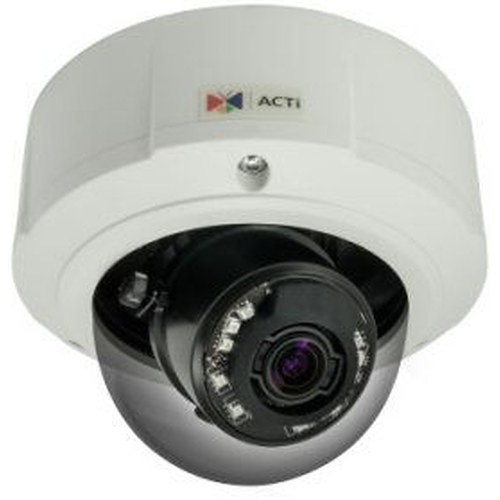
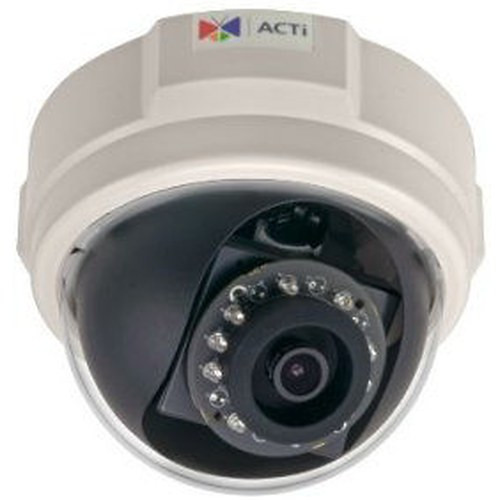
The ACTi B85 and ACTi E58 are both 2 MP IP dome cameras from ACTi, making them the same resolution class and the same general form factor. The B85 is an outdoor-rated zoom dome with a 3x optical varifocal lens, while the E58 is a fixed indoor dome. A buyer evaluating surveillance coverage for a facility might consider both when deciding between outdoor perimeter or indoor general coverage deployments, making this a meaningful cross-shop comparison within the same brand ecosystem.
In This Guide
How do the imaging specs compare?
Both cameras deliver 2 MP (1920×1080) resolution at up to 30 fps. The B85 uses a 1/2.8-inch sensor with a 3.0–9 mm 3x optical zoom lens, providing a field of view that adjusts from 103.6° at wide to 36.2° at telephoto without remounting. Minimum illumination is specified at 0.003 lux in color (F1.2) and 0 lux in IR mode. The B85 lists Basic WDR at 75 dB. The E58's sensor size, lens focal length, minimum illumination figure, and WDR specification are not provided in the supplied specs, so a direct numeric comparison on those points is not possible.
For IR night vision, the B85 specifies 850 nm illuminators with a stated range of 40 m in day/night mode. The E58 confirms IR and day/night capability but provides no wavelength, range, or illumination figure. Video compression on the B85 is H.264 (Baseline, Main, High profile) plus MJPEG; the E58 adds H.265, which can reduce bitrate and storage requirements compared to H.264, though no bitrate figures are specified for either model.
What about installation and environment?
The B85 carries IP67, IK10, NEMA 4X, and UL Listed (UL 60950-1) ratings, confirming full dust ingress protection, resistance to temporary immersion, 20-joule vandal impact resistance, and suitability for outdoor and wash-down environments. Its operating temperature range is -40°C to 50°C (-40°F to 122°F). Mounting options include wall, pole, pendant, corner, and rack. The E58 is rated for indoor use; no IP, IK, NEMA, or operating temperature specifications are provided in the supplied data, so weatherproofing and vandal resistance cannot be confirmed.
Power input differs between the two models. The B85 is powered by DC 12V or PoE Class 3 (IEEE 802.3at / PoE+), drawing up to the Class 3 budget. The E58 uses standard PoE (IEEE 802.3af), which is the lower-power standard and sufficient for its indoor fixed-lens design. Installers should verify switch port PoE class availability: the B85 requires an 802.3at-capable port, while the E58 works with any 802.3af port.
Which fits your VMS and analytics better?
The B85 is ONVIF-compliant with Profiles S, G, T, and Q, offering broader VMS compatibility than the E58, which lists only ONVIF Profile S. For edge analytics, the B85 specifies VMD, People Counting, and Smoke Detection. The E58 lists ONVIF compliance as Yes but no analytics capabilities are specified in the supplied data. The B85 also includes two-way audio with a line-in and line-out interface; the E58 has no audio specification provided. Neither model lists an onboard SD card or edge storage specification in the supplied data.
Which should you choose: the B85 or the E58?
Our take: The B85 is the stronger choice when the deployment requires outdoor installation, optical zoom, or a richer analytics and VMS integration profile. Concretely: the B85 adds 3x optical zoom (3.0–9 mm vs. no focal length specified for the E58), extends ONVIF support to Profiles S, G, T, and Q versus Profile S only on the E58, and includes two-way audio with VMD, People Counting, and Smoke Detection analytics where no equivalent capabilities are listed for the E58. The E58's notable differentiator is H.265 compression, which can reduce storage and bandwidth versus the B85's H.264/MJPEG-only encoding. Because the E58's IP rating, IK rating, operating temperature, sensor size, and minimum illumination are not specified, it cannot be verified for outdoor or harsh-environment use. Choose the B85 for outdoor perimeter, varifocal, or analytics-driven applications; consider the E58 where H.265 storage efficiency and standard PoE 802.3af are the primary indoor requirements.
Side-by-Side Comparison
Spec-for-spec, from manufacturer data.
| Specification | ACTi B85 | ACTi E58 |
|---|---|---|
| Resolution | 2 MP (1920×1080) | 2 MP (1920×1080) |
| Image Sensor | 1/2.8 inch | — |
| Lens / Focal Length | 3.0–9 mm (3x optical zoom) | — |
| Field of View | 103.6° (wide) – 36.2° (tele) | — |
| Min Illumination | 0.003 lux (color, F1.2); 0 lux (IR on) | — |
| IR Range | 40 m | — |
| IR Wavelength | 850 nm | — |
| WDR | Basic WDR (75 dB) | WDR (no dB value specified) |
| Max Frame Rate | 30 fps @ 1920×1080 | — |
| Video Compression | H.264 (BP/Main/High); MJPEG | H.265; H.264; MJPEG |
| ONVIF Profiles | Profile S, G, T, Q | Profile S |
| Edge Analytics | VMD; People Counting; Smoke Detection | — |
| Audio | Two-way (line-in, line-out) | — |
| IP Rating | IP67 | — |
| IK / Impact Rating | IK10 | — |
| NEMA Rating | NEMA 4X | — |
| Operating Temperature | -40°C to 50°C (-40°F to 122°F) | — |
| Power Input / PoE Class | DC 12V or PoE+ 802.3at (Class 3) | PoE 802.3af |
| Mounting | Wall; Pole; Pendant; Corner; Rack | Ceiling; Surface |
| Application Environment | Outdoor | Indoor |
| Weight | 1291 g (2.846 lb) | — |
| Certifications | CE Class B; FCC Class B; EAC; CB; UL (UL 60950-1); NEMA 4X | — |
Frequently Asked Questions
Which should you choose: the B85 or the E58?
The B85 is the stronger choice when the deployment requires outdoor installation, optical zoom, or a richer analytics and VMS integration profile. Concretely: the B85 adds 3x optical zoom (3.0–9 mm vs. no focal length specified for the E58), extends ONVIF support to Profiles S, G, T, and Q versus Profile S only on the E58, and includes two-way audio with VMD, People Counting, and Smoke Detection analytics where no equivalent capabilities are listed for the E58. The E58's notable differentiator is H.265 compression, which can reduce storage and bandwidth versus the B85's H.264/MJPEG-only encoding. Because the E58's IP rating, IK rating, operating temperature, sensor size, and minimum illumination are not specified, it cannot be verified for outdoor or harsh-environment use. Choose the B85 for outdoor perimeter, varifocal, or analytics-driven applications; consider the E58 where H.265 storage efficiency and standard PoE 802.3af are the primary indoor requirements.
Is the B85 or E58 better for low-light performance?
Based on available specs, the B85 is the only model with a stated minimum illumination figure: 0.003 lux in color and 0 lux with IR on, with 850 nm IR at a 40 m range. The E58 confirms IR and day/night operation but provides no illumination value or IR range in the supplied specifications, so a numeric comparison cannot be made.
Can either camera be installed outdoors?
The B85 is rated IP67, IK10, NEMA 4X, and operates from -40°C to 50°C, confirming it is suitable for outdoor and harsh environments. The E58 is described as an indoor dome camera; no IP, IK, NEMA, or operating temperature specifications are provided, so outdoor suitability cannot be confirmed from the supplied data.
Does either camera support H.265 to save storage space?
Yes — the E58 lists H.265 compression alongside H.264 and MJPEG, which can reduce bitrate and storage consumption compared to H.264 alone. The B85 is specified with H.264 (Baseline, Main, High profile) and MJPEG only; H.265 is not listed for the B85 in the supplied specifications.
Get a Second Opinion on Your Camera Choice
Share your site layout, coverage goals, and budget. Our team will validate the camera selection, flag anything we would change, and recommend products that match the use case.