
ACTi B65 vs ACTi B85: Specification Comparison
The ACTi B65 and B85 are both 2MP varifocal zoom dome cameras from ACTi, each offering a 3x optical zoom lens in a dome form factor. The B65 targets indoor deployments, while the B85 is rated for harsh outdoor environments. Both share the same resolution class and zoom range, making them natural cross-shop candidates for installers deciding between an interior corridor camera and an exterior perimeter camera on the same project.
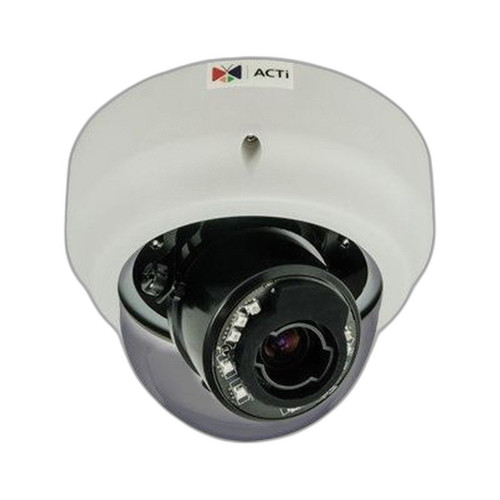
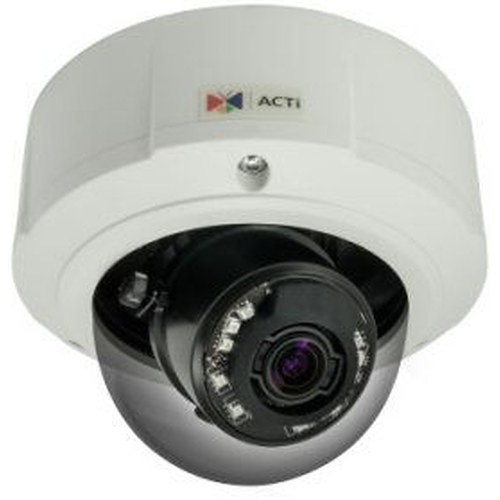
In This Guide
How do the imaging specs compare?
Both the B65 and B85 deliver 2MP resolution and use a 3x optical zoom lens. The B85 specifies a 3.0–9mm focal length, a 1/2.8-inch sensor, and a minimum illumination of 0.003 lux (color, F1.2) dropping to 0 lux in B/W with IR active. Its IR illuminators operate at 850nm with a stated 40m range. The B65 lists Basic WDR and IR with Day/Night capability, but no sensor size, minimum illumination figure, focal length, or IR wavelength/range are provided in the supplied specifications.
Video compression on the B85 is documented as H.264 (Baseline, Main, High profile) and MJPEG at up to 30 fps across resolutions from 1920×1080 down to 640×480, with 15 fps at 320×240. The B85 also lists WDR at 75 dB. The B65 notes Basic WDR but no dB value, no compression profiles, and no frame-rate figures are present in the provided specs. Buyers requiring documented low-light numbers or compression flexibility will find the B85's spec sheet more complete.
What about installation and environment?
The B85 carries IP67, IK10, NEMA 4X, and UL Listed (UL 60950-1) certifications, making it rated for full dust ingress protection, temporary immersion, 20-joule vandal impact resistance, and outdoor wash-down conditions. Its operating temperature spans -40°C to 50°C (-40°F to 122°F). The B65 carries no IP, IK, NEMA, or UL ratings in the provided specifications and is designated for indoor use only; no operating temperature range is listed.
On power, the B65 uses PoE 802.3af at approximately 12–13W, requiring only a standard 802.3af switch port. The B85 requires PoE+ (802.3at) Class 3, meaning the switch or injector must supply 802.3at power. The B85 also accepts DC 12V as an alternative. Mounting options differ: the B65 supports ceiling and wall; the B85 adds pole, pendant, corner, and rack mount options. The B85 weighs 1,291g (2.85 lb); no weight is specified for the B65.
Which fits your VMS and analytics better?
Both cameras are ONVIF-compliant. The B85 specifies ONVIF Profile S, G, T, and Q, providing documented compatibility with recording (S), edge storage (G), streaming (T), and device discovery (Q) profiles. The B65 lists ONVIF compliance and Standard IP VMS compatibility but does not specify which ONVIF profiles are supported.
The B85 includes on-board analytics: VMD (Video Motion Detection), People Counting, and Smoke Detection are listed in the provided specs. It also supports two-way audio (line-in, line-out). The B65 lists no edge analytics and no audio capability in the provided specifications. Neither camera lists on-board SD card storage in the provided specs; the B85's ONVIF Profile G listing suggests potential edge storage support, but no SD slot or capacity is explicitly stated.
Which should you choose: the B65 or the B85?
Our take: The B85 is the stronger choice when the installation is outdoor, in a vandal-risk environment, or where documented low-light and analytics specs are required; the B65 is appropriate for straightforward indoor deployments on standard 802.3af infrastructure. Key spec deltas: (1) Environmental protection — the B85 is rated IP67/IK10/NEMA 4X; the B65 carries no environmental rating. (2) Low-light performance — the B85 specifies 0.003 lux color sensitivity with 850nm IR at a 40m range; the B65 provides no illumination figure or IR range. (3) Power — the B85 requires 802.3at PoE+ Class 3, which demands compatible switch ports or injectors, while the B65 runs on standard 802.3af at ~12–13W. If the project is entirely indoors, switch infrastructure is 802.3af-only, and the VMS integration need is basic, the B65 avoids the added power requirement. For any outdoor, high-vandal, or analytics-driven application, the B85's documented certifications and feature set are the appropriate specification.
Side-by-Side Comparison
Spec-for-spec, from manufacturer data.
| Specification | ACTi B65 | ACTi B85 |
|---|---|---|
| Resolution | 2 MP | 2 MP |
| Lens / Focal Length | Varifocal 3x optical zoom (focal length not specified) | 3.0–9mm (3x optical zoom) |
| Image Sensor Size | — | 1/2.8 inch |
| Min. Illumination | — | 0.003 lux (color, F1.2); 0 lux (B/W, IR on) |
| IR Wavelength | — | 850nm |
| IR Range | — | 40m |
| WDR | Basic WDR (dB not specified) | Basic WDR (75 dB) |
| Max Frame Rate | — | 30 fps @ 1920×1080 |
| Video Compression | — | H.264 (Baseline, Main, High); MJPEG |
| IP Rating | — | IP67 |
| IK / Impact Rating | — | IK10 |
| NEMA Rating | — | NEMA 4X |
| Operating Temperature | — | -40°C to 50°C (-40°F to 122°F) |
| Power Input / PoE Class | PoE 802.3af (~12–13W) | PoE+ 802.3at Class 3; DC 12V |
| ONVIF Profiles | ONVIF (profiles not specified) | Profile S, G, T, Q |
| Edge Analytics | — | VMD; People Counting; Smoke Detection |
| Audio | — | Two-way (line-in, line-out) |
| Mount Types | Ceiling; Wall | Wall; Pole; Pendant; Corner; Rack |
| Weight | — | 1,291g (2.846 lb) |
| Certifications | — | CE Class B; FCC Class B; EAC; CB; UL Listed (UL 60950-1); NEMA 4X; IP67; IK10 |
| Application | Indoor | Outdoor |
Frequently Asked Questions
Which should you choose: the B65 or the B85?
The B85 is the stronger choice when the installation is outdoor, in a vandal-risk environment, or where documented low-light and analytics specs are required; the B65 is appropriate for straightforward indoor deployments on standard 802.3af infrastructure. Key spec deltas: (1) Environmental protection — the B85 is rated IP67/IK10/NEMA 4X; the B65 carries no environmental rating. (2) Low-light performance — the B85 specifies 0.003 lux color sensitivity with 850nm IR at a 40m range; the B65 provides no illumination figure or IR range. (3) Power — the B85 requires 802.3at PoE+ Class 3, which demands compatible switch ports or injectors, while the B65 runs on standard 802.3af at ~12–13W. If the project is entirely indoors, switch infrastructure is 802.3af-only, and the VMS integration need is basic, the B65 avoids the added power requirement. For any outdoor, high-vandal, or analytics-driven application, the B85's documented certifications and feature set are the appropriate specification.
Is the B65 or B85 better for low-light performance?
Based on the provided specifications, the B85 is better documented for low-light use: it lists a minimum illumination of 0.003 lux (color) and 0 lux in B/W with IR active, using 850nm LEDs with a 40m range. The B65 notes IR and Day/Night capability but provides no minimum illumination figure or IR range in the supplied specs, so a direct numeric comparison cannot be made.
Can I use the B65 outdoors if I mount it under an eave?
Based on the provided specifications, the B65 carries no IP, IK, or NEMA environmental rating and is designated for indoor use only. No operating temperature range is listed. Using it in any environment where it could be exposed to moisture, dust, or temperature extremes outside a conditioned interior space is not supported by the documented specs. The B85, rated IP67/IK10/NEMA 4X with an operating range of -40°C to 50°C, is the specified outdoor option between these two models.
Will either camera work with my existing 802.3af PoE switch?
The B65 is powered by PoE 802.3af at approximately 12–13W, so it is compatible with standard 802.3af switch ports. The B85 requires PoE+ (802.3at) Class 3; a standard 802.3af port will not reliably power it. If your switch supports only 802.3af, the B65 is the compatible choice; the B85 requires an 802.3at-capable port or a separate 802.3at injector, or DC 12V power.
Get a Second Opinion on Your Camera Choice
Share your site layout, coverage goals, and budget. Our team will validate the camera selection, flag anything we would change, and recommend products that match the use case.