
ACTi B57 vs Hanwha XNV-8083R: Specification Comparison
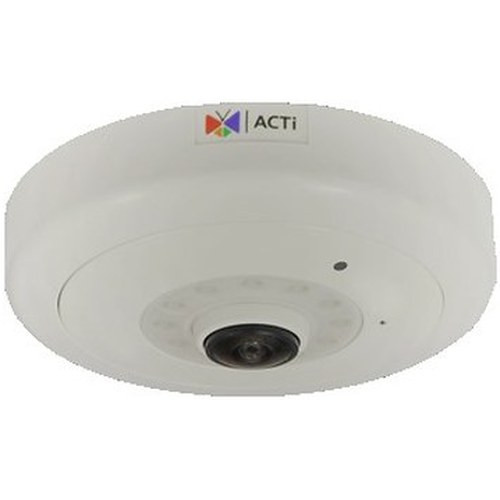
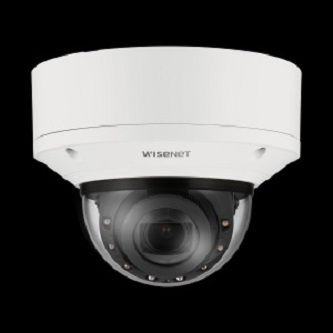
Both the ACTi B57 and the Hanwha XNV-8083R are 6MP network cameras, but they serve fundamentally different deployment scenarios. The B57 is an indoor fisheye hemispheric dome designed for 360° coverage with on-board analytics, while the XNV-8083R is a ruggedized outdoor vandal dome with a motorized varifocal lens, IK10+ impact resistance, and a -50°C cold-weather rating. This comparison covers imaging performance, installation suitability, and integration fit to help installers choose the right unit for a given site.
In This Guide
How do the imaging specs compare?
The ACTi B57 uses a 1/1.8-inch sensor at 3096×2080 (approximately 6.4MP native) with a fixed 1.3mm fisheye lens at F2.6, delivering a full 360° hemispheric field of view. Maximum frame rate is 20 fps at full 3072×2048 resolution, rising to 30 fps only at sub-megapixel resolutions. Minimum illumination is 0.003 lux in color and 0 lux with the 850nm IR illuminator active; IR range is rated to 20m. WDR is specified at 130dB.
The Hanwha XNV-8083R also uses a 1/1.8-inch sensor but at 3328×1872 resolution with a motorized varifocal 4.4–9.3mm P-iris lens (2.1× zoom, F1.3 wide to F2.15 tele), supporting full 30fps at maximum resolution. Minimum illumination is 0.04 lux in color and 0 lux with IR; WiseIR illuminators reach 50m—2.5× the B57's 20m. WDR is rated at 120dB (extremeWDR). A built-in gyro sensor provides digital image stabilization, which the B57 does not specify. The XNV-8083R adds H.265 compression; the B57 is limited to H.264 and MJPEG.
What about installation and environment?
The ACTi B57 carries CE Class B, FCC Class B, EAC, and UL certifications and is rated for indoor use only, with an operating temperature of -10°C to +50°C. No IP or IK ingress/impact rating is specified in the provided data. It weighs 461g and accepts DC 12V or PoE Class 3 (IEEE 802.3af); the spec sheet simultaneously references PoE+ (802.3at) Class 3, creating an internal inconsistency—buyers should verify actual power draw with ACTi. Mount options include wall, pole, pendant, corner, and rack via optional accessories.
The Hanwha XNV-8083R is rated IP66/IP67/IP6K9K and NEMA 4X for water/dust ingress, plus IK10+ for impact resistance, making it suitable for outdoor and high-vandalism environments. Operating temperature is -50°C to +55°C—a dramatically wider thermal envelope. It accepts PoE+ (IEEE 802.3at, Class 4) or 12VDC, with a specified maximum power draw of 22.5W. The unit weighs 1,900g and features a pan/tilt/rotate adjustment range of 0–360°/−45°–85°/0–355° for precise aim-off during installation. A 3-year warranty is stated in the spec data; no warranty term is provided for the B57.
Which fits your VMS and analytics better?
The ACTi B57 supports ONVIF Profile S, G, and T (Profile Q noted as pending future firmware) and is explicitly listed as compatible with Milestone XProtect and Axis Camera Station. Edge analytics include Video Motion Detection and People Counting. Audio is two-way with a built-in microphone, mic-in, line-in, and line-out. No on-board edge storage slot is specified in the provided data.
The Hanwha XNV-8083R supports ONVIF Profile S/G/T plus Hanwha's own SUNAPI HTTP API and Wisenet open platform. Edge analytics are substantially broader: AI-engine-based object detection (person, face, vehicle sub-classes, license plate), IVA events (virtual line, area, enter/exit, loitering, direction, appear/disappear, intrusion), defocus detection, and business intelligence functions (people counting, queue management, heatmap). It provides two alarm I/O ports, audio in (selectable mic/line) and line out, and dual microSD/SDHC/SDXC card slots supporting up to 1TB (512GB × 2). Security features include TPM 2.0 (FIPS 140-2 Level 2), 802.1X authentication, and device certificates. WiseStream II/III smart codec and SNMPv1/v2c/v3 are also specified.
Which should you choose: the B57 or the XNV-8083R?
Our take: The XNV-8083R is the stronger choice when the deployment is outdoor, vandal-prone, or requires broad AI analytics and deep VMS integration. Three concrete spec deltas drive that conclusion: IR reach is 50m versus 20m on the B57, giving the Hanwha 2.5× the low-light coverage distance; operating temperature spans -50°C to +55°C versus -10°C to +50°C, making it viable in freezing climates where the B57 is not rated; and edge analytics include AI-based object classification and IVA events versus basic VMD and people counting on the B57. The B57 remains the correct choice for indoor 360° fisheye coverage—its fixed 1.3mm lens eliminates lens-selection decisions, its 130dB WDR exceeds the Hanwha's 120dB rating, and two-way audio with a built-in microphone is ready out of the box. Choose the B57 for single-camera 360° interior coverage; choose the XNV-8083R for outdoor, wide-temperature, high-security, or AI-analytics-dependent sites.
Side-by-Side Comparison
Spec-for-spec, from manufacturer data.
| Specification | ACTi B57 | Hanwha XNV-8083R |
|---|---|---|
| Resolution | 3096×2080 (6MP) | 3328×1872 (6MP) |
| Image Sensor | 1/1.8 inch progressive CMOS | 1/1.8 inch progressive CMOS |
| Lens / Focal Length | Fixed 1.3mm fisheye, F2.6 | Varifocal 4.4–9.3mm (2.1×) P-iris, F1.3–F2.15 |
| Field of View | 360° hemispheric | H: 112.1°, V: 58.0° (wide end) |
| Min. Illumination (Color) | 0.003 lux @ F2.6 | 0.04 lux |
| Min. Illumination (IR) | 0 lux (IR on) | 0 lux (IR on) |
| IR Range | 20m (850nm) | 50m (WiseIR) |
| WDR | 130dB | 120dB (extremeWDR) |
| Max Frame Rate | 20 fps @ 3072×2048; 30 fps @ sub-MP | 30 fps @ 3328×1872 |
| Video Compression | H.264 (Baseline/Main/High); MJPEG | H.265/H.264 (Main/High); MJPEG |
| IP Rating | — (not specified) | IP66 / IP67 / IP6K9K / NEMA 4X |
| IK / Impact Rating | — (not specified) | IK10+ |
| Operating Temperature | -10°C to +50°C | -50°C to +55°C |
| Power Input / PoE Class | DC 12V; PoE Class 3 (802.3af/at — verify) | DC 12V; PoE+ 802.3at Class 4 (max 22.5W) |
| Edge Storage | — (not specified) | Dual microSD/SDHC/SDXC, up to 1TB (512GB×2) |
| Audio | Two-way: built-in mic, mic-in, line-in, line-out | Audio in (mic/line selectable); line out |
| On-board Analytics | VMD; People Counting | AI object detection; IVA; people counting; queue mgmt; heatmap; defocus |
| ONVIF | Profile S, G, T (Q pending firmware) | Profile S, G, T |
| Alarm I/O | — (not specified) | 2 configurable I/O ports |
| Weight | 461g (1.02 lb) | 1,900g (4.19 lb) |
| Warranty | — (not specified) | 3 years |
Frequently Asked Questions
Which should you choose: the B57 or the XNV-8083R?
The XNV-8083R is the stronger choice when the deployment is outdoor, vandal-prone, or requires broad AI analytics and deep VMS integration. Three concrete spec deltas drive that conclusion: IR reach is 50m versus 20m on the B57, giving the Hanwha 2.5× the low-light coverage distance; operating temperature spans -50°C to +55°C versus -10°C to +50°C, making it viable in freezing climates where the B57 is not rated; and edge analytics include AI-based object classification and IVA events versus basic VMD and people counting on the B57. The B57 remains the correct choice for indoor 360° fisheye coverage—its fixed 1.3mm lens eliminates lens-selection decisions, its 130dB WDR exceeds the Hanwha's 120dB rating, and two-way audio with a built-in microphone is ready out of the box. Choose the B57 for single-camera 360° interior coverage; choose the XNV-8083R for outdoor, wide-temperature, high-security, or AI-analytics-dependent sites.
Is the B57 or XNV-8083R better for low-light performance?
Both sensors reach 0 lux with IR active. However, the XNV-8083R's WiseIR illuminators are rated to 50m versus the B57's 20m, so the Hanwha covers more than twice the distance in darkness. The B57 has a lower specified color minimum illumination (0.003 lux versus 0.04 lux on the Hanwha), which may favor it in dimly lit but not pitch-dark interiors.
Can either camera be used outdoors?
The XNV-8083R is rated IP66/IP67/IP6K9K and NEMA 4X, and operates from -50°C to +55°C—fully outdoor-rated. The B57 is specified for indoor use only; no IP or IK rating is provided in the available spec data, and its operating range is limited to -10°C to +50°C. Do not install the B57 outdoors without confirming enclosure protection separately with ACTi.
Which camera offers more advanced on-camera analytics?
The XNV-8083R provides substantially more: AI-engine object detection (person, face, vehicle sub-classes, license plate), IVA events (virtual line, area, enter/exit, loitering, intrusion, appear/disappear), defocus detection, people counting, queue management, and heatmap—all processed at the edge. The B57 offers Video Motion Detection and people counting. If your site requires server-side analytics offload or AI classification without a dedicated VMS analytics license, the XNV-8083R has a clear advantage.
Get a Second Opinion on Your Camera Choice
Share your site layout, coverage goals, and budget. Our team will validate the camera selection, flag anything we would change, and recommend products that match the use case.