
ACTi B57 vs Hanwha C8083RV: Specification Comparison
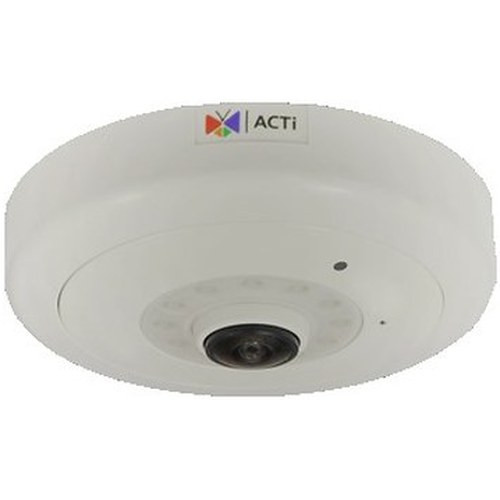
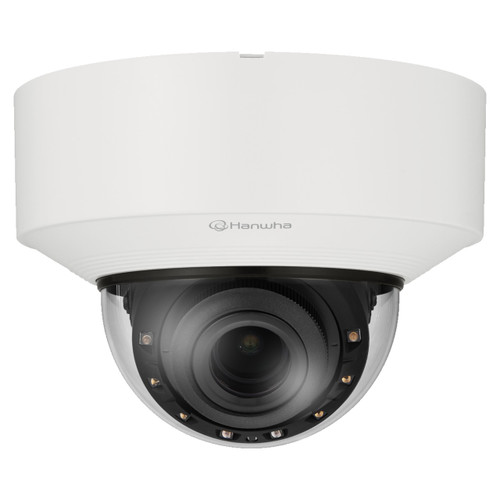
Both the ACTi B57 and Hanwha XND-C8083RV are 6MP indoor fixed IP cameras targeting commercial surveillance installations. The B57 is a hemispheric fisheye dome delivering 360° coverage with on-board people counting, while the C8083RV is a traditional vandal dome with a motorized varifocal lens and a full AI analytics suite. Buyers considering either are typically evaluating coverage strategy—wide-angle single-camera panoramic versus directed zoom with deep object classification—at the same resolution tier and PoE power class.
In This Guide
How do the imaging specs compare?
Both cameras use a 1/1.8-inch progressive CMOS sensor at 6MP, but their native output dimensions differ: the B57 captures 3072×2048 (6.3MP fisheye) at up to 20 fps at full resolution, dropping to 30 fps only at sub-HD modes, while the C8083RV outputs 3328×1872 at a sustained 30 fps across its full resolution. The B57 uses a fixed 1.3mm f/2.6 lens suited to 360° hemispheric projection; the C8083RV uses a motorized varifocal P-iris lens spanning 4.4–9.3mm (2.1× zoom) with an angular field of view ranging from 112.1° to narrower tele positions, giving the installer directional flexibility the B57 cannot provide.
In low-light performance, the B57 reaches 0.003 lux color (f/2.6) and 0 lux in B&W with its 850nm IR rated to 20m. The C8083RV specifies 0.04 lux color and 0 lux IR, with WiseIR reaching 40m—double the IR throw of the B57. WDR favors the B57 on paper at 130dB versus the C8083RV's extremeWDR rated at 120dB. The C8083RV adds digital image stabilization via a built-in gyro sensor and a defog function; neither capability is listed in the B57 specification.
What about installation and environment?
The B57 carries no IP or IK ingress/impact rating in its published specification, limiting verified deployment to controlled indoor environments. The C8083RV is rated IP52 (dust-limited ingress, drip-resistant) and IK08 (5-joule impact resistance), making it suitable for public-access corridors or areas with incidental vandal risk. Both cameras share an identical operating temperature range of -10°C to 50°C.
On power, both operate on PoE Class 3 (IEEE 802.3af), with the C8083RV specifying a maximum draw of 12.95W and an optional DC 12V input. The B57 lists DC 12V and PoE Class 3 as inputs but describes PoE+ (802.3at) capability in one spec field while referencing 802.3af Class 3 elsewhere—buyers should confirm the actual PSE class required with ACTi before specifying a switch. The B57 supports wall, pole, pendant, corner, and rack mounting. The C8083RV is a dome form factor with pan 0°–360°, tilt -45°–75°, and rotate 0°–355° adjustment at installation; no pole or corner mount is listed in its specification.
Which fits your VMS and analytics better?
Both cameras declare ONVIF Profile S, G, and T compliance. The C8083RV additionally exposes Hanwha's SUNAPI (HTTP API) and the Wisenet open platform. The B57 lists compatibility with Milestone XProtect and Axis Camera Station by name; Profile Q support is noted as pending a future firmware upgrade. The C8083RV streams up to 10 simultaneous profiles with 3 virtual channels and supports unicast to 20 users or multicast, and its protocol stack includes SNMPv1/v2c/v3, 802.1X (EAP-TLS/LEAP/PEAP), and SRTP—a materially broader network-security and management feature set than is documented for the B57.
Analytics depth diverges significantly. The B57 provides video motion detection and people counting at the edge. The C8083RV runs an AI engine delivering object detection (person, face, vehicle subtypes, license plate), IVA (virtual line, area, enter/exit, loitering, direction, appear/disappear, intrusion), defocus detection, people counting, queue management, and heatmap—all on-board. Audio is two-way on the B57 (built-in mic, mic-in, line-in, line-out); the C8083RV provides selectable mic/line-in and a line-out but does not list a built-in microphone in the specification. Edge storage is absent from the B57 specification; the C8083RV supports a single Micro SD/SDHC/SDXC slot up to 512GB.
Which should you choose: the B57 or the C8083RV?
Our take: The C8083RV is the stronger choice when the installation requires directed coverage, deep AI analytics, or edge recording. Its motorized 4.4–9.3mm varifocal lens provides scene-framing flexibility the B57's fixed 1.3mm fisheye cannot match, its WiseIR reaches 40m versus the B57's 20m, and its on-board AI engine delivers object classification—person, face, vehicle subtypes, license plate—plus IVA and business intelligence functions that the B57's VMD and people-counting cannot replicate. The C8083RV also adds IK08 impact resistance and IP52 ingress protection, which are unspecified on the B57. The B57 holds a WDR advantage (130dB vs. 120dB) and offers true 360° hemispheric coverage from a single lens—a genuine benefit when replacing multiple fixed cameras in open-plan spaces. Specify the B57 where panoramic fisheye coverage and ePTZ dewarping are the primary design criteria; specify the C8083RV where directed AI surveillance, longer IR throw, edge storage, and impact-rated housing are required.
Side-by-Side Comparison
Spec-for-spec, from manufacturer data.
| Specification | ACTi B57 | Hanwha C8083RV |
|---|---|---|
| Resolution | 6MP (3072×2048) | 6MP (3328×1872) |
| Image Sensor | 1/1.8" progressive CMOS | 1/1.8" progressive CMOS |
| Lens / Focal Length | Fixed 1.3mm (f/2.6) | Motorized varifocal 4.4–9.3mm (2.1×), P-iris |
| Min. Illumination (Color) | 0.003 lux | 0.04 lux |
| Min. Illumination (B/W) | 0 lux (IR on) | 0 lux (IR on) |
| IR Range | 20m (850nm) | 40m WiseIR |
| WDR | 130dB | 120dB (extremeWDR) |
| Max. Frame Rate (Full Res) | 20 fps @ 3072×2048 | 30 fps @ 3328×1872 |
| Video Compression | H.264 (Baseline/Main/High); MJPEG | H.265/H.264 (Main/High); MJPEG |
| IP Rating | — | IP52 |
| IK / Impact Rating | — | IK08 |
| Operating Temperature | -10°C to 50°C | -10°C to 50°C |
| Power Input / PoE Class | DC 12V; PoE Class 3 (802.3af) | DC 12V; PoE Class 3 (802.3af), 12.95W max |
| Edge Storage | — | Micro SD/SDHC/SDXC up to 512GB |
| Audio | Two-way: built-in mic, mic-in, line-in, line-out | Selectable mic-in/line-in; line-out (no built-in mic listed) |
| On-board Analytics | VMD; People Counting | AI object detection (person/face/vehicle/plate), IVA, people counting, queue management, heatmap, defocus detect |
| Form Factor | Hemispheric Dome (360° fisheye) | Vandal Dome (directional) |
| Weight | 461g (1.02 lb) | 1350g (2.98 lb) |
| Warranty | — | 3-year |
Frequently Asked Questions
Which should you choose: the B57 or the C8083RV?
The C8083RV is the stronger choice when the installation requires directed coverage, deep AI analytics, or edge recording. Its motorized 4.4–9.3mm varifocal lens provides scene-framing flexibility the B57's fixed 1.3mm fisheye cannot match, its WiseIR reaches 40m versus the B57's 20m, and its on-board AI engine delivers object classification—person, face, vehicle subtypes, license plate—plus IVA and business intelligence functions that the B57's VMD and people-counting cannot replicate. The C8083RV also adds IK08 impact resistance and IP52 ingress protection, which are unspecified on the B57. The B57 holds a WDR advantage (130dB vs. 120dB) and offers true 360° hemispheric coverage from a single lens—a genuine benefit when replacing multiple fixed cameras in open-plan spaces. Specify the B57 where panoramic fisheye coverage and ePTZ dewarping are the primary design criteria; specify the C8083RV where directed AI surveillance, longer IR throw, edge storage, and impact-rated housing are required.
Is the B57 or C8083RV better for low-light performance?
On minimum illumination, the B57 specifies 0.003 lux color versus the C8083RV's 0.04 lux color—so the B57 requires less ambient light before switching to monochrome. However, the C8083RV's WiseIR illuminates to 40m compared to the B57's 20m, meaning the C8083RV covers a longer IR-lit zone in complete darkness. Which matters more depends on your scene: low ambient color retention favors the B57; long-range IR coverage favors the C8083RV.
Can either camera record locally without an NVR?
The C8083RV supports a Micro SD/SDHC/SDXC card up to 512GB for edge recording triggered by analytics, alarm input, or schedule. No edge storage slot or SD card support is listed in the B57 specification. If standalone or failover local recording is a requirement, the C8083RV satisfies it and the B57 does not, based on published specs.
Which camera is better suited for a lobby or corridor with foot traffic analytics?
Both cameras offer people counting at the edge. The C8083RV goes further with queue management and heatmap functions powered by its AI engine, and adds object classification (person, face) with configurable IVA zones. The B57's fisheye lens provides a 360° overhead view well suited to open-plan spaces, but its analytics are limited to VMD and people counting per the published specification. For richer business-intelligence data in a lobby, the C8083RV's AI suite is more capable; for a single-camera overhead view of a wide space, the B57's hemispheric coverage is architecturally efficient.
Get a Second Opinion on Your Camera Choice
Share your site layout, coverage goals, and budget. Our team will validate the camera selection, flag anything we would change, and recommend products that match the use case.