
ACTi B419 vs ACTi E33A: Specification Comparison
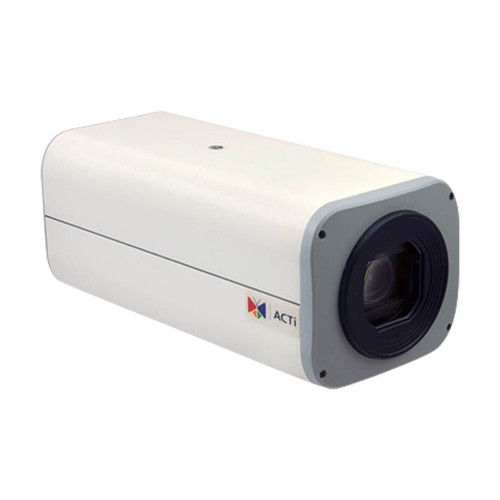
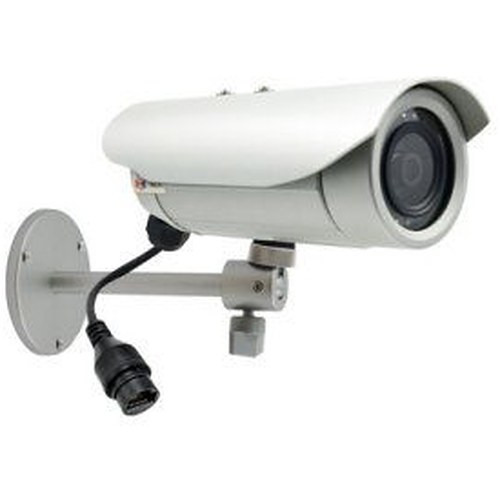
Both the ACTi B419 and ACTi E33A are 5MP outdoor bullet cameras from the same manufacturer, making them a legitimate cross-shop pair for perimeter surveillance projects. The B419 is a motorized zoom variant with onboard video analytics, while the E33A is a fixed-lens day/night camera. Buyers weighing these two are typically deciding between a feature-rich zoom platform with edge intelligence and a simpler, fixed-lens entry point — a classic capability-versus-simplicity trade-off at the same resolution tier.
In This Guide
How do the imaging specs compare?
Both cameras output 5MP resolution, but their optical implementations differ substantially. The B419 uses a 1/2.9" sensor with a motorized 4.7–47mm lens delivering 10x optical zoom, a maximum frame rate of 30 fps at 2592×1944, and a minimum illumination of 0.003 lux in color mode (0 lux with IR active). Its IR system uses adaptive 850nm/940nm LEDs with a specified range of 60 m. The E33A specifies a fixed lens, but focal length, sensor size, minimum illumination figure, IR range, and maximum frame rate are not provided in the supplied specifications.
On dynamic range, the B419 carries a rated 120 dB WDR. The E33A is listed as 'Basic WDR' with no dB value specified. For low-light work, the B419's dual-wavelength adaptive IR (including 940nm invisible illumination) and 0.003 lux color threshold are documentable; the E33A's IR is described as 'Adaptive IR; Day/Night' without quantified illumination or range figures. Buyers requiring verifiable low-light performance numbers can only confirm them for the B419 from the provided data.
What about installation and environment?
The B419 carries IP66, IK10, and NEMA 4X ratings and is certified for an operating range of −40°C to +60°C, making it suitable for harsh outdoor deployments including high-impact-risk locations. It accepts DC 12V or PoE++ (802.3bt), with the spec sheet also referencing IEEE 802.3at (High PoE). Mounting options include wall, ceiling, pole, and rack. Weight is listed at 2,134 g (4.7 lb). Certifications on file include CE, FCC, EAC, IP66, IK10, NEMA 4X, and UL (for optional injector/adapter).
The E33A lists wall, eave, and pole as mount options. IP rating, IK rating, operating temperature range, power input type, PoE class, weight, and certifications are not present in the supplied specifications for this model. Installers evaluating the E33A for exposed or temperature-extreme environments should obtain those values directly from the ACTi datasheet before specifying.
Which fits your VMS and analytics better?
The B419 is ONVIF Profile S, G, T, and M compliant and additionally supports Visca, Pelco-D, and Pelco-P protocols, broadening compatibility with PTZ-control-capable VMS platforms. Edge analytics include VMD, people counting, and smoke detection. Audio is fully specified: two-way, built-in microphone, mic-in, line-in, and line-out. On-board storage capability is not stated in the provided specs.
The E33A is ONVIF-compliant, with VMS compatibility described as 'ONVIF-compliant systems'; specific Profile designations (S/G/T/M) are not listed in the supplied data. Audio is noted as 'built-in mic' only — no line inputs or two-way capability are specified. Edge analytics, on-board storage, and serial protocol support are not referenced in the E33A's provided specifications.
Which should you choose: the B419 or the E33A?
Our take: The B419 is the stronger choice when the deployment demands verified environmental resilience, zoom flexibility, or edge intelligence. Spec-to-spec, the B419 documents a 10x motorized zoom (4.7–47mm vs a fixed but unspecified focal length on the E33A), a quantified 120 dB WDR versus the E33A's unrated 'Basic WDR,' and a confirmed −40°C to +60°C operating range with IP66/IK10/NEMA 4X certification where the E33A provides none of those environmental figures in the supplied data. The B419 also adds VMD, people counting, and smoke detection at the edge, plus full two-way audio with line I/O, against the E33A's built-in mic only. The E33A may be appropriate for cost-sensitive, indoor-adjacent or sheltered fixed-angle installations where environmental ratings and analytics are not requirements — but those conditions cannot be confirmed from the data provided.
Side-by-Side Comparison
Spec-for-spec, from manufacturer data.
| Specification | ACTi B419 | ACTi E33A |
|---|---|---|
| Resolution | 5 MP | 5 MP |
| Sensor Size | 1/2.9" | — |
| Lens / Focal Length | 4.7–47 mm motorized (10x optical zoom) | Fixed (focal length not specified) |
| Min. Illumination | 0.003 lux (color); 0 lux (IR on) | — |
| IR Range | 60 m | — |
| IR Wavelength | 850 nm / 940 nm adaptive (invisible) | Adaptive IR (wavelength not specified) |
| WDR | 120 dB | Basic WDR (no dB value specified) |
| Max Frame Rate | 30 fps @ 2592×1944 | — |
| Video Compression | H.265; H.264 (Baseline/Main/High); MJPEG | — |
| IP Rating | IP66 | — |
| IK / Impact Rating | IK10 | — |
| Operating Temperature | −40°C to +60°C | — |
| Power Input / PoE Class | DC 12V; PoE++ (802.3bt) / High PoE (802.3at) | — |
| Audio | Two-way; built-in mic; mic-in; line-in; line-out | Built-in mic only |
| Edge Analytics | VMD; People Counting; Smoke Detection | — |
| ONVIF Profile | Profile S, G, T, M | ONVIF-compliant (profiles not specified) |
| Mount Types | Wall; Ceiling; Pole; Rack | Wall; Eave; Pole |
| Weight | 2,134 g (4.705 lb) | — |
| Certifications | CE; FCC; EAC; IP66; IK10; NEMA 4X; UL | — |
| Warranty | 3 Years | — |
Frequently Asked Questions
Which should you choose: the B419 or the E33A?
The B419 is the stronger choice when the deployment demands verified environmental resilience, zoom flexibility, or edge intelligence. Spec-to-spec, the B419 documents a 10x motorized zoom (4.7–47mm vs a fixed but unspecified focal length on the E33A), a quantified 120 dB WDR versus the E33A's unrated 'Basic WDR,' and a confirmed −40°C to +60°C operating range with IP66/IK10/NEMA 4X certification where the E33A provides none of those environmental figures in the supplied data. The B419 also adds VMD, people counting, and smoke detection at the edge, plus full two-way audio with line I/O, against the E33A's built-in mic only. The E33A may be appropriate for cost-sensitive, indoor-adjacent or sheltered fixed-angle installations where environmental ratings and analytics are not requirements — but those conditions cannot be confirmed from the data provided.
Is the B419 or E33A better for low-light performance?
Based on the provided specifications, the B419 is the only model with quantified low-light figures: 0.003 lux in color mode and 0 lux with IR active, using adaptive 850nm/940nm illuminators rated to 60 m. The E33A lists 'Adaptive IR; Day/Night' but provides no minimum illumination value or IR range in the supplied specs, so a direct numerical comparison is not possible from this data.
Can both cameras work with my existing VMS?
Both cameras are ONVIF-compliant. The B419 specifies Profile S, G, T, and M compliance and also supports Visca, Pelco-D, and Pelco-P serial protocols. The E33A is described as compatible with 'ONVIF-compliant systems' but specific Profile designations are not listed in the provided specifications. If your VMS requires a particular ONVIF Profile beyond basic compliance, verify the E33A's profile support with ACTi directly.
Which camera is better suited for outdoor installation in extreme climates?
The B419 is documented for −40°C to +60°C operation with IP66 ingress protection, IK10 impact resistance, and NEMA 4X certification. None of these environmental ratings or the operating temperature range are present in the provided specifications for the E33A. For any deployment involving temperature extremes, wash-down risk, or physical impact exposure, the B419 has verifiable ratings; the E33A's suitability for those conditions cannot be confirmed from the available data.
Get a Second Opinion on Your Camera Choice
Share your site layout, coverage goals, and budget. Our team will validate the camera selection, flag anything we would change, and recommend products that match the use case.