
ACTi B415 vs ACTi E38: Specification Comparison
The ACTi B415 and ACTi E38 are both 2MP bullet cameras from ACTi sharing H.264/MJPEG compression and ONVIF compliance, making them candidates for cross-shopping by integrators evaluating indoor-to-outdoor IP camera deployments. The B415 is a motorized zoom bullet designed for long-range perimeter coverage, while the E38 is a fixed-lens bullet suited for standard surveillance at defined entry points. This comparison examines how their imaging capabilities, installation requirements, and integration features differ based on published specifications.

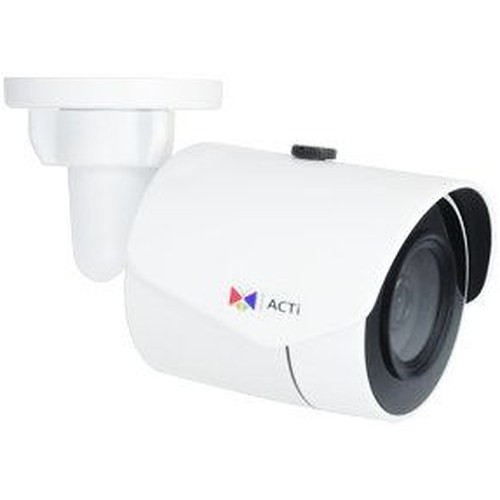
In This Guide
How do the imaging specs compare?
The B415 captures at 1944×1224 (2MP) with a 1/2.8" sensor, a 4.7–94mm motorized varifocal lens delivering 20× optical zoom, and a minimum illumination of 0.05 lux at F1.6 in color mode and 0 lux with IR active. Its IR illuminator uses a 27-LED array at 850nm with an effective range of 40m. It achieves up to 60 fps at 1920×1080 and 60 fps at 1280×720. The E38 is also rated at 2MP with 60 fps at 1080p, but its lens is listed only as "Fixed" with no focal length, aperture, sensor size, minimum illumination value, or IR range provided in the available specifications.
On dynamic range, the B415 carries an Extreme WDR rating of 145dB, providing quantified performance in high-contrast scenes. The E38 lists "Advanced WDR" without a dB figure, making a direct numerical comparison impossible from available specs. Both cameras support Adaptive IR and Day/Night switching, but the B415 provides substantially more imaging detail: sensor size, illumination threshold, IR LED count, and IR reach are all documented, whereas those parameters are absent from the E38 spec sheet provided.
What about installation and environment?
The B415 carries IP67, IK10, and NEMA 4X ratings and is approved for operating temperatures from -40°C to 50°C (-40°F to 122°F), making it suitable for harsh outdoor environments with exposure to dust, water immersion, physical impact, and industrial-grade corrosive conditions. It is powered by PoE+ (802.3af/at, Class 3) or DC 12V via a single RJ-45 pigtail connector and weighs 2,169g (4.78 lb). Mounting options include pole, rack, and board mount.
The E38 supports PoE 802.3af (standard PoE, not PoE+) and lists wall and eave mount options. However, no IP rating, IK rating, operating temperature range, weight, or dimensional data is provided in its specifications. Integrators cannot confirm outdoor suitability, impact resistance, or environmental clearances for the E38 from the available spec data alone.
Which fits your VMS and analytics better?
The B415 supports ONVIF Profile S, G, and Q, and additionally accommodates Visca, Pelco-D, and Pelco-P control protocols, enabling PTZ-style pan/tilt/zoom command via standard serial protocols and event-triggered zoom. It includes two-way audio with line-in and line-out, and offers edge analytics including VMD (Video Motion Detection) and People Counting. No on-board storage specification is listed for the B415 in the provided data.
The E38 confirms ONVIF compliance and compatibility with ACTi NVR and ONVIF-capable VMS platforms. Beyond that, no audio capability, edge analytics, PTZ or serial protocol support, or on-board storage specification is listed in the E38's available spec data. Integrators requiring two-way audio, People Counting analytics, or protocol interoperability beyond ONVIF should note those capabilities are documented only for the B415.
Which should you choose: the B415 or the E38?
Our take: The B415 is the stronger choice when long-range identification, environmental hardening, or richer integration features are required. On imaging, the B415 documents a 20× optical zoom (4.7–94mm) versus the E38's unspecified fixed focal length, a 145dB Extreme WDR rating versus the E38's unquantified Advanced WDR, and a confirmed 0 lux minimum illumination with a 27-LED, 40m IR array versus no illumination figures for the E38. On installation, the B415 provides verified IP67, IK10, and NEMA 4X ratings with a confirmed -40°C to 50°C operating range; the E38 lacks all three environmental specs in available documentation. On integration, only the B415 lists two-way audio, People Counting analytics, and Visca/Pelco protocol support. The E38 may be appropriate in cost-sensitive, fixed-angle indoor or sheltered applications where the buyer can confirm environmental suitability separately, but from the specifications provided, the B415 is the only camera with documented outdoor-rated credentials.
Side-by-Side Comparison
Spec-for-spec, from manufacturer data.
| Specification | ACTi B415 | ACTi E38 |
|---|---|---|
| Resolution | 2MP (1944×1224) | 2MP |
| Image Sensor | 1/2.8" | — |
| Lens / Focal Length | 4.7–94mm (20× optical zoom); f1.6–f3.5 DC iris | Fixed; focal length not specified |
| Min Illumination | 0.05 lux (color, F1.6); 0 lux (IR on) | — |
| IR Range | 40m (27-LED array, 850nm) | — |
| WDR | Extreme WDR (145dB) | Advanced WDR (no dB value specified) |
| Max Frame Rate | 60 fps @ 1920×1080; 60 fps @ 1280×720 | 60 fps @ 1080p |
| Video Compression | H.264 (Baseline/Main/High); MJPEG | H.264; MJPEG |
| IP Rating | IP67 | — |
| IK / Impact Rating | IK10 | — |
| Operating Temperature | -40°C to 50°C (-40°F to 122°F) | — |
| Power Input / PoE Class | PoE+ (802.3at, Class 3); DC 12V | PoE (802.3af) |
| Audio | Two-way; Line-in, Line-out | — |
| Edge Analytics | VMD; People Counting | — |
| VMS / Protocol Support | ONVIF Profile S/G/Q; Visca; Pelco-D; Pelco-P; ACTi URL | ONVIF; ACTi NVR |
| Weight | 2169g (4.78 lb) | — |
Frequently Asked Questions
Which should you choose: the B415 or the E38?
The B415 is the stronger choice when long-range identification, environmental hardening, or richer integration features are required. On imaging, the B415 documents a 20× optical zoom (4.7–94mm) versus the E38's unspecified fixed focal length, a 145dB Extreme WDR rating versus the E38's unquantified Advanced WDR, and a confirmed 0 lux minimum illumination with a 27-LED, 40m IR array versus no illumination figures for the E38. On installation, the B415 provides verified IP67, IK10, and NEMA 4X ratings with a confirmed -40°C to 50°C operating range; the E38 lacks all three environmental specs in available documentation. On integration, only the B415 lists two-way audio, People Counting analytics, and Visca/Pelco protocol support. The E38 may be appropriate in cost-sensitive, fixed-angle indoor or sheltered applications where the buyer can confirm environmental suitability separately, but from the specifications provided, the B415 is the only camera with documented outdoor-rated credentials.
Is the B415 or E38 better for low-light performance?
Based on available specifications, only the B415 provides measurable low-light data: 0.05 lux at F1.6 in color mode and 0 lux with IR active, backed by a 27-LED 850nm array with a 40m range. The E38 lists Adaptive IR and Day/Night switching but provides no minimum illumination value, IR LED count, or IR range, so a direct comparison cannot be made from the specs provided.
Can either camera handle outdoor installation in harsh weather?
The B415 is explicitly rated IP67, IK10, and NEMA 4X with a confirmed operating range of -40°C to 50°C, covering rain, dust, physical impact, and industrial-grade exposure. The E38's specifications do not include an IP rating, IK rating, or operating temperature range, so outdoor suitability for the E38 cannot be confirmed from the available data.
Do both cameras support third-party VMS platforms?
Yes, both cameras list ONVIF compliance. The B415 extends this with ONVIF Profile S, G, and Q certification plus Visca, Pelco-D, and Pelco-P protocol support for broader PTZ-capable VMS and controller integration. The E38 lists ONVIF compatibility and ACTi NVR support but does not specify ONVIF profile levels or additional control protocols in the available specifications.
Get a Second Opinion on Your Camera Choice
Share your site layout, coverage goals, and budget. Our team will validate the camera selection, flag anything we would change, and recommend products that match the use case.