
ACTi A42 vs ACTi B419: Specification Comparison
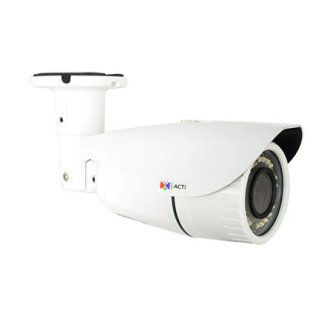
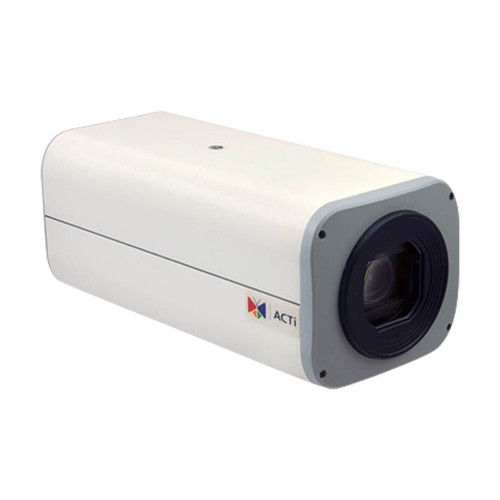
Both the ACTi A42 and ACTi B419 are 5MP outdoor zoom bullet cameras designed for perimeter and wide-area surveillance. They share the same resolution class, the same bullet form factor, and similar environmental ratings, making them direct cross-shop candidates for installers evaluating motorized-zoom fixed cameras. The comparison covers imaging capability, installation and environmental resilience, and VMS/analytics integration — the three dimensions that most differentiate them at the specification level.
In This Guide
How do the imaging specs compare?
Both cameras deliver 5MP resolution at up to 30 fps at full 2592×1944, but their sensors and optics differ meaningfully. The A42 uses a 1/1.8" sensor with a 3.6–10mm motorized lens (2.8x optical zoom per one spec field, though another field states 8x — the 3.6–10mm range itself represents approximately 2.8x). The B419 uses a smaller 1/2.9" sensor paired with a 4.7–47mm motorized lens delivering a confirmed 10x optical zoom. The B419's longer focal-length range is better suited to identifying subjects at greater distances from a single fixed mount.
On low-light performance, the A42 specifies a minimum illumination of 0.003 lux (color) and 0.002 lux (B/W) at F1.5, with 850nm IR illumination effective to 30m. The B419 specifies 0.003 lux (color) at F1.6 and 0 lux with IR active, using 940nm invisible IR effective to 60m — double the IR range. The A42 provides a measured WDR of 122dB; the B419 lists WDR at 120dB. The A42 additionally supports 60 fps at 1280×720, while the B419's maximum frame rate is 30 fps at full resolution with no higher-fps mode specified.
What about installation and environment?
Both cameras carry IP66, IK10, and NEMA 4X ratings, indicating identical ingress protection against water jets and dust, equal impact resistance (IK10, metal casing), and equivalent NEMA enclosure compliance. The operating temperature range differs: the A42 is rated −30°C to +50°C (−22°F to +122°F), while the B419 extends that envelope to −40°C to +60°C (−40°F to +140°F), a meaningful advantage in extreme-climate deployments. Certifications also differ slightly — the B419 adds UL listing (for optional PoE injector and power adapter) while the A42 adds EAC; both carry CE and FCC Class A.
On power, the A42 operates on PoE Class 3 (IEEE 802.3af/at) or DC 12V, drawing a lower power budget. The B419 requires PoE++ (IEEE 802.3bt) or DC 12V — installers must verify that the supplying switch or injector supports 802.3bt. The B419 is substantially heavier at 2,134g (4.7 lb) versus the A42's 813g (1.79 lb), which affects bracket and pole load calculations. Mount options also differ: the B419 supports wall, ceiling, pole, and rack; the A42 is specified for pole and rack only.
Which fits your VMS and analytics better?
The A42 is ONVIF Profile S, T, and Q compliant. The B419 is ONVIF Profile S, G, T, and M compliant — adding Profile G (recording and storage) and Profile M (metadata and analytics events), which enables tighter integration with ONVIF-native recording platforms and analytics pipelines. The B419 also supports PTZ control via Visca, Pelco-D, and Pelco-P protocols, allowing integration with PTZ-capable VMS controllers despite being a fixed bullet; the A42 lists no PTZ protocol support.
Both cameras list VMD, People Counting, and Smoke Detection in their analytics fields. Audio capability differs: the A42 provides audio input (mic-in, line-in, and line-out) but does not specify a built-in microphone or two-way audio. The B419 provides two-way audio with a built-in microphone plus mic-in, line-in, and line-out. On-board edge storage is not specified in the provided data for either model. Both carry a 3-year warranty with an ACTi extended-warranty option.
Which should you choose: the A42 or the B419?
Our take: The B419 is the stronger choice when the deployment demands long-range identification, extreme temperatures, or deep VMS integration; the A42 is preferable when infrastructure is limited to standard PoE switches, mounting flexibility is constrained to pole or rack, or budget and weight savings matter. Concrete spec deltas: the B419's 10x zoom (4.7–47mm) versus the A42's approximately 2.8x (3.6–10mm) allows subject identification at significantly greater standoff distances; the B419's IR range is 60m versus the A42's 30m; and the B419 operates down to −40°C versus the A42's −30°C floor. The A42 counters with a higher-specified WDR (122dB vs 120dB), a larger 1/1.8" sensor versus the B419's 1/2.9", 60 fps at 720p, and PoE Class 3 compatibility — important where 802.3bt switches are not deployed. Choose the B419 for perimeter or parking-lot coverage requiring long-reach zoom and harsh-climate tolerance; choose the A42 where sensor size, frame rate, and standard PoE infrastructure are the governing constraints.
Side-by-Side Comparison
Spec-for-spec, from manufacturer data.
| Specification | ACTi A42 | ACTi B419 |
|---|---|---|
| Resolution | 5MP | 5MP |
| Image Sensor Size | 1/1.8" | 1/2.9" |
| Lens / Focal Length | 3.6–10mm motorized (~2.8x optical) | 4.7–47mm motorized (10x optical) |
| Min Illumination (Color) | 0.003 lux @ F1.5 | 0.003 lux @ F1.6 |
| Min Illumination (B/W) | 0.002 lux @ F1.5 | 0 lux (IR on) |
| IR Wavelength | 850nm | 940nm (invisible) |
| IR Range | 30m | 60m |
| WDR | 122dB | 120dB |
| Max Frame Rate | 30 fps @ 2592×1944; 60 fps @ 1280×720 | 30 fps @ 2592×1944 |
| Video Compression | H.265; H.264; MJPEG | H.265; H.264 (Baseline/Main/High); MJPEG |
| IP Rating | IP66 | IP66 |
| IK / Impact Rating | IK10 (metal casing) | IK10 (metal casing) |
| NEMA Rating | NEMA 4X | NEMA 4X |
| Operating Temperature | −30°C to +50°C | −40°C to +60°C |
| Power Input / PoE Class | PoE Class 3 (802.3af/at); DC 12V | PoE++ (802.3bt); DC 12V |
| Mount Types | Pole; Rack | Wall; Ceiling; Pole; Rack |
| Audio | Mic-in; Line-in; Line-out (no built-in mic specified) | Two-way; Built-in mic; Mic-in; Line-in; Line-out |
| ONVIF Profiles | Profile S; T; Q | Profile S; G; T; M |
| PTZ Protocol Support | — | Visca; Pelco-D; Pelco-P |
| Certifications | CE Class A; FCC Class A; EAC; NEMA 4X | CE; FCC; EAC; NEMA 4X; UL |
| Weight | 813g (1.79 lb) | 2,134g (4.71 lb) |
| Warranty | 3 Years | 3 Years |
Frequently Asked Questions
Which should you choose: the A42 or the B419?
The B419 is the stronger choice when the deployment demands long-range identification, extreme temperatures, or deep VMS integration; the A42 is preferable when infrastructure is limited to standard PoE switches, mounting flexibility is constrained to pole or rack, or budget and weight savings matter. Concrete spec deltas: the B419's 10x zoom (4.7–47mm) versus the A42's approximately 2.8x (3.6–10mm) allows subject identification at significantly greater standoff distances; the B419's IR range is 60m versus the A42's 30m; and the B419 operates down to −40°C versus the A42's −30°C floor. The A42 counters with a higher-specified WDR (122dB vs 120dB), a larger 1/1.8" sensor versus the B419's 1/2.9", 60 fps at 720p, and PoE Class 3 compatibility — important where 802.3bt switches are not deployed. Choose the B419 for perimeter or parking-lot coverage requiring long-reach zoom and harsh-climate tolerance; choose the A42 where sensor size, frame rate, and standard PoE infrastructure are the governing constraints.
Is the A42 or B419 better for low-light and night surveillance?
The B419 has the edge in most low-light scenarios: its 940nm invisible IR illuminates to 60m (versus the A42's 850nm IR at 30m), and it reaches 0 lux with IR active. The A42 specifies a slightly better minimum illumination at F1.5 (0.002 lux B/W) versus the B419's F1.6 threshold, and its larger 1/1.8" sensor theoretically collects more light than the B419's 1/2.9" sensor. For covert night operation where IR glow is a concern, the B419's 940nm invisible illuminator is also an advantage.
Can I use both cameras with a standard PoE switch?
The A42 requires only PoE Class 3 (IEEE 802.3af/at), which is supported by virtually all managed and unmanaged PoE switches. The B419 requires PoE++ (IEEE 802.3bt), which delivers higher wattage and is only available on 802.3bt-capable switches or injectors. If your existing infrastructure is 802.3af/at only, the A42 is directly compatible; the B419 would require either a 802.3bt switch upgrade or an optional PoE injector (UL-listed per spec).
Which camera works better with an ONVIF-based VMS for analytics integration?
The B419 offers broader ONVIF compliance — Profiles S, G, T, and M — versus the A42's Profiles S, T, and Q. Profile G adds ONVIF-native recording and storage control, and Profile M enables structured metadata and analytics event streaming, which is significant for VMS platforms that consume VMD or people-counting data as ONVIF events. The B419 also adds Visca, Pelco-D, and Pelco-P PTZ protocol support, useful for VMS systems that manage zoom control through those protocols. The A42's Profile Q adds zero-configuration provisioning, which the B419 does not list.
Get a Second Opinion on Your Camera Choice
Share your site layout, coverage goals, and budget. Our team will validate the camera selection, flag anything we would change, and recommend products that match the use case.