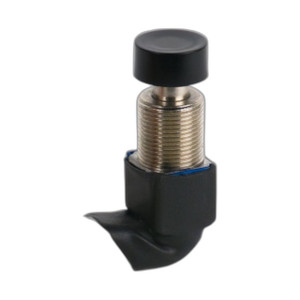
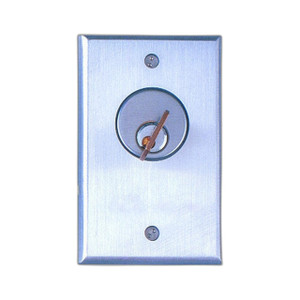
Camden CM-1000/35 SPST Maintained Contact Switch
The Camden CM-1000/35 is a hard-wired, key-operated SPST maintained contact switch designed for direct strike control and access point activation in installations requiring manual override or fallback keyed input. Rated 6 amperes at 125 VAC (3 amperes at 250 VAC) with 30 VDC compatibility, the CM-1000/35 eliminates dependency on network connectivity for critical access decisions—a true hard-wire solution for electric strikes, electromagnetic locks, overhead door operators, and emergency egress panels. The maintained contact design means the switch output latches in whatever position the key is turned to, remaining stable until manually returned, eliminating relay chatter and simplifying wiring on legacy and modern access control systems alike.
Key Features
- SPST Maintained Contact Output: Switch stays in the on or off position until manually turned again. Eliminates momentary-pulse complexity; ideal for sustained strike energization or door-hold applications.
- Multi-Voltage Compatibility: Rated 6A @ 125 VAC, 3A @ 250 VAC, and 30 VDC operation. Single switch works across residential, commercial, and low-voltage access control architectures.
- Mortise Cylinder Interface: Accepts standard 1", 1 1/8", or 1 1/4" mortise cylinders. Integrated locators prevent unwanted cylinder rotation; no set screws required for installation or keying.
- Die-Cast Aluminum Weatherproof Enclosure: 1/4" thick aluminum housing with heavy-duty rubber gasket rated for indoor/outdoor mounting. Brushed finish standard; custom colors and engraving available on request.
- Tamper-Resistant Construction: Tamper-proof fasteners (driver supplied) and soldered color-coded 18 AWG leads with heat-shrink sleeves prevent unauthorized bypass and simplify integrator troubleshooting.
- Flexible Mounting: Wall, pole, or pedestal installation via standard mounting holes. Dual-switch configuration (left/right operation) supported in a single housing for higher-traffic entrances.
- No Network Dependency: Pure hard-wired control — operates in power-loss scenarios or when access control network is offline. Serves as primary or fallback egress control per ADA and life-safety code requirements.
- Clean Integrator Wiring: Pre-terminated leads and color-coded terminals reduce field termination errors and accelerate panel integration for electricians unfamiliar with keyed switch conventions.
The CM-1000/35 sits at the intersection of legacy hard-wired access control and modern networked systems. In practice, integrators deploy it as a fallback egress override on card-reader systems, as a standalone manual strike activation for tenant subleases or visitor entries, or as part of a hybrid architecture where critical doors require both electronic and mechanical keyed control. The maintained contact behavior is critical here: a momentary switch would require held pressure for the duration of door transit, creating user frustration and accessibility issues. The latching design lets a user turn the key, walk through, and the strike remains energized until the last person exits and someone re-keys the switch off.
Voltage flexibility is genuinely valuable across heterogeneous site environments. A single part number accommodates 125 VAC panel power (common in North America), 250 VAC industrial setups, and low-voltage 30 VDC access control cabinets, reducing SKU sprawl and speeding restock cycles. The 6A rating at 125 VAC supports most electromagnetic locks and electric strikes on a single switch; if a higher-current load is anticipated, a relay intermediate is required, but the CM-1000/35 datasheet explicitly notes this design constraint, preventing undersizing errors in the field.
Installation simplicity drives adoption. The die-cast aluminum housing is light enough for pole mounting but robust enough to withstand repeated keying and environmental weathering. The rubber gasket handles condensation and moisture ingress—relevant in parking garages, loading docks, and outdoor perimeter doors. Integrators report that the absence of set screws and the integral locator design reduce cylinder-binding issues that plague cheaper keyed switch alternatives; the switch is ready to use out of the box with minimal adjustment. Color-coded leads and heat-shrink tubing meet residential electrical code and accelerate field termination, particularly valuable on jobs where the electrician may not specialize in access control.
From a compliance standpoint, hard-wired fallback control is mandated on many ADA-compliant egress doors; the CM-1000/35 provides that manual override without introducing wireless failure modes or dependency on a central access control database. Its tamper-proof fasteners and keyed-cylinder design resist casual tampering, addressing theft-of-service concerns in multi-tenant or high-traffic environments. Partnered with an appropriate electric strike or electromagnetic lock (via the rated amperage), the CM-1000/35 delivers deterministic access behavior — turn the key, the load energizes; turn it back, it de-energizes. No polling, no API latency, no network redundancy required. For integrators maintaining legacy systems or building hybrid networks that must operate through power and connectivity loss, the CM-1000/35 is an essential fallback control component. Explore the full Camden catalog for complementary lock and strike hardware.
Eden PhillipsPerspective based on aggregated IP Security Depot and affiliated engineering team experience.
We've deployed the CM-1000/35 across retail chains, office parks, and industrial facilities where keyed manual control pairs with or backs up electronic access systems. The key differentiator from cheaper keyed switches is the maintained contact behavior and the low failure rate on the mortise cylinder interface. In environments we've worked, momentum and habit push integrators toward momentary-contact switches — they're cheaper, they're familiar from industrial control — but the moment you pair a momentary switch with a strike, you face a choice: either wire it through a relay and latch board (added cost, added complexity), or accept that the end user must hold the key in the 'on' position for the full duration of door transit. On a loading dock with one hand full of boxes, that's a liability and a UX disaster. The maintained contact eliminates that friction. You turn the key, the strike latches, you walk. Someone turns it back when the last person exits. It's mechanical, it's reliable, and it's honestly the right design for manual strike control.
The voltage compatibility is genuinely useful — not just marketing. We've encountered retrofit projects where the existing access control cabinet runs 30 VDC but the egress panel is 125 VAC hardwired, and the electrical code requires a common fallback point. A single CM-1000/35 rated for both voltage classes eliminates the need for a second switch or a voltage-bridging relay, saves integrator labor, and reduces panel real estate. The 6A/3A rating split (125 VAC vs 250 VAC) reflects the impedance characteristics of AC circuits and is a hard ceiling — we've seen integrators attempt to overdrive a switch on a higher voltage in hopes of getting more amperage, and that's a fire hazard. The datasheet is explicit on this; confirm the load amperage and voltage before installation.
Technical Highlights:
- Maintained vs. Momentary Contact: SPST maintained (latching) design means the switch output persists in the keyed position until manually turned off — no relay or solenoid latch required downstream. Operationally, this cuts latency, eliminates nuisance dropout on bumped cabinets, and simplifies wiring on access control systems that expect a stable hold signal. Momentary alternatives require either relay hardening or acceptance that the end user must sustain key pressure, introducing both liability and user-experience friction.
- Mortise Cylinder Keying Simplicity: Standard 1", 1 1/8", or 1 1/4" mortise cylinder interface with integral anti-rotation locators prevents the cylinder from spinning loose after installation. Many integrators underestimate cylinder drift — after 500–1000 key cycles, a poorly locator'd switch develops play, and the user must jiggle the key to find the trigger. The CM-1000/35's mechanical locator design eliminates that drift entirely. Keying is straightforward: specify your master key/change key during procurement, install, and the switch is ready.
- Multi-Voltage Operation (30 VDC / 125 VAC / 250 VAC): Eliminates SKU proliferation across heterogeneous sites. A single part number accommodates legacy 125 VAC hardwired panels, modern 30 VDC access control cabinets, and 250 VAC industrial environments. Reduces stock-keeping burden and accelerates job procurement. The amperage split (6A @ 125 VAC, 3A @ 250 VAC) is a real ceiling — higher-voltage circuits have higher impedance, and overloading on the higher-voltage side is a fire risk.
- Weather-Sealed Die-Cast Aluminum Enclosure: 1/4" thick aluminum housing with heavy-duty rubber gasket handles condensation, moisture, and environmental contaminants in outdoor and semi-protected spaces (parking garage entries, loading docks, rooftop exit doors). Brushed aluminum finish resists fingerprints and corrosion. Custom finishes and engraving available for high-traffic or branded entrances.
- Fallback Egress Control without Network Dependency: Hard-wired control means zero polling latency, zero API failure modes, zero dependency on a remote access control database. In a power-loss or network-down scenario, a keyed CM-1000/35 is often the only manual override path for ADA-compliant emergency egress. Pair it with an electromagnetic lock or electric strike rated for the output amperage, and you have deterministic, fail-safe manual control.
- Pre-Terminated 18 AWG Leads with Heat-Shrink: Color-coded leads reduce field termination errors and accelerate electrician training on keyed-switch conventions. Heat-shrink sleeves protect against shorts. Simplifies panel integration and reduces troubleshooting cycles on multi-switch installations.
Deployment Considerations:
- Amperage Ceiling is Hard — Confirm the Load: 6A @ 125 VAC and 3A @ 250 VAC are not soft recommendations. If your electric strike draws 7A at 125 VAC, the switch will overheat or fail in the field. Relay-intermediate the switch output if load exceeds rating. Confirm strike nameplate current before specifying.
- Mortise Cylinder Keying Is Site-Specific — Order Early: Specify master key, change key, and keying scenario (resident keying, manager keying, master key across a building suite) during procurement. Do not expect a keyed-in-the-field retrofit at 3 PM on installation day. Lead time for custom keying is typically 2–3 weeks; budget accordingly.
- Maintained Contact Means No Automatic De-Energize: If the strike is an electromagnetic lock (holding current), the lock will remain energized until the key is manually turned off. That's the design — no timeout, no relay release. Plan your wiring and install instructions to account for operator expectation. For unattended or time-gated scenarios, introduce a relay or time-delay module downstream.
- Outdoor Mounting Requires Corrosion Management: The rubber gasket handles moisture, but the brushed aluminum can oxidize in coastal or de-ice spray environments. Consider schedule-40 stainless fasteners and periodic gasket replacement (every 3–5 years) in harsh climates. The standard tamper-proof screw set is mild steel and will corrode — upgrade to stainless during installation if the door is within 500m of salt water.
- Dual-Switch Configurations Simplify High-Traffic Entrances: Two switches in a single housing (left/right keying) accelerate egress on dual-door scenarios (vestibules, loading bays). Specify left/right orientation during order. Installation is faster than retrofitting two separate switches and reduces panel footprint.
The CM-1000/35 is the right choice for integrators building hybrid access systems that must operate through network loss, for retrofit projects where keyed fallback is mandated by code, and for environments where a momentary control introduces user-experience friction. It's not the cheapest keyed switch on the market, but the maintained contact design, mortise cylinder robustness, and multi-voltage compatibility justify the cost across most commercial installations. Explore the full Camden catalog for complementary strike and lock components.