
Best Access Control Readers for Schools
Access readers for K-12 and university campuses — fast lockdown support, mass student/staff credentials, smart-card and mobile migration, and tamper-resistant entries.

Jerry Tildsen
Access Control & Intercoms Specialist · Working integrator
Bottom line
School access control readers must balance speed, durability, and credential flexibility—supporting both legacy smart cards and mobile while surviving high-traffic hallways and outdoor weather. The right fit depends on whether you're retrofitting existing infrastructure, deploying mobile-first, or need integrated keypad capability for emergency lockdown.
What This Setup Needs
Choosing access readers for K–12 and university campuses requires balancing operational speed, environmental durability, credential technology migration, and lockdown responsiveness. Here are the real decision factors integrators and facility managers face:
- Credential Technology Mix: Schools typically run smart cards (ID badges) alongside mobile (Apple Wallet, Google Pay) and PIN pads for emergency situations. Multi-tech readers cost more upfront but eliminate the need for parallel infrastructure; pure smart-card readers are cheaper but leave you vulnerable if students forget badges or lose phones during lockdown.
- Environmental Rating & Traffic Volume: Exterior doors, loading areas, and high-traffic corridors demand IP65 or IP66 (dust and water resistance). Interior academic buildings tolerate IP54, but weatherproofing pays for itself in reduced maintenance on frequently-used entry points—especially in schools that operate year-round or have outdoor campus connectivity.
- Form Factor & Installation Reality: Cable-attached readers (like HID 20NWS) are simpler to retrofit into existing door frames but require conduit planning. Integrated housing units and single-gang keypads reduce installation footprint and look professional but demand careful rough-in coordination. Keypad integration is critical for lockdown—staff and students need a manual override that works during network failures.
- Lockdown & Failsafe Behavior: During active threats, readers must fail secure (locked) when power or network drops, and keypad entry must work immediately without cloud round-trip. Verify that your reader supports local PIN validation and that your access control system can push lockdown commands faster than students can physically jam doors—this is non-negotiable.
- Mobile & Legacy Coexistence: Schools can't flip smart-card infrastructure overnight. Multi-tech readers let you issue mobile credentials to staff and upper-class students while older badge systems continue operating. Verify that your platform supports simultaneous credential types and that readers you pick actually support the mobile protocol (13.56 MHz NFC or BLE) your access control system mandates.
- Tamper Resistance & Outdoor Durability: Campus readers see abuse—weather, UV, vandalism attempts. Look for readers with tamper switches and sealed electronics. IP65+ is table stakes for exterior; verify gasket quality and cable strain relief on any wired unit, especially in climates with freeze-thaw cycles.
- Integration & Redundancy: Readers must talk to your access control panel or edge controller without lag. If you're using distributed controllers (like Kantech or HID edge nodes), confirm reader compatibility and test failover behavior—your lockdown can't wait for a cloud gateway to respond.
Our Picks
Selected from our catalog by spec-fit. All channel-direct and factory-new — not ranked by price.

HID 20NWS-01-000000
Smart Card
HID's wired smart-card reader with IP65 housing is a strong fit for retrofitting existing interior and protected-exterior doors where cable runs are feasible. Cable form factor simplifies rough-in in legacy buildings, and IP65 rating handles covered entries and loading docks; this reader suits schools that have standardized on HID smart-card infrastructure and need to extend coverage without major wall demolition.
View product →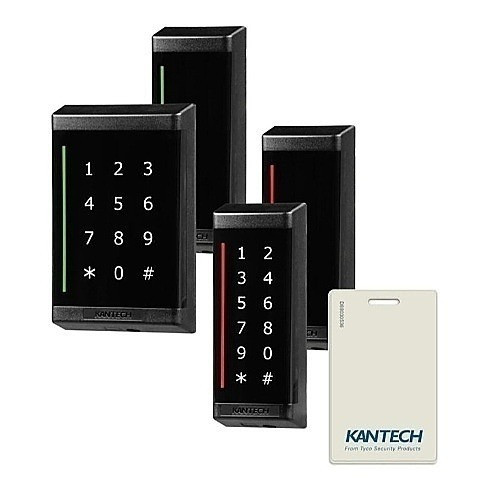
Kantech P345-SPACER
Multi-Tech
Kantech's multi-tech spacer is a support component for proximity and smart-card reader stacking, well-suited for retrofit installations where you're adding mobile or dual-credential support to existing readers without full replacement. IP65-rated, it allows integrators to upgrade reader capability in place—useful when budgets require phased smart-card-to-mobile transitions.
View product →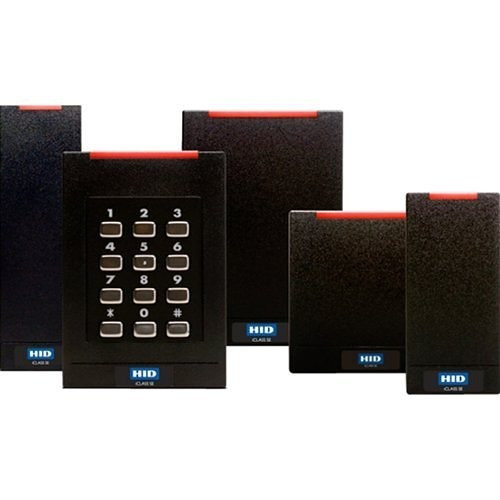
HID 920NHRTEK0001T
Smart Card
HID's IP65 smart-card reader in protective housing form factor is a strong choice for exterior campus doors, vehicle gates, and high-traffic entrances where a robust, sealed enclosure reduces maintenance and weather damage. Housing-based design provides better tamper resistance than cable readers and suits schools prioritizing durability over minimal footprint.
View product →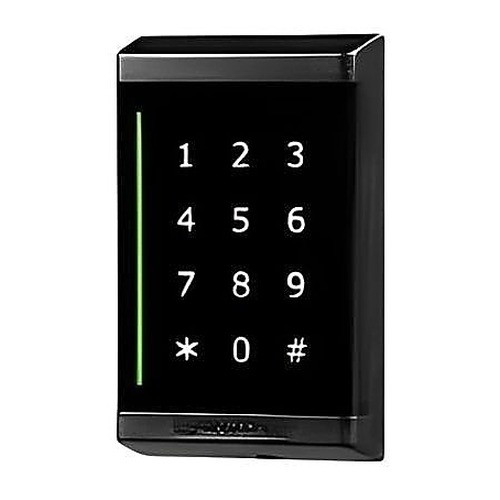
Kantech KT-SG-MT-KP2
Multi-Tech
Kantech's single-gang multi-tech reader with integrated keypad and IP66 rating directly addresses school lockdown requirements—staff and students can enter a PIN without mobile or badge during network failure or threat response. IP66 rating (higher than most competitors) handles outdoor weather; multi-tech support enables parallel smart card and mobile deployment, making this a strong fit for campuses ready to migrate credentials while maintaining emergency access.
View product →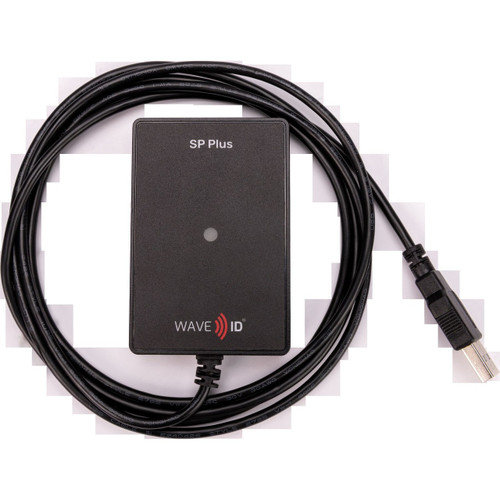
DMP USB
Multi-Tech
DMP's multi-tech cable reader is well-suited for integrators building distributed or edge-based access systems where USB power and protocol simplicity reduce installation complexity. Multi-tech class supports mixed credential environments; cable form factor works for interior retrofits and protected areas where environmental stress is moderate.
View product →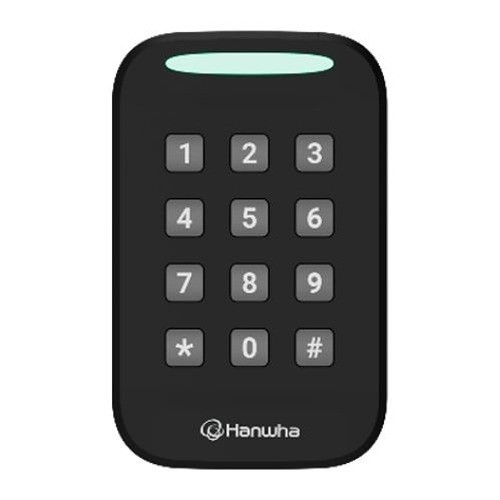
Hanwha NOD-AX25S
Multi-Tech
Hanwha's multi-tech reader with IP65 rating is a strong fit for schools seeking integration between access control and existing IP video surveillance infrastructure on campus. Multi-tech support aligns with mobile and smart-card coexistence; IP65 durability suits exterior and semi-protected entries on large campuses where vendor consolidation reduces training and spare-parts overhead.
View product →Frequently Asked Questions
Do I need multi-tech readers everywhere, or can I mix smart-card-only and multi-tech?
You can mix, but it creates operational friction. Multi-tech readers cost 15–25% more but future-proof your infrastructure and simplify credential issuance—one deployment path for staff, students, and guests. Smart-card-only readers are cheaper for interior, low-risk zones; reserve multi-tech for exterior, high-traffic, and lockdown-critical doors (main entries, emergency exits, administrative). Avoid creating a patchwork that requires users to remember which badge format works at which door—it defeats security culture and slows emergency response.
What's the real difference between IP65 and IP66 for school readers?
IP65 handles rain and dust, suitable for covered entries and most outdoor campus locations. IP66 adds protection against heavy spray and temporary submersion—needed for very wet climates, ground-level doors prone to flooding, or vehicle-access gates. For most K–12 and university sites, IP65 is sufficient if readers are mounted above ground level under roof overhang; upgrade to IP66 for below-grade entries or regions with high snow load and melt-water runoff. The cost difference is modest but verify gasket and connector quality—poor-quality IP65 fails faster than honest IP54.
Can readers work without network during a lockdown?
Yes, if your system is architected correctly. Readers must validate PIN locally against cached credentials on the access control panel or edge controller—never relay to cloud during lockdown. Verify that your platform supports 'failsecure' (defaults locked) and that cached PIN tables update when network is restored. Test this in pre-deployment: disable WAN, trigger lockdown command, confirm doors lock and PIN entry still works. Many systems fail this test because designers assume network will never drop—schools cannot make that bet.
Should I choose keypad readers for all exterior doors?
Keypad readers are critical for lockdown and after-hours access but not necessary everywhere. Deploy them at emergency exits, administrative entries, and any door staff regularly need to open during network outages. Academic building side doors and classroom entries can use card-only readers if there's a proximate keypad-equipped reader (e.g., at the main hallway access point). Keypad readers are more expensive and require PIN rotation discipline—overpopulated keypads with shared PINs become a security and audit nightmare. Start with keypad at perimeter; add interior coverage based on actual operational patterns and lockdown drills.
How do I handle smart-card-to-mobile migration without downtime?
Deploy multi-tech readers 3–6 months before you issue mobile credentials, so readers are in place and tested. Pilot mobile with staff and IT-literate students; let legacy badges co-operate for 6–12 months. Issue new student badges only if they opt into mobile, or enforce mobile at re-enrollment. Do not create a hard cutoff—schools with 5,000+ students cannot burn 20% of access attempts in a week. Use your access control system's audit logs to identify laggards and send physical reminders. Plan for ~15% of students to permanently lose or not use mobile; keep a smart-card issuing kiosk operational as long as you distribute student IDs.
What reader specs matter most for high-traffic hallways?
Durability and speed. Choose readers with sealed electronics (IP65 minimum) and tamper switches; high-traffic zones see weather, dirt, and physical abuse. Verify read range and response time—slow readers cause bottlenecks at shift changes or lunch exits. Cable-strain relief and gasket replacement cost are real maintenance factors if you're replacing readers every 5–7 years in heavy-use areas. Test readers in-situ before mass deployment; a reader that works in lab conditions may fail under high-humidity, high-UV, or extreme-temperature campus locations.
Related Resources
- Access Control Reader comparisons — head-to-head spec matchups
- Access Control Reader Buying Guide
- Best Access Control Reader for Multi-Tenant Buildings
- Best Mobile Credential Access Control Readers
- All product comparisons
Speccing this for a project?
Send us your requirements and our senior specialists will confirm specs, compatibility, availability and pricing — free, usually within one business day. Channel-direct, factory-new, serving commercial integrators since 2014.
Get a Free QuoteComparing for a project?
Send us the models you are weighing and our team will confirm specs, compatibility, availability, and pricing — free, usually within one business day.