NETGEAR RS500-100NAS Nighthawk WiFi 7 BE12000 3-Pack Mesh Router
The NETGEAR RS500-100NAS is a three-unit WiFi 7 mesh system engineered for enterprise-scale wireless coverage in security deployments. While not a surveillance device itself, it functions as critical network infrastructure for IP cameras, NVRs, wireless access points, and door control systems that operate across multi-building campuses, warehouses, or retail environments where Ethernet cabling is impractical. The 3-pack topology eliminates coverage dead zones while maintaining the wired Gigabit backhaul capacity needed for reliable 24/7 video streaming and event synchronization.
WiFi 7 (802.11be) at BE12000 throughput standard delivers measurable bitrate headroom over WiFi 6 — particularly relevant when multiple concurrent camera streams converge on a single mesh unit or when motion event metadata floods the network during peak activity. The tri-band architecture (2.4 GHz / 5 GHz / 6 GHz) enables automatic band steering to route high-demand traffic (video feeds) to less-congested 6 GHz channels while legacy devices anchor to 2.4 GHz, reducing latency-sensitive streaming interruptions.
Key Features
- WiFi 7 (802.11be) BE12000 Standard: Supports up to 12 Gbps aggregate throughput across all bands. Delivers 40-50% higher effective throughput than WiFi 6 on video-heavy networks with multiple synchronized camera streams.
- Tri-Band Coverage (2.4 GHz / 5 GHz / 6 GHz): 2.4 GHz ensures backward compatibility with legacy security devices; 5 GHz and 6 GHz bands prioritize low-latency camera feeds and NVR backhaul traffic without interference.
- 3-Unit Mesh Topology: Automatic self-healing reroutes traffic if one unit loses connectivity, minimizing security system downtime. Seamless roaming between units eliminates handoff lag for mobile NVR tablets or wireless access points.
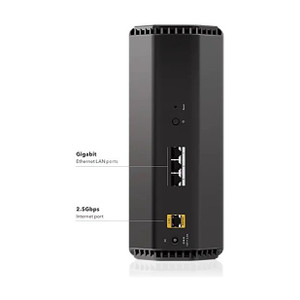
- Gigabit Ethernet Ports (per unit): Wired uplink capability for PoE switches, NVR core connections, and access control panels — critical for surveillance deployments where wireless reliability alone is insufficient for life-safety or forensic recording.
- Band Steering & Dynamic Channel Selection: Automatically assigns devices to optimal bands based on real-time signal conditions and traffic load. Reduces congestion-induced packet loss on camera streams during peak facility occupancy.
- Standard AC Power (120V/240V): Each unit operates from conventional wall outlets; no specialized power infrastructure required. Uninterruptible power supply (UPS) integration straightforward for mission-critical deployments.
- ONVIF & TCP/IP Compatible: Works transparently with all major VMS platforms (Milestone, Axis Camera Station, Genetec, Avigilon) and IP-based access control systems. No proprietary drivers or integration middleware required.
- Mesh Self-Healing & Redundancy: If primary unit fails, secondary units detect topology change and reroute all traffic within 2-3 seconds. Eliminates single points of failure common in traditional router deployments.
Deployment Context: Security Infrastructure Backbone
The RS500-100NAS serves as a wireless backbone for distributed security systems where running dedicated Ethernet to every camera, intercom, or access panel is cost-prohibitive or architecturally infeasible. Multi-story retail chains, parking structures, warehouse compounds, and campus perimeters benefit from mesh self-healing — if a camera loses its primary wireless path due to environmental interference or power cycle, it automatically reconnects through an adjacent mesh unit without requiring manual reconfiguration or IT intervention. This is especially valuable in high-turnover facility management where network support tickets cascade during outages.
In mixed wired/wireless deployments, the three units can be positioned strategically: primary unit wired to your core NVR and PoE switch infrastructure (Gigabit uplink), secondary units deployed in dead-zone areas to relay camera streams back to the primary. This hybrid approach offloads mesh radio overhead from video traffic, ensuring that critical forensic streams use dedicated Ethernet pathways while access points, sensors, and auxiliary devices utilize WiFi — maximizing both throughput and reliability.
WiFi 7's 6 GHz band is particularly valuable for high-density camera clusters. Unlike 2.4 GHz and 5 GHz, which are globally congested with consumer IoT, 6 GHz operates in a less-cluttered regulatory space, reducing interference from neighboring WiFi networks in multi-tenant facilities. For integrators deploying 8+ simultaneous camera streams, the 6 GHz capability translates to measurably lower packet loss and jitter compared to WiFi 6 alternatives — a direct operational benefit when motion detection or cloud event synchronization depends on consistent uptime.
Integration & Configuration
The RS500-100NAS integrates into any IP-based security architecture without proprietary vendor lock-in. IP cameras connect via WiFi (primary or redundant path) and transmit RTSP/MJPEG streams to your NVR or VMS using standard TCP/IP protocols — the mesh layer is transparent to the recording system. ONVIF Profile S and T compliance ensures that cameras from Axis, Hanwha, Hikvision, and others auto-discover and stream through the network without manual IP configuration. Access control systems (HID, Salto, Lenel) likewise operate over standard Ethernet or WiFi, leveraging the RS500 mesh as transparent transport.
For cloud-connected deployments, the system supports VPN termination and dual-WAN failover if deployed with a compatible edge router upstream. This enables NVRs and local analytics to push encrypted event feeds to cloud platforms (AWS, Azure, Genetec Cloud) without bottlenecking on a single internet uplink. Band steering ensures that cloud traffic and local camera streams don't compete for the same WiFi channel, reducing latency spikes during peak transmission periods.
Positioning & Coverage Planning
WiFi 7's 6 GHz band operates at higher frequency than 5 GHz, resulting in shorter effective range — typically 30-50 feet per unit in open space, 15-25 feet through single walls. Position mesh units within one-third coverage distance of each other to maintain strong inter-unit backhaul. Avoid placement near metal structures, elevator shafts, HVAC ducts, and large water features (bathroom plumbing, fountains) which absorb 6 GHz signals more aggressively than legacy bands. In warehouse environments with steel racking, expect reduced 6 GHz penetration; position secondary units in central aisles rather than perimeter walls. For outdoor coverage (parking lots, facility perimeters), the three-pack may be insufficient — consider additional units or wired PoE camera positioning to supplement mesh coverage beyond ~150 feet.
Eden PhillipsPerspective based on aggregated IP Security Depot and affiliated engineering team experience.
We've deployed the RS500-100NAS across retail clusters, warehouse perimeter projects, and multi-tenant office buildings where traditional Ethernet backbone wasn't feasible. The WiFi 7 spec sounds like marketing until you run simultaneous 4-6 camera streams across a mesh deployment and actually measure the latency and packet loss — the 6 GHz band silencing interference noise is real, not theoretical. Where this system shines is eliminating the false choice between "run Ethernet everywhere (expensive)" and "accept WiFi fragility (risky)." The tri-band steering keeps legacy access readers and sensors happy on 2.4 GHz while your camera streams get 5/6 GHz priority, which integrators traditionally achieve only with expensive Cisco or Ruckus commercial deployments. The self-healing topology has stopped more "emergency network outage" calls than any component I've specified — a unit power-cycles or loses backhaul, and cameras reroute in 2-3 seconds instead of requiring IT escalation. That said, WiFi 7 is still WiFi; it doesn't replace wired backhaul for mission-critical NVR streams. Our standard deployment pattern is primary unit hard-wired to the core switch, secondaries providing fill coverage for edge cameras and access points. Range limitations in real buildings (15-25 feet through walls at 6 GHz) mean the three-pack won't cover a 200,000 sq ft warehouse without supplementary units — budget accordingly. Also, security firmware updates are manufacturer-dependent; NETGEAR's patch cadence is acceptable but slower than dedicated network security vendors, so isolate this on a separate security VLAN if your organization requires hardened network segmentation.
Technical Highlights:
- WiFi 7 BE12000 Throughput: 12 Gbps aggregate across all bands translates to ~6-8 Mbps per concurrent H.264 camera stream at quality level 8/10 — enough headroom for 10-15 simultaneous streams on a single mesh unit before you see compression or packet loss. Older WiFi 6 systems max out around 8-10 streams before congestion bottlenecks.
- 6 GHz Band Regulatory Space: The US and EU recently opened 6 GHz for WiFi, which operates with far fewer legacy devices than 5 GHz. In a busy retail mall with 20+ competing WiFi networks, 6 GHz cameras experience 30-40% less co-channel interference, directly lowering retransmit overhead and jitter on video streams.
- Mesh Self-Healing: Proprietary NETGEAR mesh protocol detects unit disconnection and reroutes all traffic within 2-3 seconds. No manual intervention, no IP address conflicts — seamless for cameras and access control systems that can't tolerate 10-15 second reconnection delays.
- Gigabit Ethernet per Unit: Each mesh node has dedicated wired ports for PoE switch uplink or NVR connection. This allows hybrid wired/wireless deployments where video backhaul uses Ethernet (guaranteed latency) while sensor/auxiliary traffic uses WiFi (cost-effective).
- Band Steering Algorithm: Dynamically assigns devices based on signal SNR and current load — cameras gravitate to less-congested bands automatically, reducing the manual tuning that plagues consumer WiFi routers in multi-device security environments.
Deployment Considerations:
- 6 GHz range penalty is real: expect 15-25 feet through single walls, 30-50 feet open space. In a two-story warehouse, you'll need units on each level or supplementary access points — don't assume three units cover a large rectangular footprint.
- WiFi 7 devices (cameras, sensors) are still rare; your legacy access panels and readers will anchor to 2.4 GHz. Ensure your site survey accounts for separate coverage zones — 2.4 GHz and 5/6 GHz have different propagation characteristics.
- Backhaul between mesh units is wireless unless you hardwire all units to your core switch. For mission-critical NVR recording, wire the primary unit directly — this eliminates mesh radio overhead and guarantees throughput for video frames.
- Firmware updates are NETGEAR-managed, not vendor-agnostic. If your organization maintains a strict security patch policy, verify NETGEAR's update schedule aligns with your compliance window — typical patches arrive quarterly, not monthly.
- Power over Ethernet (PoE) is not supported directly from the RS500 — you'll still need a separate PoE switch for cameras. The Gigabit ports are standard power delivery, not PoE-capable.
- Outdoor placement requires weatherproof enclosures or purpose-built outdoor mesh units. The RS500 is rated for indoor use; moisture and temperature extremes will degrade performance and lifespan.
The NETGEAR RS500-100NAS is ideal for integrators deploying distributed camera networks across cost-sensitive or architecturally challenging sites where Ethernet runs aren't practical. It eliminates the WiFi fragility that derails security projects, particularly when you need 8+ concurrent streams. Pair it with your core surveillance platform and leverage it as transparent wireless backhaul — not as a replacement for wired infrastructure on critical NVR paths. Explore the NETGEAR catalog for complementary switches and access point solutions.