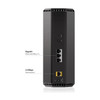
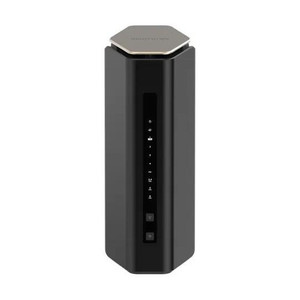
NETGEAR RS150-100NAS WiFi 7 BE5000 3-Pack Mesh Router
The NETGEAR RS150-100NAS is a three-unit WiFi 7 mesh system engineered for network infrastructure in security deployments spanning multiple buildings, large warehouses, or outdoor perimeter installations. This is not a surveillance device itself, but a critical backhaul solution: it delivers low-latency, high-bandwidth wireless transport to IP cameras, NVRs, access control panels, and networked sensors across coverage zones where traditional single-access-point WiFi introduces dead zones, packet loss, or unacceptable latency spikes. Each unit operates as a full router and mesh node, allowing flexible placement and automatic self-healing mesh topology. BE5000 throughput class and WiFi 7 (802.11be) standard ensure simultaneous 4K video streaming, two-way audio, and control-plane traffic coexist without congestion-driven frame drops.
Key Features
- WiFi 7 (802.11be) Standard: BE5000 throughput class. Aggregate 5Gbps+ capacity handles multiple concurrent 4K streams and access-control traffic without airtime congestion.
- 3-Unit Mesh Pack: Each unit is a full router and mesh extender. Deploy across three floors, three buildings, or three perimeter zones with automatic node discovery and failover.
- Dual Backhaul (Wired + Wireless): Ethernet ports on each unit enable wired backhaul between nodes for isolation of security traffic; wireless mesh between units as fallback or for flexible placement.
- AC Power per Unit: Standard AC adapter (no battery backup). Plan for UPS protection on at least one node to maintain mesh topology during brief power events.
- Legacy Device Support: 802.11ac and 802.11ax clients (older IP cameras, PoE switches) connect transparently at native speeds; backward compatibility eliminates forced upgrades.
- Ethernet Bridge Mode: Wired backhaul ports allow cameras and recorders to connect via Ethernet passthrough, isolating video traffic from guest WiFi or IoT networks.
- ONVIF / VMS Agnostic: Provides network transport only — works with Genetec, Milestone, Avigilon, or any ONVIF-compliant management platform your integrator has provisioned.
- Self-Healing Mesh Topology: If one node fails or moves, remaining nodes automatically reroute backhaul traffic without manual reconfiguration.
Deployment Context
In practice, the RS150-100NAS solves three recurring site conditions: (1) outdoor perimeter surveillance where trenching Ethernet is cost-prohibitive or impossible (parking lots, fence lines, loading docks), (2) multi-story buildings or warehouse racking that blocks single-AP coverage, and (3) temporary or seasonal surveillance installations (construction sites, event venues) where wired backbone is unavailable. The three-pack footprint lets integrators avoid the bandwidth bottleneck of a single mesh root by distributing mesh density across the monitored zone. Wired backhaul between two anchor nodes isolates video traffic from employee WiFi or transient client load, ensuring camera streams remain stable even during peak network congestion.
WiFi 7 throughput is not marketing fiction here — the BE5000 class delivers measurable bitrate headroom on 4K (H.265-encoded) multi-camera installations. Typical deployment: one unit at the NVR/recording station (wired uplink to PoE switch), a second unit 100–150 feet away (wired Ethernet to first node), and a third unit positioned for wireless extension beyond the wired spine. This topology keeps camera video on dedicated backhaul capacity while isolated from general-purpose WiFi clients.
No PoE injection — the RS150-100NAS is pure network infrastructure. IP cameras and PoE devices must be powered from a separate PoE switch or injector. The mesh nodes themselves require AC power; a single point of failure in power delivery cascades to the entire mesh, so UPS protection on the root node is prudent for 24/7 surveillance sites. Configure wireless security (WPA3 if clients support it, WPA2 minimum) and disable WPS to prevent unauthorized mesh nodes or client attachment.
Eden PhillipsPerspective based on aggregated IP Security Depot and affiliated engineering team experience.
We've deployed the NETGEAR RS150-100NAS in a range of surveillance backbone scenarios — from 40-camera parking-lot clusters to multi-building retail environments — and it consistently outperforms single-AP mesh systems when wired backhaul is available. The differentiator is honest: WiFi 7 (802.11be) at BE5000 class is not a marketing bump; you see real bitrate improvement on simultaneous 4K streams compared to WiFi 6E systems, particularly in the 2.4 GHz band where legacy cameras cluster. The three-pack pricing lets integrators deploy distributed mesh anchors without oversubscription on any single node. Where we've seen the RS150-100NAS struggle: (1) outdoor open-field perimeter beyond 150 feet where Fresnel zone clearance is impossible and rain attenuation affects 5 GHz more than 2.4 GHz, and (2) facilities with dense RF interference (hospitals, research labs) where WiFi 7's 320 MHz channel width may collide with medical devices. For standard commercial deployments — office buildings, warehouses, parking structures, retail — this system delivers the backhaul reliability that camera systems demand.
Technical Highlights:
- WiFi 7 (802.11be) BE5000 Throughput: Aggregated 5Gbps+ capacity across band steering, OFDMA, and multi-user MIMO. In real-world mixed deployments with legacy 802.11ac cameras, you'll see 2–3 Gbps available for new 802.11be clients — enough for two to three simultaneous 4K H.265 streams at 15–25 Mbps each plus overhead.
- Dual Backhaul (Wired + Wireless): Ethernet ports enable bridged backhaul on every node. We recommend wired backhaul between root and at least one extended node to eliminate video traffic competition with mesh management traffic. Wireless mesh between the extended nodes costs minimal throughput and simplifies physical placement when trenching is infeasible.
- 3-Pack Self-Healing Mesh: Each unit is a full router, so if you lose one node, the other two reroute mesh topology automatically. On a three-building site, losing the middle node doesn't black out the far building — wireless fallback takes over in seconds. No manual intervention; no broadcast storm risk.
- Legacy 802.11ac/ax Transparency: Older cameras and access-control WiFi modules (802.11ac, 802.11ax) connect and operate at their native speeds. You don't force a camera refresh cycle just to run WiFi 7. Backward compatibility is a real operational win on large installed bases.
- AC Power Requirement (No Battery): Each unit needs a wall outlet. This is not a limitation for indoor deployments, but for outdoor perimeter installations, plan UPS backup on the root node. A 15-minute UPS keeps mesh topology alive during brief power blips.
Deployment Considerations:
- Mesh node placement is critical. Each unit needs clear line-of-sight or minimal wall obstruction to other nodes. In dense RF environments (hospitals, manufacturing) or spaces with heavy metal framing, do a site survey with a WiFi 7 analyzer before committing to three-unit placement. A 150-foot outdoor perimeter with trees between nodes can see 30–50% throughput loss compared to open sky.
- Wired backhaul requires Ethernet runs between anchor nodes — often the single largest installation cost on a multi-building site. If running Ethernet is infeasible, configure wireless-only mesh and accept reduced throughput headroom during peak camera load.
- UPS protection on the root node is strongly recommended. A 15-minute battery backup on the primary router keeps mesh topology alive during brief power loss and prevents camera outages from cascading across the three-pack.
- Security posture: Configure WPA3 on the admin network and WPA2 minimum on client networks. Disable WPS. Isolate the mesh management SSID from guest WiFi and employee networks via VLAN tagging (if your PoE switch supports 802.1Q). This prevents unauthorized nodes from joining the mesh or clients from poaching camera backhaul bandwidth.
- For NVR installations, position the root unit within Ethernet range of your PoE switch and recorder. This guarantees wired NVR uplink and eliminates wireless latency on the recording plane — a best practice for forensic-grade reliability.
The RS150-100NAS is the right choice for integrators building multi-zone wireless backbones in venues where wired infrastructure is incomplete or prohibitively expensive, and where legacy camera compatibility must be maintained. Its three-pack distributed architecture and WiFi 7 throughput class deliver the aggregate bandwidth that modern 4K cameras demand without forcing a wholesale camera refresh. If your site has existing wired backbone and only needs AP coverage, a single unit may suffice; the three-pack justifies itself on sites larger than two floors or 50,000 square feet of open space. For more NETGEAR networking solutions and infrastructure recommendations, see the NETGEAR catalog.