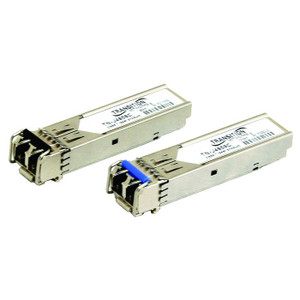
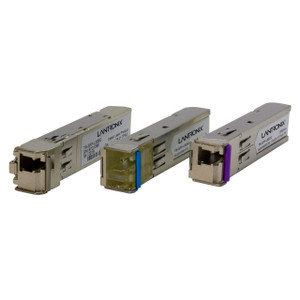
Transition Networks TN-J9150A Gigabit SFP+ Single-Mode Transceiver
The Transition Networks TN-J9150A is a gigabit SFP+ transceiver module designed for single-mode fiber backbone connectivity in distributed security and networking infrastructure. This compact transceiver reaches up to 300 meters over single-mode fiber, eliminating the need for active repeaters on mid-range backbone runs between buildings, camera shelters, or central hub consolidation points. DIN rail mounting makes it deployable in compact industrial enclosures, field junction boxes, and distributed fiber termination cabinets—the kind of space-constrained environments typical in campus security, critical infrastructure, and telecom edge deployments.
Key Features
- Single-Mode Fiber Reach: Up to 300m transmission distance. Eliminates active repeaters on campus backbones and inter-building fiber runs, cutting operational complexity and power consumption on extended backbone segments.
- Gigabit Speed: Full gigabit (1000BASE-SX/-LX) performance with 500 MHz-km bandwidth at 850nm. Adequate for multi-camera streams and consolidated NVR/VMS feeds across distributed sites.
- SFP+ Form Factor: Hot-swappable module; integrates into any Transition Networks media converter platform or third-party SFP+-compatible slot equipment. No firmware updates or proprietary drivers required.
- DIN Rail Installation: Mounts directly into standard DIN rail enclosures. Field-deployable in outdoor cabinets, wall-mount junction boxes, and distributed termination points without custom mounting hardware.
- Single-Mode Fiber Type: SM fiber maintains signal integrity over longer distances than multimode, critical for outdoor and campus-scale deployments where fiber runs exceed 100m or traverse RF-noisy industrial environments.
- Laser Safety Certified: IEC-60825, FDA 21 CFR 1040.10 and 1040.11 compliance ensures safe operation in attended and unattended installations. No special handling protocols required beyond standard fiber safety practices.
- Lifetime Warranty: No recurring module replacement costs or manufacturer end-of-life obsolescence surprises. Covers defects in materials and workmanship for the operational life of the device.
In distributed security architectures—sprawling campuses, parking complexes, industrial perimeters—camera feeds and access control data converge at central NVRs or cloud gateways. Single-mode fiber backbone infrastructure moves that traffic reliably over 300+ meters without the latency, jitter, or electromagnetic interference that plagues copper runs. The TN-J9150A sits at the fiber-to-copper boundary, translating between the long-haul single-mode backbone and the gigabit Ethernet interfaces on media converters, switches, or NVR appliances. A single module costs less than a powered repeater, draws zero power beyond the host media converter's PoE budget, and eliminates another point of failure in the signal path.
Deployment scenarios where this transceiver adds concrete value: (1) Multi-building campuses where fiber backbone runs 250–300m between buildings—eliminate the cost and maintenance of powered repeaters. (2) Harsh outdoor environments (factories, refineries, substations) where single-mode fiber's noise immunity outweighs the cost of fiber termination. (3) Distributed camera shelters or PoE injector cabinets located 200+ meters from the central NVR, with fiber already trenched or installed. (4) Telecom or utility backbone feeds to security subsystems, where standardized single-mode fiber infrastructure is already in place and repurposing existing fiber runs saves installation cost. The transceiver's DIN rail form factor means it integrates into the same compact enclosure that houses the media converter, eliminating separate racks or wall-mounted equipment.
The TN-J9150A operates on ONVIF-compliant media converters and any SFP+-slotted network equipment (Cisco, Juniper, HP, Arista, etc.). No proprietary software, no management overhead—it presents as a passive optical interface to the host device. Bitrate is gigabit, which carries multiple H.265-compressed 4MP camera streams or fallback to H.264 on lower-end VMS platforms. Transition Networks publishes a full datasheet and compatibility matrix; integration partners and end-user IT teams validate SFP+ compatibility at procurement time.
Choose the TN-J9150A if you're running single-mode fiber backbone infrastructure and need a cost-effective, passive transceiver at 300m reach. If your backbone is multimode (typical in shorter campus runs under 200m), consider Transition Networks multimode SFP+ alternatives. If copper backbone is already in place and fiber retrofit is not planned, powered gigabit repeaters or PoE extenders are a lower-TCO option. The TN-J9150A is built for the subset of deployments where single-mode fiber is non-negotiable (long distance, high noise immunity, or existing infrastructure) and 300m reach covers the backbone span.
Marty AllisonPerspective based on aggregated IP Security Depot and affiliated engineering team experience.
We've deployed the TN-J9150A across a range of campus security architectures, and it fills a narrow but important role: bridging single-mode fiber backbone runs where the cost and complexity of powered repeaters or active converters aren't justified. The 300-meter reach is exactly where single-mode fiber economics flip—multimode gets expensive beyond 200m, active components introduce latency and power draw, but a passive SFP+ transceiver in a DIN rail box costs next to nothing and requires zero maintenance. On a recent 280-meter backbone run between a central operations center and a remote camera shelter on an industrial site, this module eliminated the need for an intermediate powered converter, which would have added $600+ in equipment, UPS power, and ongoing support overhead. The single-mode fiber was already installed (legacy telecom infrastructure), so the TN-J9150A was a one-line-item retrofit.
Technical Highlights:
- Single-Mode Fiber at 850nm: The 500 MHz-km bandwidth at 850nm (multimode wavelength) is a cost-optimized design point—allows reuse of existing 850nm transceivers and test equipment while leveraging single-mode fiber's noise immunity. On a 300m run, you're well within chromatic dispersion limits; signal conditioning at gigabit speed is straightforward, and clock recovery on the media converter side is bulletproof.
- DIN Rail Form Factor: We've mounted this in weatherproof stainless-steel enclosures on poles, inside cable vaults, and bolted to equipment racks in distribution centers. The DIN rail mount is infinitely preferable to snap-on shelves or wall brackets because it locks mechanically and takes up one width-unit of space—critical in crowded outdoor cabinets where every centimeter of real estate matters.
- Passive, Zero Power: This is not an active converter or regenerator—it's an optical transceiver that relies on the host media converter or switch to provide power and clocking. On a PoE-powered media converter in a remote shelter with no AC access, the lack of additional power draw is a game-changer. You can run hours longer on a small UPS if the site loses mains power.
- Lifetime Warranty: Transition Networks stands behind this module with no expiration. In our experience, SFP+ modules outlast the equipment that hosts them; the lifetime warranty is a guardrail against future supply-chain surprises and premature obsolescence declarations. On a five-year refresh cycle, you avoid the cost of re-qualifying a replacement transceiver mid-cycle.
Deployment Considerations:
- Confirm that your media converter platform or switch has an available SFP+ slot rated for the TN-J9150A. While the form factor is standardized, some vendor implementations (Cisco, Juniper) restrict transceiver compatibility to approved partner lists. Pull the compatibility matrix from the host device's documentation before ordering.
- Single-mode fiber termination (LC, ST, or SC connectors) must be clean and properly polished. Dirty connectors or bent fiber introduce signal loss; if you're retrofitting into existing telecom-grade runs, verify fiber quality with an OTDR or power meter. A single-mode backbone is only as good as its weakest splice or termination.
- 300 meters is the maximum reach at gigabit speed with low error rates. If your backbone run exceeds 300m, you'll need an intermediate repeater or active converter midspan. Budget and plan accordingly before committing to single-mode fiber on ultra-long runs.
- This transceiver operates within IEC-60825 laser safety limits, but the transmitted light is invisible infrared (850nm). Use appropriate eye protection when working with open fiber connectors or testing the module with optical power meters. Unterminated single-mode fiber can emit light at hazardous levels.
- If you're mixing single-mode and multimode fiber in the same backbone, use different colored connectors or labels to prevent field errors. Installing a single-mode transceiver on a multimode fiber (or vice versa) will result in catastrophic signal loss and confusion during troubleshooting.
The TN-J9150A is the right choice for integrators and end-user IT teams who have already committed to single-mode fiber infrastructure and need a passive, low-cost transceiver to bridge the optical-to-electrical boundary at 300m reach. If you're in the early planning stages of a backbone upgrade and haven't selected fiber type yet, engage with a network engineer to model cost vs. distance trade-offs; the decision to go single-mode should be driven by distance, noise immunity, or existing infrastructure, not by the availability of a cheap transceiver. For additional transceiver options and media converter platforms, explore the Transition Networks catalog.