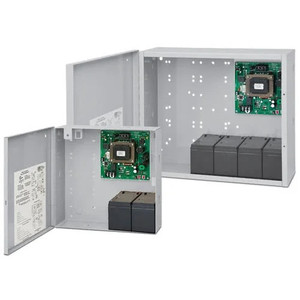
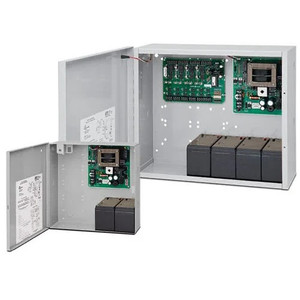
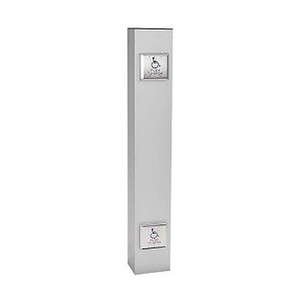
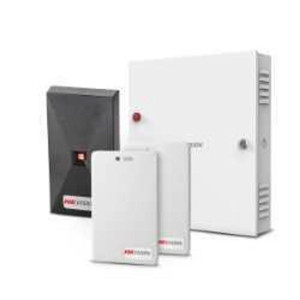
SDC 632RFA 2 Amp Class 2 Access Controller
Overview
The SDC 632RFA is a wired multi-door access control controller engineered for mid-scale enterprise deployments where credential reader diversity and large user databases are non-negotiable. Operating at 24VDC with a 2 amp output capacity, the 632RFA manages up to 63 doors simultaneously, making it suitable for office parks, healthcare facilities, warehouses, and manufacturing environments where a single controller must coordinate access across multiple building zones without requiring separate power infrastructure per door.
This Class 2 controller supports a user database of up to 250,000 records—a real advantage in larger organizations where turnover, temporary access provisioning, and audit trails demand substantial credential storage without hitting the controller's memory ceiling. Unlike lower-capacity alternatives, you won't face the operational friction of splitting user databases across multiple controllers or managing complex synchronization protocols.
Key Features
- Multi-Credential Support (13.56 MHz, 125 kHz, NFC): The 632RFA reads DESFire, MIFARE, and NFC credentials alongside legacy 125 kHz proximity cards. This mixed-reader environment flexibility matters in retrofit projects where you can't afford the cost and downtime of replacing every card stock at once—migrate credentials incrementally while supporting both old and new access methods in parallel.
- 24VDC 2A Output: Sufficient capacity to power standard electromagnetic locks, magnetic locks, and request-to-exit devices across multiple doors. Two amps at 24V means you're not constrained to undersized hardware; confirm your lock and REX device current draw doesn't exceed 2A per door circuit when calculating multi-door power budgets.
- OSDP and TCP/IP Protocols: The 632RFA communicates via Open Supervised Device Protocol and standard Ethernet TCP/IP, ensuring compatibility with modern OSDP-compliant access control platforms and networked security management software. OSDP specifically eliminates the Wiegand protocol's bandwidth and security limitations—critical if you're integrating with contemporary VMS or identity management systems.
- 250,000 User Credential Database: Large-scale user storage reduces administrative overhead and eliminates the need to partition access across multiple controllers in mid-size facilities. Whether managing 500 or 5,000 cardholders, database capacity isn't your constraint.
- Enterprise-Grade Integration: Designed for security integrators, IT architects, and facility managers deploying networked access control across dispersed locations. The controller's wired architecture ensures consistent, low-latency communication without relying on wireless mesh networks or cellular backup.
- Class 2 Controller Rating: This certification indicates the controller meets industry standards for multi-door coordination, credential processing, and failover behavior under normal operating conditions. Class 2 is appropriate for commercial and enterprise deployments; do not confuse with higher-tier ratings used in government or special-access facilities.
Integration & Compatibility
The 632RFA integrates with OSDP-compliant access control systems, networked security platforms, and identity management software that support TCP/IP communication. Wired connectivity via RJ-45 ensures deterministic latency—essential when coordinating door access decisions across multiple reader stations in real time. The controller requires a 24VDC power supply sized to handle its internal circuitry plus the aggregate draw of all connected locks and REX devices; confirm power budget before installation to avoid nuisance failures during peak access periods.
For deployments exceeding 63 doors, consider cascading multiple 632RFA units under a parent access control platform—a common pattern in large campuses or multi-building facilities. The TCP/IP backbone allows fine-grained door-level reporting and audit logging across all controllers.
When to Choose a Different Model
If your deployment requires more than 63 doors under a single controller, or if you need integrated web-based credential enrollment without a separate management server, evaluate higher-capacity variants in the access control product family. If wireless reader connectivity is mandatory (due to retrofit constraints), the wired-only 632RFA won't meet that requirement—verify controller options that support wireless reader bridges or mesh networking before finalizing your equipment list.
Frequently Asked Questions
Q: What is the maximum load on the 2 amp output of the 632RFA?
A: The 632RFA delivers up to 2 amps at 24VDC. Total door hardware (locks, REX devices, solenoids) wired to the controller must not exceed this aggregate current. Typical electromagnetic locks draw 0.5–1.2A; confirm individual hardware specs and sum the concurrent draw when multiple doors are accessed simultaneously.
Q: Can the 632RFA support both new DESFire and legacy 125 kHz proximity cards at the same time?
A: Yes. The controller's multi-credential architecture allows readers operating at 13.56 MHz (DESFire, MIFARE, NFC) and 125 kHz (proximity) to coexist. This is a significant advantage in retrofit projects where card replacement budgets are phased—you can issue new DESFire credentials to critical staff while maintaining backward compatibility for existing cardholders.
Q: Is the 632RFA OSDP-only, or does it support Wiegand output to legacy readers?
A: The 632RFA communicates via OSDP and TCP/IP. If your existing readers are Wiegand-only, you'll need to upgrade readers or install a Wiegand-to-OSDP converter—confirm compatibility with your access control platform before procurement.
Q: What happens if the 632RFA loses network connectivity?
A: Class 2 controllers maintain local credential validation and cached access rules during brief outages. However, real-time audit logging and remote policy updates will fail. Consult your access control platform's documentation for failover behavior and allowable offline windows in your security policy.
Q: Can I manage the 632RFA directly from a web browser, or do I need a separate management server?
A: The 632RFA is a networked controller designed to integrate with an access control management platform (server or cloud service). Direct web-based provisioning varies by platform; confirm credential enrollment and door assignment workflows with your chosen ACS software before installation.
Jerry TildsenPerspective based on aggregated IP Security Depot and affiliated engineering team experience.
The SDC 632RFA is a solid fit for mid-scale multi-door deployments where credential diversity and user database size drive the architecture. The 2 amp Class 2 rating and 24VDC backbone are not exotic—they're standard in enterprise access control—but the 632RFA's ability to handle 63 doors and 250,000 user records without requiring multiple controllers significantly reduces engineering complexity and network topology overhead on retrofit projects.
Technical Highlights:
- Multi-Credential Flexibility (13.56 MHz, 125 kHz, NFC, DESFire, MIFARE): This mixed-reader support eliminates the card-replacement shock many organizations face when upgrading from proximity to modern encryption. You migrate credentials on your own timeline—a real cost and operational advantage in large facilities.
- OSDP Protocol Native: OSDP eliminates Wiegand bandwidth constraints and improves reader-to-controller communication security. If your VMS or access control platform is modern and OSDP-compliant, this is the right transport protocol; legacy Wiegand-only systems require reader replacement or converters, so verify platform compatibility upfront.
- 250,000 User Database Capacity: Most mid-market controllers cap out at 50K–100K users. The 632RFA's capacity means you're not managing partitioned credential lists or synchronizing across multiple controllers in a 500–2,000-person organization. This matters operationally when onboarding/offboarding cycles demand rapid provisioning.
Deployment Considerations:
- Power Budget Calculation is Non-Optional: The 2A output is an aggregate limit. If you have 10 doors each with a 0.3A lock draw, concurrent access (fire alarm release scenario) can spike to 3A and exceed capacity. Wire a separate 24VDC power supply sized conservatively—do not rely on controller output alone for high-door-count installations.
- Wired Connectivity Constraint: The 632RFA is Ethernet-based, not wireless. If your facility has retrofit zones without network runs or requires reader diversity across areas separated by metal structures, you'll need wired infrastructure or reader bridge solutions that translate wireless reader protocols into OSDP upstream. Plan network provisioning early.
- Class 2 Failover Behavior: During WAN outages, the controller falls back to cached credentials and local rules. Understand your organization's offline-access policy—some facilities reject all access during network loss; others allow specific high-priority doors. Confirm failover behavior with your access control platform before deployment.
The 632RFA is well-positioned for healthcare campuses, multi-building office parks, and light-industrial warehouses where you need deterministic door control across 20–60 access points, mixed credential stocks, and large user populations. It's not the right choice if your deployment exceeds 63 doors under a single controller or if you need integrated web-based credential administration without a separate ACS server—those are product family decisions, not shortcomings of the 632RFA itself.