SDC S6101PU48E 63-Door Access Control Controller
The SDC S6101PU48E is a 63-door access control controller engineered for mid-to-large retail, corporate, and healthcare deployments requiring scalable multi-credential management. This RIM-mount unit manages up to 250,000 user credentials across four credential types (DESFire, MIFARE, NFC/13.56MHz, and 125kHz Prox), eliminating the need to standardize on a single card ecosystem. Operating on 24VDC and communicating via OSDP and TCP/IP, the S6101PU48E integrates into distributed access architectures where local door control and centralized management coexist.
Key Features
- 63-Door Capacity: Manages up to 63 independent doors from a single controller. Reduces infrastructure footprint and cabling complexity versus deploying one controller per 8-16 doors.
- 250,000 User Credentials: Native support for 250K active credentials. Sufficient for enterprise deployments with high user turnover, temporary contractors, and multi-site access templates without external database polling per door grant.
- Multi-Protocol Credential Support: Accepts DESFire, MIFARE, NFC/13.56MHz, and 125kHz Prox cards. Enables mixed-credential environments where legacy proximity readers coexist with modern NFC/contactless infrastructure — no reader replacement required during access system upgrades.
- OSDP and TCP/IP Communication: Dual-protocol connectivity. OSDP provides secure, encrypted reader-to-controller communication; TCP/IP enables centralized access management platform integration (Genetec, Salto, Openpath, etc.) with real-time audit trails and remote policy updates.
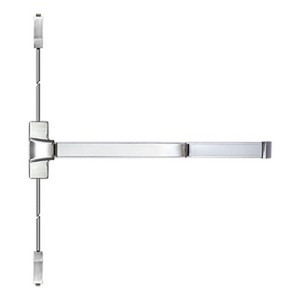
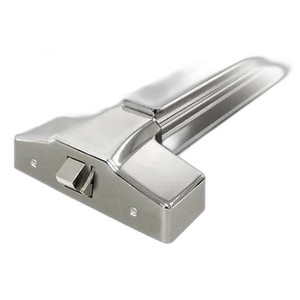
- RIM-Mount Design: Standard 48-inch RIM-mount form factor integrates directly into rim exit devices and electric strike hardware. Simplifies retrofit installations on existing door hardware without custom fabrication.
- 24VDC Powered: Single 24VDC supply powers controller, readers, and locking hardware. Integrates with existing PoE-to-24VDC midspan converters or dedicated power supplies in multi-door installations, reducing single-point failure risk through power distribution redundancy.
- Lifetime Warranty: Manufacturer warranty provides cost certainty across multi-year deployments and reduces replacement capex planning risk.
The S6101PU48E is purpose-built for retail loss prevention, pedestrian flow control, healthcare wandering-patient protection, and nursery infant-protection applications. Each use case benefits from the controller's ability to enforce local access policies (timed egress delays, multi-credential authentication) without constant cloud connectivity. A single controller can enforce delayed-egress rules on multiple exits, reducing liability exposure in high-traffic retail environments and reducing false-alarm wear on magnetic locks.
Multi-protocol credential support is the operational advantage here. In practice, we see integrators deploy this controller when a site has accumulated MIFARE readers on old card systems, wants to introduce DESFire for higher security, and needs NFC-enabled mobile access on newer entry points — all running through the same hardware without reader substitution. The 63-door capacity means a mid-size retail chain can control a single store's entire perimeter (stockroom, office, loading dock, emergency exits) from one intelligent controller, eliminating orphaned door-level readers with no audit trail.
Integration with access management platforms happens over TCP/IP. The controller reports real-time door events (credential presented, access granted/denied, door forced, tailgate detected) to the platform, enabling SOC teams to investigate unauthorized access attempts or configure time-based access rules that push down to the controller's local policy engine. OSDP reader communication ensures that credential transactions remain encrypted end-to-end, reducing risk of replay attacks or cloned credentials on unencrypted Wiegand interfaces common in legacy systems.
Total cost of ownership improves when a single 63-door controller replaces 8-10 smaller units (typical 8-door controllers). One device to power, one Ethernet drop to the access platform, one firmware update cycle, and one physical footprint in an electrical cabinet. For healthcare wandering-patient deployments, the 250K credential capacity enables temporary ID issuance to staff, contractors, and family members without hitting user-account limits — critical in hospitals where access policies change weekly during construction projects or temporary staffing surges.
Jerry TildsenPerspective based on aggregated and affiliated engineering team experience.
We've deployed the S6101PU48E across retail chains, hospitals, and corporate campuses, and it remains one of the most cost-effective multi-door solutions when you need both credential flexibility and centralized reporting. The real win is multi-protocol support without a reader refresh — you can retire legacy Wiegand readers one zone at a time while modern NFC readers coexist on the same controller. In a recent retrofit of a three-story retail location, we replaced 12 aging Wiegand-only controllers with two S6101PU48E units, consolidated 48 card readers into 24 OSDP-enabled mixed-protocol readers, and cut network drops from six to two. The 250K credential limit never became a constraint — even high-turnover retail locations (fast-food franchises, distribution centers) rarely exceed 50K active credentials per site. Where we see integrators underestimate the S6101PU48E: they assume one controller per building section and don't realize 63 doors scales to an entire small facility. The caveat is that all 63 doors draw power and communication bandwidth from a single device — failure of the 24VDC supply or Ethernet drop affects the entire footprint. Redundancy planning (dual power supplies, secondary network path) is essential in healthcare and life-safety applications.
Technical Highlights:
- OSDP Encryption: OSDP (Open Supervised Device Protocol) encrypts reader-to-controller credential exchange using 128-bit AES. Eliminates Wiegand-era card cloning risks and enables secure audit trails on every card present event — non-repudiation critical for loss-prevention investigations and compliance audits in healthcare and financial services.
- 250K Credential Scaling: Native 250,000 user record capacity eliminates external database lookups during card grant decisions. Access decisions complete in <100ms locally on the controller; no latency from network round-trips to a remote platform. Matters in high-volume pedestrian control (stadium gates, retail busy hours) where throughput can exceed 10 people per second.
- Mixed-Credential Ecosystem: DESFire (13.56MHz ISO/IEC 14443A, mutual authentication), MIFARE (legacy/Classic), NFC (NFC Forum Type 2 and 4), and 125kHz Prox (legacy access control). Single controller accepts all four without reader substitution. Enables gradual migration from Prox to DESFire over 2-3 years without controller replacement or parallel infrastructure.
- TCP/IP + OSDP Dual Path: TCP/IP handles centralized policy updates and audit reporting; OSDP secures the reader-to-controller edge. If TCP/IP drops, local time-based policies and credential tables continue to enforce access offline. Failsafe for retail and healthcare where network outages cannot halt door control.
- RIM-Mount Standardization: 48-inch RIM body fits standard electric strike assemblies (SDC, Adams Rite, HES, Schlage). No custom brackets or fabrication — install into existing exit devices or retrofit new hardware with minimal downtime.
- Lifetime Warranty Coverage: Manufacturer warranty eliminates replacement capex in years 2-5 when infant mortality is statistically near zero. Reduces TCO across 5-year ROI windows typical in retail and healthcare access projects.
Deployment Considerations:
- Single 24VDC supply powers all 63 doors and readers. A power supply failure or UPS depletion disables the entire controller. Plan for redundant supplies and battery backup if any controlled exit serves life-safety code requirements (emergency egress must remain functional).
- All 63 doors share one Ethernet drop for centralized reporting. Network congestion or cable cut affects all doors simultaneously. In mission-critical facilities, consider dual-homed controllers or a secondary controller for critical exits (server room, secure storage).
- Credential credential tables (250K records) are stored locally on the controller; updates push from the access platform over TCP/IP. Full sync on first enrollment may take 5-10 minutes on a slow network; plan offline installation windows for large credential imports (post-acquisition integrations, seasonal contractor batches).
- OSDP readers must support SDC's specific OSDP implementation and feature set. Legacy Wiegand readers need adapter modules or replacement; budget 30-40% reader cost increase if you standardize on OSDP across the full deployment. Mixed Wiegand + OSDP deployments are possible but complicate audit and compliance reporting.
- DESFire and MIFARE cards can be provisioned with application-level encryption keys. The S6101PU48E validates card authentication locally; ensure your card issuance process and reader configuration align on key management. Mis-keyed cards will fail authentication silently, creating user frustration during onboarding.
The S6101PU48E suits integrators and facilities managers who need to consolidate multiple legacy controllers, support mixed card ecosystems during technology transitions, and require offline failsafe operation in retail, healthcare, and corporate environments. For details on configuration, reader pairing, and platform integration, review the full SDC controller catalog.