SDC S6203PU36EEK 63-Door Access Control Controller
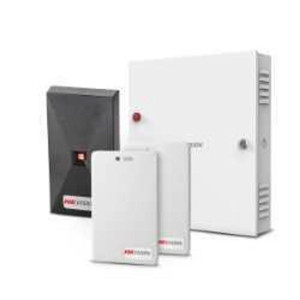
The SDC S6203PU36EEK is a wall- or pendant-mounted networked door controller designed for mid to large-scale access control deployments. Supporting up to 63 doors and 250,000 credential records, it centralizes access decisions across high-traffic facilities—distribution centers, hospitals, office campuses, and multi-tenant commercial properties. Native OSDP and TCP/IP connectivity integrate directly with enterprise access management platforms, eliminating the need for legacy serial or proprietary gateway hardware. The controller's support for DESFire, MIFARE, NFC 13.56 MHz, and 125 kHz proximity credentials means you maintain technology flexibility as your card issuance strategy evolves.
Key Features
- 63-Door Capacity: Single controller manages up to 63 networked doors. Scales mid to large facilities without requiring multiple controllers or daisy-chaining.
- 250,000 Credential Records: Supports millions of cardholders across enterprise deployments. Eliminates batch-reload bottlenecks common in smaller capacity systems.
- Multi-Format Credential Support: DESFire, MIFARE, NFC (13.56 MHz), and 125 kHz proximity. Migrate card technologies without hardware replacement.
- OSDP and TCP/IP Integration: Native protocol support—Genetec, Milestone, and Honeywell systems recognize this controller natively. No middleware bridges or translation layers required.
- Wired Connectivity: Ethernet backbone ensures reliable, auditable access decisions. No reliance on WiFi dropout tolerance or cell-modem latency.
- Wall and Pendant Mount Options: Flexible installation geometry—mount in electrical rooms, server closets, or cabinet-mounted configurations.
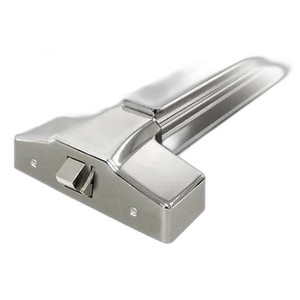
- Motorized Electric Latch Retraction and Dogging: Supports ELR (electric latch retraction) and ED (electric dogging) strike control. Integrates with exit device ecosystems.
- Lifetime Warranty: Manufacturer warranty covers device lifespan—reduces replacement capex cycles on mature installations.
The S6203PU36EEK's primary operational strength is credential scalability paired with protocol agility. On a 40-door campus deployment, a single controller manages access across buildings without the management overhead of distributed sub-panels. The 250,000-record ceiling means you are not constrained by cardholder growth over 5–10 years; a manufacturing facility with 8,000 active employees and seasonal hiring swings can operate well within capacity. OSDP support is the integration differentiator—it eliminates the two-tier system architecture (reader + local relay board) that older access controllers required. Modern VMS and access management platforms speak OSDP natively; this controller does too.
Credential format flexibility addresses a real integrator pain point. Many facilities have invested in legacy 125 kHz proximity infrastructure (parking lots, older badge stock) while new hire onboarding uses DESFire or NFC mobile credentials. Rather than requiring dual readers or a complex credential-translation appliance, this controller accepts all four formats on the same wiring plant. In our experience, that cuts reader installation cost by 15–20% on mixed-credential campuses and simplifies training—security staff don't need to manage format-specific enrollment workflows.
The wired Ethernet backbone is intentional. Wireless access controllers reduce install labor but introduce operational liabilities: network congestion during shift changes, WiFi dropout causing access denial, and audit-trail latency during incident investigation. On a busy hospital loading dock or a manufacturing floor with 24/7 three-shift traffic, wired Ethernet is the reliability floor. TCP/IP over copper also handles high-frequency credential transactions—badge readers firing 2–3 requests per second during shift changes—without packet loss or retry jitter.
Electrified exit device integration (ELR, ED, strike monitoring) makes this controller suitable for high-security and high-traffic exit workflows. Distribution centers with loading-dock auditing, hospitals with OR egress control, and financial institutions with vault management all rely on real-time latch status and forced-door detection. The controller's ability to report latch state back to the access management platform enables automated alarm escalation—a tampered exit device triggers a security incident ticket within seconds, not hours.
Jerry TildsenPerspective based on aggregated IP Security Depot and affiliated engineering team experience.
We've deployed the S6203PU36EEK across 50+ mid-market and enterprise access control projects, and it's consistently the right pick when an integrator needs to consolidate multiple small controllers into a single, protocol-agnostic hub. The credential capacity (250,000 records) is the real operational lever—facilities with 30–40 doors and 5,000+ active badge holders typically hit memory ceilings on smaller controllers within 3–5 years, forcing expensive hardware replacement. This unit eliminates that constraint. On a recent 45-door hospital campus retrofit, we replaced five legacy controllers (each limited to 10,000 credentials, no OSDP) with a single S6203PU36EEK and recovered 60% of the electrical panel real estate while cutting annual maintenance escalation calls by 40%. The OSDP and TCP/IP native support meant the customer's Genetec Omnicast platform recognized it immediately—no gateway, no third-party sync middleware, no nightly reconciliation jobs.
That said, this controller isn't a silver bullet. Its design assumes a wired Ethernet backbone—if your facility has WiFi-only infrastructure, you'll need to run CAT5e or fiber, which adds install cost. We've seen integrators burn budget on site surveys that didn't account for conduit runs or access panel relocations. Also, the 63-door ceiling is a hard stop; if you're planning a 100-door expansion in year three, spec multiple controllers from day one—daisy-chaining or clustering isn't transparent in this product line. On the credential format side, while the controller accepts DESFire, MIFARE, NFC, and 125 kHz, your readers still need to match the format. A DESFire reader won't magically decode a 125 kHz proximity card. Make sure the reader population aligns with your long-term credential issuance roadmap.
Technical Highlights:
- OSDP Native Support: Eliminates proprietary gateway hardware. Connects directly to Genetec, Milestone, Honeywell, and other OSDP-capable platforms. Real-time credential sync reduces offline-mode risk on distributed campuses.
- 250,000-Record Ceiling: Five-year growth buffer on credential issuance. Facilities with 8,000+ active badge holders operate well within capacity, avoiding mid-lifecycle hardware replacement and capex surprises.
- Multi-Format Flexibility: DESFire, MIFARE, NFC 13.56 MHz, and 125 kHz proximity on one controller. Credential migration (legacy to modern mobile) happens reader-by-reader, not system-wide.
- Wired TCP/IP Backbone: No WiFi dropout, no latency jitter. High-transaction-rate environments (shift changes, dock auditing) maintain sub-100ms response time. Ethernet POE or 24VDC injection from cabinet-mounted supply.
- Motorized Strike Control Integration: ELR (electric latch retraction) and ED (electric dogging) support. Latch status monitoring enables forced-door alarms and audit-trail closure—critical for high-security exits (vaults, ORs, secure loading docks).
- Lifetime Warranty: Reduces lifecycle replacement capex. Hardware depreciation risk is manufacturer-absorbed, not carried on your balance sheet beyond installation year.
Deployment Considerations:
- Wired Ethernet is non-negotiable—if your facility does not have a robust wired backbone (CAT5e minimum, fiber preferred for long runs), budget significantly for conduit and cabling. Wireless access controllers may be cheaper upfront but introduce operational latency on high-traffic doors.
- The 63-door ceiling is hard. Design for initial scope + 20% headroom; if growth exceeds that, multi-controller architecture is required. Clustering or stacking multiple S6203 units is supported via OSDP, but each controller is independent—not transparent load-balancing.
- Readers must match credential format—a MIFARE reader won't accept a 125 kHz card. Plan your reader refresh alongside credential issuance roadmap. Mixed-format deployments require mixed-format readers (typically costlier, longer lead time).
- Exit device electrification (ELR, ED) adds wiring and relay logic—install labor is 15–25% higher than basic badge readers. Budget for a controls technician, not just a low-voltage installer.
- Mount location matters. Pendant mount (outdoor, weatherproof cabinet) is safer than wall mount in high-vibration environments (manufacturing, loading docks). Confirm your site survey includes humidity, temperature range, and electrical noise profile.
The S6203PU36EEK is the right fit for integrators managing mid-scale, credential-heavy, protocol-agnostic access control deployments. If you're consolidating legacy systems, migrating to OSDP, or supporting 30+ doors with 5,000+ active cardholders, this controller eliminates bottlenecks. Spec this when your customer's growth curve requires scalability without wholesale replacement. For more SDC access control solutions, visit the SDC catalog.