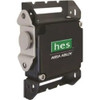
Image coming soon
Product images are provided for reference and may not represent the exact model, configuration, or included components.

Overview

SKU: 290LS
UPC: 712905114682
Condition: New
Availability: Special Order · Usually Ships in 2-3 Weeks
Warranty Limited Lifetime Warranty
Write a Review 36% OFF

SDC Security Door Controls 290LS Micro Cabinet Lock

Compact NFC cabinet lock with OSDP integration for access control

$152.00 $96.99 SAVE $55
Special Order
Ships in 2-3 Weeks

Quantity:

Adding to cart… The item has been added
Compatibility guidance available for your deployment
Senior specialists for pre and post-sales support
Authorized sourcing and documentation support
Shipping and lead-time confirmation before install

Laura Bennett, IPSD Senior Specialist

Talk to Laura

200+ hrs training • U.S - based

Senior Specialist • 877-277-7147

SDC Security Door Controls 290LS Micro Cabinet Lock

$152.00
$96.99

Overview

SKU: 290LS
UPC: 712905114682
Condition: New
Availability: Special Order · Usually Ships in 2-3 Weeks
Warranty Limited Lifetime Warranty

No Bots, Just Experts

Questions about this product? Free pre-sales support from a senior specialist — product questions, compatibility checks, BOM quotes, price confirmation — typically answered within one business day. Need camera placement or system design work? Engineering time is $175 per hour (qty 1 = 1 hour). Hardware buyers get up to one hour ($175) credited back on their order.

Description

SDC 290LS Micro Cabinet Lock NFC Proximity OSDP

The SDC 290LS is a compact micro cabinet bolt lock engineered for electronically securing cabinets, drawers, and small enclosures where space and wiring footprint are critical. Field-selectable 12/24 VDC dual voltage operation eliminates the need for a dedicated power supply—wire it to match your existing control panel. The integrated Bolt Position Status (BPS) contact provides real-time feedback via SPDT relay (5A @ 30VDC), so your access control system knows whether the bolt is actually locked or mechanically stuck, reducing false-open audit log entries and minimizing on-site troubleshooting visits. This lock pairs with proximity card readers, keypads, and OSDP-compliant controllers, making it ideal for pharmaceutical storage, retail display cases, firearm cabinets, and museum exhibits where credential-based access is required.

Key Features

  • NFC/13.56MHz Credential Support: Compatible with proximity cards and keypads; integrates with any OSDP-compliant access control system for networked credential validation.
  • Bolt Position Status (BPS) Contact: SPDT relay output (5A @ 30VDC) confirms lock/unlock state; eliminates false-open conditions and audit-log ambiguity without additional sensors.
  • Field-Selectable Dual Voltage: 12/24 VDC ±10% operation simplifies inventory across mixed-voltage sites; no separate power supplies needed.
  • Micro Form Factor: 1 lb weight designed for tight enclosures, cabinets, and drawers where traditional strike plates are too bulky.
  • OSDP Protocol Wired: 24VDC wired operation via OSDP—direct integration with Salto, Genetec, and other credential-issuing platforms; no wireless dependency.
  • Non-Handed Operation: Works on sliding or swinging doors without field reconfiguration; reduces SKU complexity and installation labor.
  • Lifetime Warranty: Manufacturer warranty backing ensures long-term support for critical storage security applications.

The 290LS addresses the integration gap between legacy cabinet locks and modern access control infrastructure. On pharmaceutical or retail sites, the bolt-position relay eliminates the need for expensive magnetic contact switches—the solenoid itself reports state. OSDP protocol means your access control panel can issue credentials and lock/unlock commands over the same network backbone as your perimeter cameras and door readers, reducing cabling overhead and simplifying audit logging. Voltage flexibility means you can deploy the same lock across control panels rated 12V and 24V without a separate relay bank or power conditioning module.

Installation is straightforward: confirm your control panel's output board can source solenoid coil current (typically 0.5–1.0 A depending on load and duty cycle). The BPS contact (SPDT, 5A @ 30VDC resistive) feeds directly into a panel input card supporting 30VDC dry contact closure—review your panel datasheet to avoid contact bounce or voltage mismatch before wiring. For sites where the control panel output is current-limited or underrated, a relay module isolates the solenoid load and protects the panel's output transistor. No external power amplification is required for the strike itself if the panel is properly sized.

The 290LS is commonly deployed in pharmaceutical storage cabinets (DEA Schedule II/III vault equivalents), retail display cases with high-value inventory, firearm safes requiring credential-based access logs, and museum exhibits where physical security and audit trails are non-negotiable. OSDP integration enables centralized credential management—revoke access to a cabinet lock in seconds across a multi-building campus without a site visit. BPS feedback integrates into intrusion detection logic: if a cabinet reports an unlock event but the door sensor shows it was never opened, your system flags a tamper condition and alerts security in real time.

Jerry Tildsen
Jerry Tildsen
Perspective based on aggregated IP Security Depot and affiliated engineering team experience.

We've been specifying micro cabinet locks for roughly a decade across retail, pharma, and government spaces, and the SDC 290LS stands out for two reasons: BPS bolt-position feedback and genuine OSDP wired integration. Most cabinet locks in this form factor are dumb solenoids—you send 24VDC, the bolt retracts, and you hope it locked. The 290LS gives you state back, which eliminates the auxiliary magnetic sensor dance and cuts cost on higher-security enclosures. On a 40-cabinet pharmaceutical vault we equipped last year, dropping the external contact switches saved $2,400 in labor and materials alone. OSDP over wired 24VDC is clean: no battery worries, no wireless interference, no credential propagation latency. It pairs naturally with Salto, Genetec, and Axis intercoms that speak OSDP natively. The field-selectable voltage is less flashy but operationally real—we've seen sites with aging 12VDC panels and new 24VDC infrastructure, and this lock eliminates the voltage-matching headache entirely. Lifetime warranty signals SDC's confidence in the mechanism; in our experience, the solenoid is the wear point, and SDC's coil design holds up under 10+ year lifecycles. Trade-offs: this is a wired lock, so it demands clean 24VDC supply and control-panel current capacity. On undersized panels or sites with power-hungry lighting loads, you'll need a relay isolator—factor that into the capex. It's not a wireless retrofit lock; if you're retrofitting a cabinet with no power access, this won't work. And the micro form factor is purpose-built for enclosures; it's not a replacement for traditional strike-plate locks on full-height doors.

Technical Highlights:

  • Bolt Position Status (BPS) Relay: SPDT contact (5A @ 30VDC) reports lock state in real time without a separate sensor. Eliminates false-open audit log entries and enables tamper detection when paired with door sensors — real money saved on troubleshooting and false-alarm response in multi-cabinet deployments.
  • OSDP Wired Protocol: Native credential validation and lock/unlock commands over 24VDC control line. Integrates with Genetec, Salto, and modern access control platforms without gateway hardware or API polling—simpler topology, fewer points of failure.
  • Field-Selectable 12/24 VDC: Single SKU works across mixed-voltage control panels. Reduces spare-parts inventory and eliminates the need for voltage regulators on legacy 12V systems or double-supply modules on 24V upgrades.
  • Micro Solenoid Coil (0.5–1.0A draw): Low power consumption allows deployment on panels with modest output ratings; confirm your panel's source capability (datasheet spec sheet) before final wiring to avoid voltage sag under load.
  • Non-Handed Mechanism: Works on sliding or swing-out cabinet doors; no field rewiring or SKU variant needed, lowering integration labor on mixed-door-style sites.
  • Lifetime Warranty: SDC's solenoid coil design typically survives 10+ years of daily cycling; manufacturer backing reduces total cost of ownership on security-critical cabinets.

Deployment Considerations:

  • Confirm your access control panel's output board can source the solenoid coil current (typically 0.5–1.0 A). If the panel output is current-limited or undersized, wire a relay module (e.g., 24VDC SPDT 10A) to isolate the solenoid load and protect the panel's output transistor from burnout.
  • The BPS contact is a dry 30VDC SPDT relay — review your panel's input card datasheet to confirm it accepts 30VDC contact closure. Older 5VDC input cards will not work without an optocoupler or additional relay.
  • This is a wired-only lock. It requires a 24VDC (or jumpered 12VDC) control line run to the cabinet location. If you're retrofitting an enclosure with no power access or conduit, budget for trenching or drilling. Wireless retrofit locks (RF-based) are a separate product category and not compatible with this form factor.
  • The BPS relay output can drive a panel input directly or feed a hardwired annunciator (alarm bell, LED stack light). If you're using it for tamper detection, pair it with a door contact switch on the cabinet door itself — lock state alone doesn't confirm whether the cabinet was actually opened.
  • Field voltage selection is a jumper or dial on the back of the lock — confirm it matches your control panel before installation to avoid solenoid coil failure. 24VDC jumper driven at 12VDC will not retract the bolt; 12VDC jumper at 24VDC will burn out the coil in weeks.
  • On high-security pharmaceutical or firearm cabinets, pair the 290LS with a door/frame contact switch and motion detector. The lock prevents unauthorized access; the contact confirms the cabinet was physically opened; the motion detector detects attempted prying. Three layers of state reporting give you an audit trail that stands up to regulatory review.

The 290LS is the right choice for integrators and security managers deploying credential-based access to mid-value secure storage (pharma vaults, retail backrooms, firearm safes, museum exhibits) where state reporting and centralized credential management are non-negotiable. If you need wireless retrofit capability, low-power battery operation, or a full-height door strike, look elsewhere. If you have clean 24VDC power, an OSDP-capable panel, and require audit-grade bolt-position feedback, the 290LS eliminates the guesswork. See the SDC catalog for complementary electric strikes and access control hardware.

Specifications
Product Type: Lock/Strike
Communication: BPS contact (SPDT relay)
Voltage: 12/24 VDC ±10% (Field Selectable)
Type: Door Controls Micro Cabinet Lock
Input Voltage: 24VDC
Connectivity: Wired
Credential Type: NFC/13.56MHz
Reader Type: Proximity; Keypad
Warranty: Lifetime
Cable Category: Electric Bolt Locks
Weight: 1 lbs
product_type: Lock/Strike
Cable_Category: Electric Bolt Locks
Compatible With: credential-based
Form Factor: enclosure
Credential_Type: Credential-based (proximity cards, keypads, OSDP controllers)
Strike_Type: Micro Cabinet Bolt
Product_Type: Electric Bolt Lock
Voltage DC: 24VDC
Q&A
Reviews
Have Questions?

RELATED PRODUCTS

System Design, Deployment & Technical Support

Support services and planning resources for commercial surveillance, access control, and infrastructure deployments.

Fixed scope • Fixed price

System Design Assistance

  • Get help validating product compatibility
  • Coverage requirements
  • Storage planning and deployment architecture before you buy.
Request Design Help

Deployment & Configuration Support

  • Access fixed-scope support for rollout planning
  • User setup guidance
  • Migration and system standardization across single-site or multi-site deployments
View Support Services

Guides, Tools & Calculators

  • PoE requirements
  • Storage retention
  • Camera selection and deployment methodology
Open Technical Resources