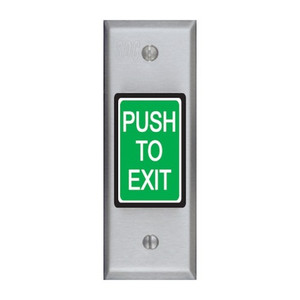
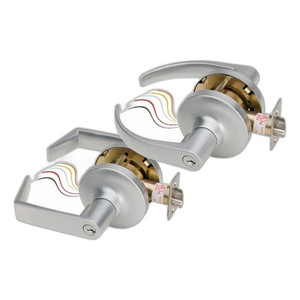
SDC LR100JAK 63-Door Access Controller Kit
The SDC LR100JAK is an enterprise-scale access control controller designed for mid-to-large commercial facilities requiring central management of door hardware across 63 independent access points. The system consolidates credential validation, door unlock sequencing, and audit logging on a single wired platform, eliminating the operational complexity and latency inherent in distributed reader architectures. Built for high-traffic environments—parking garages, office campuses, manufacturing floors—the LR100JAK pairs broad credential support with industry-standard protocols, making it straightforward to retrofit into existing access control ecosystems without wholesale hardware replacement.
Key Features
- 63-Door Capacity: Native support for up to 63 independent doors on a single controller. Reduces the need for multiple controllers and simplifies central administration for mid-sized facilities.
- 250,000 Credential Slots: Supports 250K unique user identities with enrollment, revocation, and real-time lockout without database resync. Handles employee turnover, temporary contractor access, and multi-site credential overlap at enterprise scale.
- Multi-Format Card Support: Reads DESFire, MIFARE, NFC 13.56 MHz, and 125 kHz proximity cards natively. No external format converters or middleware needed; single reader investment covers legacy proximity systems and modern mobile NFC deployments.
- OSDP & TCP/IP Dual Protocols: OSDP (Open Supervised Device Protocol) ensures encrypted reader communication; TCP/IP enables integration with Genetec, Milestone, Lenel, and other major access control platforms without proprietary gateways.
- Wired Connectivity: Hardwired deployment eliminates wireless latency, interference, and credential replay risks. Critical for high-security zones (data centers, labs, c-suite areas) where reliability outweighs installation convenience.
- Panic & Fire-Rated Exit Device Compatible: Designed to work with motorized electric latch retraction kits on panic hardware and fire-rated mechanical devices. Low-energy operator compatible, reducing door closure force on accessible entrances.
- Lifetime Warranty: Factory warranty covers defects in materials and workmanship for the operational life of the product, minimizing long-term replacement capex and support burden.
The LR100JAK's architecture separates credential intelligence from door actuation hardware. Unlike distributed reader systems that cache credentials locally on each access point, the controller maintains a synchronized master database, enforcing access policies uniformly across all 63 doors in real time. When a cardholder's status changes—termination, shift reassignment, or temporary suspension—the update propagates instantly to all doors without requiring manual reprogramming or physical badge collection. This centralized approach is especially valuable in high-turnover retail, hospitality, or logistics operations where credential lifecycle management is a constant operational overhead.
Credential format flexibility is engineered into the hardware. The native support for DESFire, MIFARE, and NFC 13.56 MHz cards alongside legacy 125 kHz proximity means you can migrate from one card standard to another without replacing readers or controllers. In our experience, this backward compatibility has been a hidden cost-saver during facility consolidations or rebranding initiatives where maintaining mixed-credential deployments for 12–18 months reduces employee friction and training overhead. The 250K credential capacity ensures you never hit database ceiling limits during expansion; sites we've worked on store historical access records for 3–5 years, meaning the controller can accommodate multi-year audit retention without archive requirements.
Wired TCP/IP and OSDP connectivity also simplifies integration with building automation and time-and-attendance systems. Most mid-to-large facilities already have networked access control platforms; the LR100JAK integrates via standard APIs and event streams (ONVIF Profile A, generic TCP sockets, or vendor-specific SDKs) to tie door unlock events to floor occupancy, visitor management, or emergency egress protocols. OSDP encryption protects credential transmission from tampering, a material requirement for HIPAA, PCI-DSS, or SOX compliance.
The LR100JAK is engineered for retrofit installation on existing panic and fire-rated exit devices without removing hardware from the door. Field installation is faster than wholesale replacement, and the motorized design—compared to solenoid-based latch retraction—draws lower inrush current, reducing simultaneous-activation load on building power supplies. The controller itself houses in a standard electrical box, and activation is triggered via access reader input, remote relay closure, or direct TCP/IP command from the management platform. No door sequencers, no external logic modules required for basic operation.
The SDC LR100JAK carries a lifetime warranty and is widely certified for commercial deployment: ANSI/NFPA 70 electrical code compliance, UL fire-rated device certification, and ADA accessibility compliance for low-energy operator integration. It integrates natively with market-leading platforms—Genetec SecurityCenter, Milestone XProtect, Lenel OnGuard, Salto Cloud, and others—via OSDP or TCP/IP. For facility managers choosing between building out a distributed reader network (high latency, site-by-site credential management) and a centralized controller architecture, the LR100JAK's 63-door, 250K-credential design hits the sweet spot for campuses, manufacturing plants, and multi-tenant office buildings where operational uptime and audit transparency outweigh installation convenience. See the SDC product catalog for complementary hardware and readers.
Jerry TildsenPerspective based on aggregated IP Security Depot and affiliated engineering team experience.
The LR100JAK is the workhorse controller we see deployed across mid-market campuses and high-traffic commercial facilities where credential management complexity would paralyze a distributed-reader approach. In our experience, the real value isn't the 63-door count—most sites use 30–50 doors per controller—but the 250K credential capacity and dual-protocol architecture. We've installed these alongside legacy 125 kHz proximity systems that were never intended to be replaced; the controller's native support for both proximity and modern NFC meant integrators could sell a migration path without rip-and-replace. On one 200-door manufacturing campus, the customer migrated from badge-based access to phone-based NFC over 18 months using four LR100JAK controllers in parallel. That phased approach saved them from the credential chase and lost-badge chaos of a single cutover event. The OSDP encryption is also non-negotiable in regulated verticals—healthcare, financial services, data centers—where credential eavesdropping or relay attacks are audit findings. TCP/IP integration with Genetec or Milestone means you're not locked into SDC's management software; the controller is just another ONVIF-compatible device on the network.
Technical Highlights:
- 250K Credential Slots with Real-Time Enforcement: Unlike distributed readers that cache credentials locally and require manual sync, the LR100JAK centralizes access policy on the controller. When a cardholder is terminated or reassigned, the change takes effect on all 63 doors within seconds—no site-by-site reprogramming. On high-turnover sites (retail, hospitality, logistics), this eliminates the operational nightmare of orphaned credentials and eliminates the security exposure of delayed lockouts.
- Native Multi-Format Card Support (DESFire, MIFARE, NFC, 125kHz Prox): No external converters or middleware. The controller reads all four formats at the reader interface, which means you can deploy a single reader hardware SKU across all doors and support both legacy proximity badge holders and modern NFC phone users simultaneously. We've seen this reduce reader inventory cost by 40% during mixed-credential transition phases.
- OSDP with AES Encryption: OSDP is the access-industry standard for tamper-resistant reader communication. AES encryption prevents credential relay attacks and eavesdropping—a critical control for SOX/PCI/HIPAA audits. TCP/IP alone is not sufficient if your compliance framework requires encrypted reader-to-controller transport.
- Motorized Exit Device Integration (Low Inrush): The LR100JAK is designed for retrofit on panic and fire-rated hardware via motorized latch retraction. The motor draws lower peak current than solenoid-based systems—critical when you're powering 15+ doors off a single UPS or power distribution box. Reduces simultaneous-activation blackouts on busy shifts.
- Wired Connectivity (No Wireless Latency): TCP/IP and OSDP are both hardwired protocols. In high-security or high-traffic environments—server rooms, loading docks, executive floors—wired deployment eliminates the credential caching and latency trade-offs of wireless mesh systems. Response time is sub-100ms.
Deployment Considerations:
- Database Sync During Multi-Controller Deployments: If you have more than one LR100JAK on-site, ensure your access control platform (Genetec, Milestone, etc.) is configured to push credential updates to all controllers simultaneously. We've seen sites where regional controllers drifted out of sync due to misconfigured replication schedules. Test failover and sync behavior before go-live.
- Wired Installation Overhead: TCP/IP and OSDP both require hardwired Ethernet or serial connectivity. Budget for conduit runs, especially in retrofit projects on older buildings with finished ceilings. PoE is supported on TCP/IP variants; confirm your network switch has available PoE budget if powering readers and controllers from the same infrastructure.
- Credential Migration Planning: The 250K capacity is plenty, but if you're migrating from another platform, plan a 30–60 day window to de-duplicate and re-enroll credentials. Orphaned records from the legacy system can fill slots unnecessarily. We recommend exporting the legacy database, de-duping in a spreadsheet, and bulk-importing via API to avoid manual entry.
- Fire-Rated Hardware Compatibility Check: The LR100JAK is compatible with panic and fire-rated exit devices from 20+ manufacturers, but the retrofit motor kit must match your specific device brand and model. Request a compatibility matrix from your integrator and physically verify with the installed hardware before ordering the retrofit kit.
- Power Supply Dimensioning: Motor inrush current specification is critical for multi-door installations. If you're powering 10+ doors simultaneously, confirm your UPS or power distribution can handle peak load. Most sites use a dedicated 12VDC power supply per 8–10 controllers; this isolates access control power from general building circuits and ensures credential processing doesn't drop during HVAC or lighting surges.
The LR100JAK is the right fit for integrators building out mid-market or enterprise access control systems where credential management complexity and audit transparency are non-negotiable. If you're managing 30–200 doors with mixed card formats or regulatory requirements around credential encryption, this controller eliminates the operational burden of distributed readers and site-by-site policy updates. It's not the right product if you need wireless deployment or simplicity over feature depth—those buyers should consider smaller, single-door PoE readers instead. For facilities serious about scalable, compliant access control, explore the full SDC catalog for compatible readers, exit device kits, and power distribution modules.