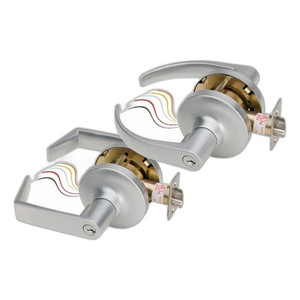
SDC 1581SBDV Multi-Door Electric Strike 24VDC Control
The SDC 1581SBDV is a networked electric strike designed to manage secure access across distributed door installations in healthcare, long-term care, and commercial facilities. It consolidates control of up to 63 doors under a single 24VDC power architecture, supporting 250,000 user credentials across multiple card technologies. The native OSDP and TCP/IP integration removes the need for proprietary gateways, fitting directly into modern access control platforms alongside readers from any OSDP-compliant manufacturer. Real-world deployments use this strike for perimeter exit control, patient-wandering mitigation in behavioral health units, and multi-tenant access in commercial buildings where credential flexibility is non-negotiable.
Key Features
- Multi-Door Capacity: Controls up to 63 doors per system. Eliminates daisy-chaining complexity and centralized credential administration across a single network.
- 250,000 User Credentials: Supports up to 250,000 individual users. Scales from small clinics to large enterprises without system redesign.
- Credential Format Support: DESFire, MIFARE, NFC 13.56MHz, and 125kHz proximity. Mix card types and technologies in the same facility without replacing hardware.
- OSDP Protocol: Open Supervised Device Protocol for secure, encrypted reader-to-controller communication. Guarantees interoperability with third-party readers and eliminates lock-in to single-brand ecosystems.
- TCP/IP Networking: Wired Ethernet integration for remote monitoring and centralized management across multiple buildings. Integrates with access control software using standard networking infrastructure.
- 24VDC Wired Power: Low-voltage DC operation reduces fire code compliance burden compared to AC-powered strikes. Standard PoE injectors can supplement 24VDC distribution in retrofit scenarios.
- Tri-Color LED Status Indicator: Visual confirmation of lock state (secure/unlocked/egress-in-progress). Reduces operator guesswork during audit and troubleshooting.
- Dual-Tone Audio Alert: Distinct tones signal unauthorized egress and unlocked state. Audible feedback without speech synthesis keeps false-alarm noise minimal in healthcare environments.
- Lifetime Warranty: Manufacturer warranty covers the strike for the product lifespan. No time-limited support expiration in long-term care deployments.
Deployment Architecture & Integration
The 1581SBDV functions as a centralized strike controller, not a per-door reader. Pair it with OSDP-compliant card readers mounted at each door—this modular approach lets you upgrade readers independently from the strike logic. OSDP encryption prevents credential interception on the wired link, critical for healthcare and facilities handling patient privacy. The TCP/IP backbone connects to your access control platform (Salto, Gallagher, Genetec Security Center, HID, etc.) using standard Ethernet drops; no RS-485 serial runs or proprietary integration modules. A single PoE switch can power both readers and the strike controller in retrofit builds, simplifying cabling and reducing panel real estate.
For long-term care and behavioral health applications, the strike's 63-door limit accommodates a single nursing unit or two adjacent wards. Delayed-egress mode—triggered by a timed unlock followed by a re-lock if the door isn't opened—prevents patient elopement while remaining compliant with life-safety code (NFPA 101). Audio and LED feedback reassure staff that a door is in egress-delay state, reducing confusion during lockdown or wandering-risk events. Tie credential rules to door schedules: unlock perimeter exits only during business hours, lock them in the evening, and log every attempt in your access log.
Total cost of ownership favors the 1581SBDV in multi-door facilities: one strike replaces 5–10 individual electronic locks, reducing wiring, power distribution, and management overhead. Maintenance is centralized—update firmware, manage credentials, and view audit trails from your platform dashboard instead of visiting each door. The 250,000-user capacity means you'll never outgrow the strike on a single facility; even a 500-bed hospital typically runs 80,000–100,000 active credentials across all access points.
Credential & Reader Flexibility
Support for DESFire, MIFARE, NFC 13.56MHz, and 125kHz proximity means you can issue staff cards in whatever format your organization already uses—and change formats mid-deployment without forklift upgrades. If your ID badge printer is MIFARE-only today but you want to issue smartphone NFC credentials tomorrow, the strike's backend credential database adapts instantly. No hardware swaps, no re-installation. This flexibility is especially valuable in healthcare mergers, where two facilities using different card technologies need to consolidate access under a single platform.
Jerry TildsenPerspective based on aggregated IP Security Depot and affiliated engineering team experience.
We've deployed the 1581SBDV in nursing homes, assisted-living facilities, and mid-size commercial buildings where the 63-door limit aligns perfectly with a single behavioral zone or tenant suite. What separates this strike from single-door electronic locks is the operational simplicity: one IP connection, one power feed, one credential database. Staff don't need to re-badge between doors on the same strike—the system authenticates the card once and releases all doors the credential permits. In a memory-care unit, that means residents and caregivers move seamlessly between common areas and medication rooms without fumbling for badge readers at every threshold. On the commercial side, a multi-tenant building with 40 tenant suites (2–3 doors each) can consolidate access management: the landlord manages building perimeter and common corridors, tenants manage their own suite doors, and audit logging separates who accessed what from a single platform.
The OSDP integration is the technical differentiator. We've seen too many access control projects derailed by proprietary integrations and vendor lock-in—OSDP eliminates that. You can mix readers from different manufacturers, upgrade them independently, and swap the strike controller later without cascading rewiring. That's enterprise-grade flexibility at a mid-market price point.
Technical Highlights:
- OSDP Protocol: Encrypted reader-to-controller link prevents credential spoofing and eavesdropping. Interoperability with any OSDP-certified reader—Salto, HID, Honeywell, Dorma Kaba—without firmware patches or gateway appliances.
- 24VDC Wired Architecture: Single low-voltage supply eliminates AC-to-DC conversion at each door and reduces fire code review burden. PoE-powered readers mean you need only one cable run to each door frame.
- 250,000 Credential Capacity: Sufficient for a 500-bed hospital or a 30-story office tower. Credential provisioning never becomes a system bottleneck.
- Tri-Color LED + Dual-Tone Audio: Real-time feedback (visual + audible) eliminates operator confusion during egress-delay lockdown. Especially critical in healthcare where staff turnover is high and training time is limited.
- Lifetime Warranty: No time-based warranty cliff. In a 20-year facility lifecycle, you own the strike outright—no planned obsolescence, no surprise replacement costs.
Deployment Considerations:
- 63-door limit is a hard ceiling per strike system. Multi-building or multi-campus deployments require multiple strikes and credential synchronization. Plan expansion early if you anticipate growth beyond a single zone.
- 24VDC power must be wired to each door, not retrofitted easily into older facilities with AC-only infrastructure. Budget for electrical runs during design phase.
- Delayed-egress mode compliance varies by jurisdiction (NFPA 101, ADA, state fire marshal rules). Verify local code before specifying for healthcare projects—some states prohibit it entirely, others require manual override buttons.
- Credential provisioning happens at the platform level (your access control software), not at the strike. Ensure your VMS has OSDP API support and staffing to manage 250,000+ credentials; credential bloat is a common pain point in large deployments.
- Wired Ethernet is mandatory for TCP/IP integration—no wireless backup. Run redundant network drops or plan for switch failover if zero-downtime access is a requirement.
The 1581SBDV is the right choice for healthcare facilities, long-term care communities, and commercial buildings where you need secure multi-door access control without proprietary lock-in and where a 24VDC power budget fits the site infrastructure. For single-door installations or outdoor/harsh-environment applications, dedicated smart locks often outperform a centralized strike. Explore the SDC product catalog for complementary readers, power supplies, and exit devices.